
North Indian · Main course
Kala Chana Masala
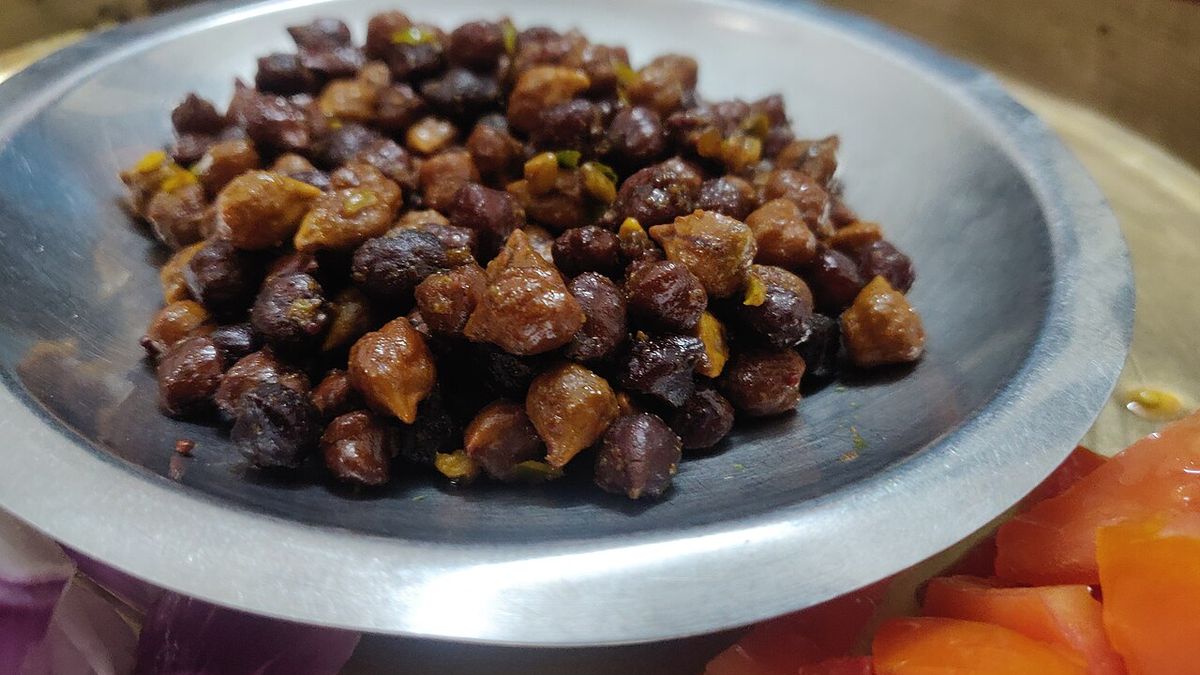
Kala chana masala is a North Indian curry of small black chickpeas in a dark, tangy onion and tomato gravy, eaten with rice, roti or puri. The chickpeas decide it: soak them overnight and cook until one crushes easily between finger and thumb, because undercooked chana never softens once the masala goes in.
- Prep
- 15 min
- Cook
- 55 min
- Total time
- 1 hr 10 min
- Servings
- 4
- Vegetarian
- Vegan
- High-protein
- Iron-rich
- Diabetic-friendly
Ingredients
- 1 cup (about 200 g) dried kala chana, soaked for 8 to 10 hours in 4 cups of water
- 3 cups fresh water, for pressure cooking
- 1 tsp salt, for cooking the chana
- 2 tbsp mustard or neutral oil
- 1 bay leaf
- 1 tsp cumin seeds
- 1/4 tsp hing (asafoetida)
- 2 medium onions (about 200 g), finely chopped
- 1 tbsp ginger-garlic paste
- 2 green chillies, slit
- 3 medium tomatoes (about 300 g), puréed or finely chopped
- 1/2 tsp turmeric powder
- 1 tsp Kashmiri red chilli powder
- 2 tsp coriander powder
- 1 tsp cumin powder
- 1/2 tsp salt, for the masala
- 1/2 tsp garam masala
- 1 tsp amchur (dried mango powder)
- 2 tbsp chopped fresh coriander
NNWA health note
Kala chana is one of the more nourishing everyday pulses. Its dark skin adds a good deal of fibre, and it supplies plant protein, folate and iron, which the body absorbs better alongside the vitamin C from tomato and lemon, while tea with the meal reduces it. The slow-digesting starch and fibre make it a sensible choice on a diabetic plate, in a measured portion and paired with a modest amount of rice or roti, as a dietitian would advise. Its protein is lower in methionine, so a grain alongside rounds out the meal.
Method
- 01
Drain the soaked chana, which should have roughly doubled in size, and rinse well. Put it in a pressure cooker with 3 cups of fresh water and 1 tsp salt, keeping the cooker no more than half full.
- 02
Cook on high heat to the first whistle, then lower the heat and cook for 25 to 30 minutes. Turn off and let the pressure fall by itself, about 15 minutes. A chana should crush easily between finger and thumb; if not, cook for another 8 to 10 minutes.
- 03
Heat the oil in a heavy pan on medium heat. If using mustard oil, heat it until it just starts to smoke and cool for a minute. Add the bay leaf, cumin and hing and let them sizzle for 30 seconds until fragrant.
- 04
Add the onions and cook on medium heat for 10 to 12 minutes, stirring often, until a deep brown-gold. This colour gives the gravy its dark look, so do not rush it. Stir in the ginger-garlic paste and chillies for 1 minute.
- 05
Add the turmeric, chilli powder, coriander powder and cumin powder with a splash of water, stirring for 30 seconds. Add the tomatoes and 1/2 tsp salt and cook for 8 to 10 minutes until thick, dark and shiny with oil at the edges.
- 06
Add the cooked chana with 1.5 cups of its cooking water and bring to a boil. Mash a large spoonful of chana against the side of the pan and stir it back in to thicken the gravy.
- 07
Simmer uncovered on low heat for 15 minutes, stirring now and then, until the gravy is thick enough to coat a spoon and tastes rounded. Add a little more cooking water if it tightens too much.
- 08
Stir in the garam masala and amchur and simmer for 1 minute more. Turn off the heat, add the fresh coriander, rest covered for 5 minutes and check the salt and sourness before serving.
Last reviewed on 2 November 2026.
NNWA publishes the name and qualifications of everyone who writes and checks its material. You can see the full teaching team on the faculty page.
Black chickpeas in the Indian kitchen
Kala chana is the small, dark-skinned desi chickpea, nuttier and firmer than the large pale kabuli variety used in Punjabi chole. It is cooked all over India in many forms. This recipe is the North Indian home-style gravy, usually served with rice or roti. A drier version without much gravy goes on the plate with puri and suji halwa for the kanya pujan meal during Navratri in many North Indian homes. The South cooks the same pulse with coconut and curry leaves as chana sundal, and eastern India's ghugni applies a similar masala to dried yellow peas.
Soaking and pressure cooking without error
Black chickpeas have thick skins and need time. Eight to ten hours in plenty of water is standard, and an overnight soak in summer is best done in the refrigerator so that the water does not start to ferment. Discard the soaking water; it holds some of the sugars that cause gas. Fresh water and a little salt go into the cooker, since the salt seasons the chana right through and, contrary to the old warning, does not stop it from softening.
Whistle counts vary too much between cookers and stoves to be reliable, so this recipe gives time under pressure and a test. Keep the cooker no more than half full, since pulses foam and can block the vent, and let the pressure fall on its own. Never force the lid. Once the chana can be crushed between finger and thumb, it is done. Under-cooked chana will not soften much once it enters the acidic tomato masala, so it is better to give it a second round in the cooker than to serve it hard. Old stock can take much longer, so buy from a shop with a good turnover.
Depth without shortcuts
Three things build the gravy. The first is deep browning of the onions, which supplies colour and sweetness. The second is the cooking water, which is dark, earthy and full of the flavour of the skins, and should never be thrown out. The third is mashing a spoonful of chana into the pot, which gives body without any added flour or cream. Amchur at the end lifts all of this. Some cooks add a teaspoon of chole masala, which works well as a shortcut if you have a good one in the cupboard.
Rescuing the pot
If the gravy tastes thin, it probably needs more simmering rather than more spice, so take the lid off and give it another ten minutes. If the chana remains hard after going into the masala, transfer everything to the cooker with half a cup of water and cook for ten minutes more. A curry that tastes bitter usually has scorched spice powder, which is why a splash of water goes in with them. If it has gone too sour, add a pinch of jaggery. If it is too salty, add a boiled, mashed potato and a little water.
Swaps and additions
Tamarind pulp or lemon juice can replace amchur. A small potato or some spinach can be added during the simmer for a fuller pot. Hing lends a good savoury note, but compounded hing usually contains wheat flour, so anyone avoiding gluten should buy a certified variety or leave it out. Kabuli chana takes the same masala, although the cooking time is shorter. This dish is already light, so a lighter version is mostly about using one tablespoon of oil and more onion. For more on how pulses support a meatless diet, see the high-protein Indian diet guide, or the plant-based nutrition course for a deeper study.
Serving and leftovers
Serve with plain steamed rice, jeera rice or hot phulkas, with sliced onion, a wedge of lemon and green chilli on the side. It is even better the next day. Refrigerate within two hours of cooking and keep for up to three days. Thin with a splash of water and simmer until steaming through. It freezes well for a month in a closed container, so a double batch is worth making. Any extra boiled chana keeps for three days in its cooking water in the refrigerator, ready for a salad, or a quick snack tossed with onion, lemon and chaat masala. Rice served alongside should be cooled quickly and refrigerated within two hours as well, and reheated only once.
Those who find pulses cause bloating can start with smaller servings, and raise them gradually over a few weeks, since the gut adjusts in time. A thorough rinse after soaking tends to help as well. The dish page for kala chana curry gives sourced figures per serving. Finally, the iron-rich foods guide puts the pulse beside other Indian sources, with practical guidance on how to pair them.
Learn the science
Plant-Based Nutrition
This dish's nutrition reasoning is taught in full in this NNWA course.
What people ask about Kala Chana Masala
Can kala chana be cooked without soaking?
It can, but it takes about twice as long under pressure, and the skins may split unevenly. If you forget to soak, cover the chana with boiling water and leave it for an hour before cooking, which helps a good deal though not fully.
Is kala chana better than white chole?
They are close nutritionally, and both are good foods. Kala chana has more fibre because of its dark, thick skin, and a nuttier taste, while kabuli chana is softer and milder. Choose whichever you will eat regularly, and rotate them for variety.
Why is my kala chana curry not dark?
The colour comes from well-browned onions, the skin-tinted cooking water and a well-fried masala. Pale onions or plain water in place of the cooking liquid give a lighter gravy. There is no need for tea bags or colouring when these three stages are done properly.
What is the difference between this and the kanya pujan chana?
The festive version is cooked dry with just a little ginger, cumin, coriander powder, amchur and often no onion or garlic. It is meant for serving with puri and halwa. Reduce the water to almost nothing and leave out the onion for that plate.
More recipes
Aam Panna
Aam panna is a summer cooler made from cooked raw mango pulp, jaggery, roasted cumin and black salt, diluted with cold water when you want a…
Vegetarian · VeganRecipeAloo Gobi (Potato & Cauliflower Dry Curry)
Aloo gobi is a North Indian dry curry of potatoes and cauliflower cooked together with turmeric, cumin and a light blend of spices until ten…
Vegetarian · VeganRecipeAloo Matar
Aloo matar is a simple North Indian curry of potatoes and green peas in an onion and tomato base. It is one of the most commonly cooked home…
Vegetarian · VeganRecipe