
East Indian · Snack
Ghugni
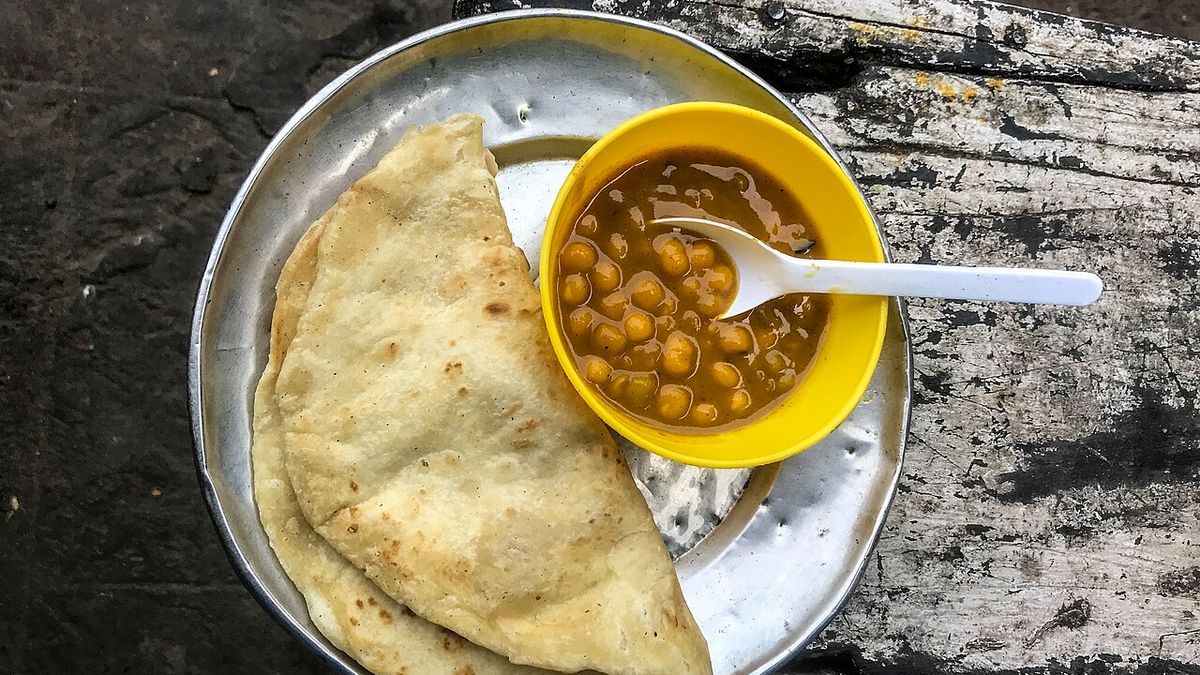
Ghugni is a spiced curry of dried yellow peas eaten across Bengal, Odisha and Bihar, often as a street snack topped with raw onion and tamarind. It succeeds or fails on the peas: soaked overnight and cooked until they crush easily but stay whole, so a few can be mashed to thicken the gravy.
- Prep
- 20 min
- Cook
- 45 min
- Total time
- 1 hr 5 min
- Servings
- 5
- Vegetarian
- Vegan
- Gluten-free
Ingredients
- 1 1/2 cups (300 g) dried yellow peas (motor dana or pila vatana), soaked for 8 to 10 hours
- 3 1/2 cups water for cooking, plus 1 cup hot water later
- 1 1/2 teaspoons salt, or to taste
- 1 teaspoon turmeric powder
- 3 tablespoons mustard oil
- 1/4 cup fresh coconut, cut into small slivers
- 1 medium potato, peeled and cut into 1 cm cubes
- 2 bay leaves
- 1 teaspoon cumin seeds
- 2 medium onions, finely chopped
- 1 tablespoon ginger paste
- 1 teaspoon garlic paste
- 1 large tomato, chopped
- 1 teaspoon Kashmiri chilli powder
- 1 teaspoon coriander powder
- 1/2 teaspoon sugar
- 2 teaspoons bhaja masala (roasted cumin, coriander and dried chilli, ground)
- 1/2 teaspoon garam masala
- 2 tablespoons tamarind water, for topping
- 1 small onion, finely chopped, for topping
- 2 green chillies, chopped, for topping
- 2 tablespoons coriander leaves, chopped, for topping
NNWA health note
Ghugni is one of the more filling snacks you can buy or make, because dried peas are rich in protein and fibre and take their time to digest. Mixed with roti or rice it makes a fair meal. The fat comes from the mustard oil and is easy to reduce at home; the potato and any fried accompaniments add more starch and oil. Street versions can be salty. Peas that are undercooked or eaten in very large helpings can cause wind in some people, so soak them well, cook them fully and start with a moderate bowl.
Method
- 01
Drain the soaked peas, which should have roughly doubled in size. Pressure cook them with the 3 1/2 cups of water, 1 teaspoon of the salt and half the turmeric on medium heat for 3 whistles, then on low for 5 minutes, and let the pressure fall naturally.
- 02
Press a pea between your fingers. It should crush with almost no effort, but most should still be whole in the pot. If they resist, cook for another whistle before going on, because they will not soften further once the masala goes in.
- 03
Heat the mustard oil in a heavy kadhai on medium heat until it just begins to smoke, then turn the heat down and let it cool for a few seconds. Fry the coconut slivers for about 2 minutes until golden, lift out and set aside.
- 04
In the same oil, fry the potato cubes on medium heat for 5 to 6 minutes until golden on the outside. A knife should meet some resistance; they will finish in the gravy. Lift out and keep them with the coconut.
- 05
Add the bay leaves and cumin to the oil and let them sizzle for 20 seconds. Add the onions and fry on medium heat for 10 to 12 minutes, stirring often, until deep golden brown at the edges and sweet smelling.
- 06
Stir in the ginger and garlic and fry for 2 minutes until the raw smell goes. Add the tomato, chilli powder, coriander powder, sugar and remaining turmeric and cook for about 6 minutes, until the tomato melts and the oil separates at the edges.
- 07
Tip in the peas with their cooking liquid, the potato and most of the coconut. Add up to 1 cup of hot water if needed for a loose gravy and simmer uncovered on medium-low for 12 to 15 minutes, until the potato is soft.
- 08
Crush a ladleful of peas against the side of the pan and stir them back in, which thickens the gravy to the consistency of a thick soup. Add the remaining salt to taste.
- 09
Turn off the heat and stir in the bhaja masala and garam masala. Rest for 5 minutes, then serve hot with the raw onion, green chilli, coriander, a drizzle of tamarind water and the saved coconut on top.
Last reviewed on 2 November 2026.
NNWA publishes the name and qualifications of everyone who writes and checks its material. You can see the full teaching team on the faculty page.
The dish and how it is eaten
Ghugni is a fixture of eastern India, sold from street carts in Kolkata and found in homes in Bengal, Odisha, Bihar and Jharkhand. In Bengal it often turns up at tea-time, on Bijoya Dashami tables and in every kind of neighbourhood stall, where it is ladled into a leaf bowl and finished with sour tamarind water and raw onion. Recipes differ across the region. The Bengali home version given here uses dried yellow peas, mustard oil, potato and coconut. Bihar and Odisha have their own variations, some made from black chana or green peas, and meat lovers will know mangsher ghugni, in which mutton mince goes into the same pot.
The soak and the crush
Dried peas are slow. A short soak gives you pots of hard peas swimming in thin gravy, however long you simmer them. Eight hours is the minimum for a reliable result, so start the night before and refrigerate in hot weather so the soak does not ferment. Discard that water and cook in fresh. Salt goes into the pressure cooker along with the peas so that they are seasoned to the centre. Once the masala is cooked, crushing a ladleful against the kadhai is what gives ghugni its body. No flour or cashew paste is needed, and the gravy should settle like a thick soup rather than a clear broth.
The masala is the flavour
Two stages give ghugni its taste. The onions need patience, because pale onions leave the dish tasting sharp and thin; aim for deep gold and stir them often through the last few minutes. The bhaja masala goes in at the end, off the heat, because roasted spices lose their top note if boiled for a long time. To make your own, dry roast 2 teaspoons cumin, 1 teaspoon coriander seeds and 2 dried red chillies on low heat for about 3 minutes until fragrant, then grind them. This keeps for a month in a dry jar and works on jhal muri too.
Common mistakes and their rescues
Hard peas are the commonest failure. Do not keep simmering in the masala, since acid from the tomato slows softening. Scoop out the peas, pressure cook them separately with fresh water for 2 whistles, and return them to the gravy. If the gravy is watery, simmer uncovered for 5 more minutes and crush more peas. If it has gone too thick, loosen it with hot water and adjust salt. If it tastes dull, the fix is usually acid and salt rather than more spice: add tamarind water a teaspoon at a time. Overcooked, burst peas still taste good. Serve them as a thick dal-like ghugni with a sharper garnish.
Substitutions and a lighter version
Yellow peas are sold as pila vatana in many Indian shops. White peas (safed vatana), the usual choice for ragda in Mumbai, behave the same way, while kala chana gives a chewier ghugni and takes a little longer. Mustard oil is what makes this taste Bengali; a neutral oil is fine but milder, so add a small extra pinch of chilli. For a lighter bowl, use 1 1/2 tablespoons of oil and skip the frying step for the potato, simmering the cubes directly in the gravy for about 15 minutes. Leave out the potato altogether and you have a higher protein pot that is also easier to keep for a couple of days.
Serving it
At home it is usually served on its own in a small bowl, with puffed rice or a thin slice of toast, or as a meal with parathas or luchi. A cup of masala chai is what most people expect beside it on a rainy evening. For a leaf-bowl street feel, finish the bowl at the table so that the onion stays crisp and the coriander stays fresh.
Storing and reheating
Cool the ghugni soon after cooking, and refrigerate it in a closed container for up to 3 days. Leave the raw toppings off until serving. It thickens substantially overnight, so reheat in a pan with a splash of hot water on medium heat until bubbling all through, and stir so the base does not catch. It also freezes well for up to a month if you can leave out the potato, which turns grainy in the freezer.
Learn the science
Plant-Based Nutrition
This dish's nutrition reasoning is taught in full in this NNWA course.
What people ask about Ghugni
Can I use canned or tinned yellow peas for ghugni?
They work as a shortcut for a quick weeknight bowl, though they are softer and bring less flavour. Rinse them well, reduce the salt, and simmer for only 5 minutes in the finished masala so that they keep their shape.
Is ghugni the same as ragda?
They are close cousins made from similar dried peas, but ragda is plainer and thicker, designed as a base for chaat. Ghugni has its own onion and mustard oil masala and stands alone as a dish.
Why do my peas split but stay hard in the middle?
Old peas or too short a soak is the usual reason. Peas stored for many months need longer in water and under pressure, so buy from a shop with quick turnover and soak them overnight in plenty of water.
Can ghugni be made without onion and garlic?
Yes, and a niramish version with only ginger, cumin and tomato is common in Bengali homes on days when onion and garlic are avoided. Use extra coconut and a slightly larger pinch of bhaja masala so the pot keeps its depth of flavour.
Is ghugni suitable for children?
Most children enjoy it if you skip the chilli powder and leave out the green chilli and tamarind garnish. Mash the peas a little more for toddlers, because whole peas can be a choking risk for very small children.
More recipes
Aloo Posto (Bengali Potato & Poppy Seed Curry)
Aloo posto is a Bengali side dish from West Bengal made by simmering cubed potatoes in a ground white poppy seed paste with minimal spicing.…
VegetarianRecipe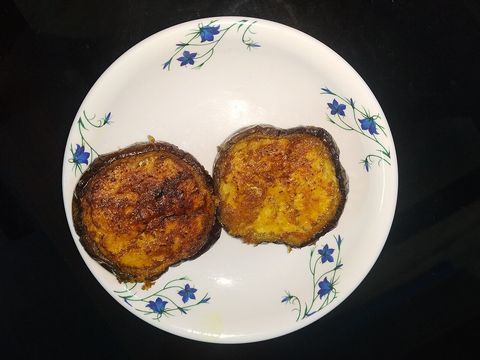
Begun Bhaja
Begun bhaja is thick slices of brinjal rubbed with turmeric, salt and a little sugar, then fried in mustard oil until browned outside and cr…
Vegetarian · VeganRecipeBengali Shukto (Mixed Vegetable Bitter Curry)
Shukto is a traditional Bengali mixed vegetable curry from West Bengal, built on bitter gourd and a medley of seasonal vegetables in a light…
Vegetarian · VeganRecipe