
East Indian · Snack
Jhal Muri
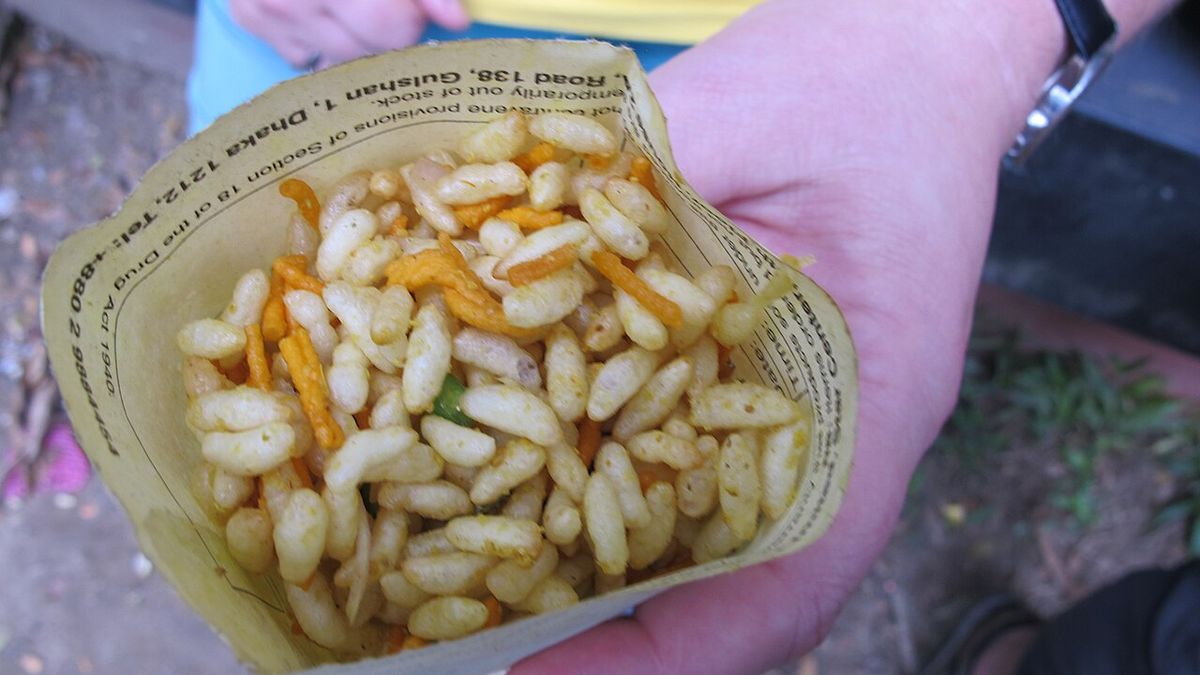
Jhal muri is the Kolkata street snack of puffed rice tossed with raw mustard oil, roasted masala, chanachur, onion, cucumber, boiled potato and green chilli. Everything depends on crisp muri and last-minute mixing: once the wet ingredients meet the rice, you have only a few minutes before the crunch goes.
- Prep
- 15 min
- Cook
- 5 min
- Total time
- 20 min
- Servings
- 3
- Vegetarian
- Vegan
Ingredients
- 4 cups (about 60 g) muri (puffed rice)
- 1/3 cup chanachur (Bengali spiced fried mix)
- 2 tablespoons roasted peanuts
- 1 medium potato, boiled, peeled and cut into small cubes
- 1 small onion, finely chopped
- 1/2 cup cucumber, seeded and finely chopped
- 1 small tomato, seeded and finely chopped, optional
- 2 green chillies, finely chopped
- 2 tablespoons coriander leaves, chopped
- 2 tablespoons thin coconut slivers, optional
- 2 teaspoons jhal muri masala or bhaja masala
- 1/2 teaspoon black salt
- 1/4 teaspoon salt, or to taste
- 1 1/2 tablespoons raw mustard oil
- 1 teaspoon oil from a mango pickle, optional
- 1 tablespoon lemon juice
NNWA health note
As street snacks go, jhal muri is a lighter choice than most. Puffed rice is airy, so a big-looking portion has less grain than it seems, and the raw vegetables add crunch and some fibre. The peanuts bring protein and good fats. Chanachur is deep-fried and salty, so it is the ingredient to go easy on. Puffed rice digests fast and will not keep you full for long, so more peanuts or a boiled chana handful make a better evening snack. Anyone watching blood sugar should treat it as a small snack, not a meal.
Method
- 01
Boil the potato ahead of time and let it cool fully before dicing, since warm potato turns the rice soggy. Chop the onion, cucumber, tomato, chilli and coriander, and keep each in its own small pile, patting the cucumber and tomato dry with a clean cloth.
- 02
Taste a pinch of the muri. If it is not sharply crisp, spread it in a wide kadhai on low heat and toast for 3 to 5 minutes, stirring constantly, until it crackles against the spoon and gives no resistance between the teeth. Tip into a large steel bowl and let it cool completely.
- 03
Add the masala, black salt and salt to the dry muri in the bowl. Pour in the mustard oil and pickle oil and toss for about 30 seconds, using your hands or a spoon, until every grain looks lightly coated and turns a pale gold.
- 04
Add the potato, onion, cucumber, tomato, green chilli and half the coriander. Toss quickly for about 15 seconds. Taste one spoonful and judge the salt and heat, since now is the moment to correct them.
- 05
Add the chanachur, peanuts, coconut and lemon juice at the very end and give 4 or 5 fast tosses, shaking the bowl from below rather than stirring. The rice should still rustle loudly and stay separate.
- 06
Divide into paper cones or small bowls right away, scatter over the rest of the coriander and eat within about 5 minutes, before the crunch fades.
Last reviewed on 2 November 2026.
NNWA publishes the name and qualifications of everyone who writes and checks its material. You can see the full teaching team on the faculty page.
The dish and how it is eaten
Jhal means hot and muri means puffed rice, and this is the snack of the Kolkata street, sold by vendors on footpaths, at bus stops and around railway stations across Bengal. The seller keeps a large tin with a row of small containers around it, mixes each portion to order and shakes the whole thing in a covered canister before tipping it into a paper cone. Part of the appeal is watching this done. It is an afternoon or evening snack, usually eaten standing up and always within minutes of being made. Unlike bhel puri, it has no sweet tamarind chutney; the flavour comes from the pungent mustard oil and sour lemon.
The case for raw mustard oil
Most Indian cooking heats mustard oil to mellow it, but here it goes in cold, and the sharp, nose-tingling heat is exactly what you want. Choose a fresh bottle labelled kachi ghani or cold pressed, since older oil tastes rancid when raw. Note that this strong oil can catch people out, so measure it the first time. A useful way to use it is to toss the dry muri with the oil before the wet ingredients go in. This thin coat keeps the grains from absorbing the moisture of the vegetables straight away, and it buys you those extra few minutes of crunch.
Keeping the crunch
There are two rules. First, the muri must be properly crisp, because any softness from the packet only gets worse when it meets lemon juice and cucumber. Toasting takes minutes and costs nothing. Second, the wet things should be dry to the touch and mixed in only when you are ready to eat. Seed the cucumber and tomato, chop them small rather than grating, and cool the potato. Mix one or two portions at a time for guests rather than a whole bowl in one go. Everything can be prepared an hour in advance and kept in separate piles.
Common mistakes and their rescues
If the muri has gone soft, it cannot be crisped again once it is wet, so fold in a fresh handful of toasted muri and eat straight away. If it tastes too hot, add more muri and a little more boiled potato, since both absorb chilli heat well. If the mustard oil tastes harsh, stir in more lemon and a small pinch of sugar. A bland bowl usually needs black salt and lemon rather than extra chilli. Too much lemon can be balanced with chanachur and extra toasted peanuts, though you then need to eat quickly.
Substitutions and a lighter version
Jhal muri masala is sold in Bengali stores, but a home mix of ground roasted cumin, roasted coriander, dried chilli, black pepper, a little amchur and black salt does the job. The same bhaja masala from the ghugni recipe will work too, with a small pinch of amchur. If you cannot find chanachur, a good sev mix or a Bombay mix can stand in, though many of these contain wheat or dairy, so read the label if you are avoiding either. For a lighter bowl, halve the chanachur and double the roasted peanuts, or use boiled black chana, as many Kolkata vendors do. A spoon of sprouted moong or grated raw mango is good here too. Mustard oil can be reduced to 2 teaspoons before the flavour fades away.
Serving it
Jhal muri needs little beside it, perhaps a cup of hot masala chai or plain tea. For a heartier evening, Bengali cooks often pair puffed rice with a bowl of ghugni, spooned over at the table. It can also be set out as a build-your-own snack, with the dry mix in one bowl and small bowls of vegetables so each guest mixes their own. That also suits children and anyone who wants less chilli.
Storing and preparing ahead
Mixed jhal muri does not store at all, so make only what you will eat. The dry base stays good: muri tossed with the masala and oil keeps for a day in a tightly closed tin, and plain toasted muri keeps for a couple of weeks if the tin is truly airtight. Peanuts and chanachur should stay in their own containers. Boiled potato and chopped vegetables can be refrigerated in closed boxes for a few hours, but pat them dry again before they go in.
Learn the science
Healthy Eating & Everyday Wellness
This dish's nutrition reasoning is taught in full in this NNWA course.
What people ask about Jhal Muri
Can I make jhal muri without mustard oil?
You can use a neutral oil and it will still be a tasty puffed rice snack, but the Bengali character goes with it. If the raw oil is too strong for you, use half the amount rather than removing it.
What is the difference between muri and the puffed rice used for bhel?
They are essentially the same product, sold as murmura in the west and north. Bengali muri is often slightly larger and lightly salted when bought from local shops, so reduce the added salt until you have tasted it.
Which mustard oil is safe to use raw?
Check the label, because in India only bottles labelled edible should go into food. Buy a known food brand with a food licence number, avoid loose oil of unknown origin, and store it away from light so it stays fresh.
How much jhal muri should I make per person?
A generous cup and a half of the mixed snack makes a good single portion, which works out at a little over a cup of dry muri. Allow more if it is standing in for an evening meal with peanuts.
More recipes
Aloo Posto (Bengali Potato & Poppy Seed Curry)
Aloo posto is a Bengali side dish from West Bengal made by simmering cubed potatoes in a ground white poppy seed paste with minimal spicing.…
VegetarianRecipe
Begun Bhaja
Begun bhaja is thick slices of brinjal rubbed with turmeric, salt and a little sugar, then fried in mustard oil until browned outside and cr…
Vegetarian · VeganRecipeBengali Shukto (Mixed Vegetable Bitter Curry)
Shukto is a traditional Bengali mixed vegetable curry from West Bengal, built on bitter gourd and a medley of seasonal vegetables in a light…
Vegetarian · VeganRecipe