
East Indian · Side dish
Begun Bhaja
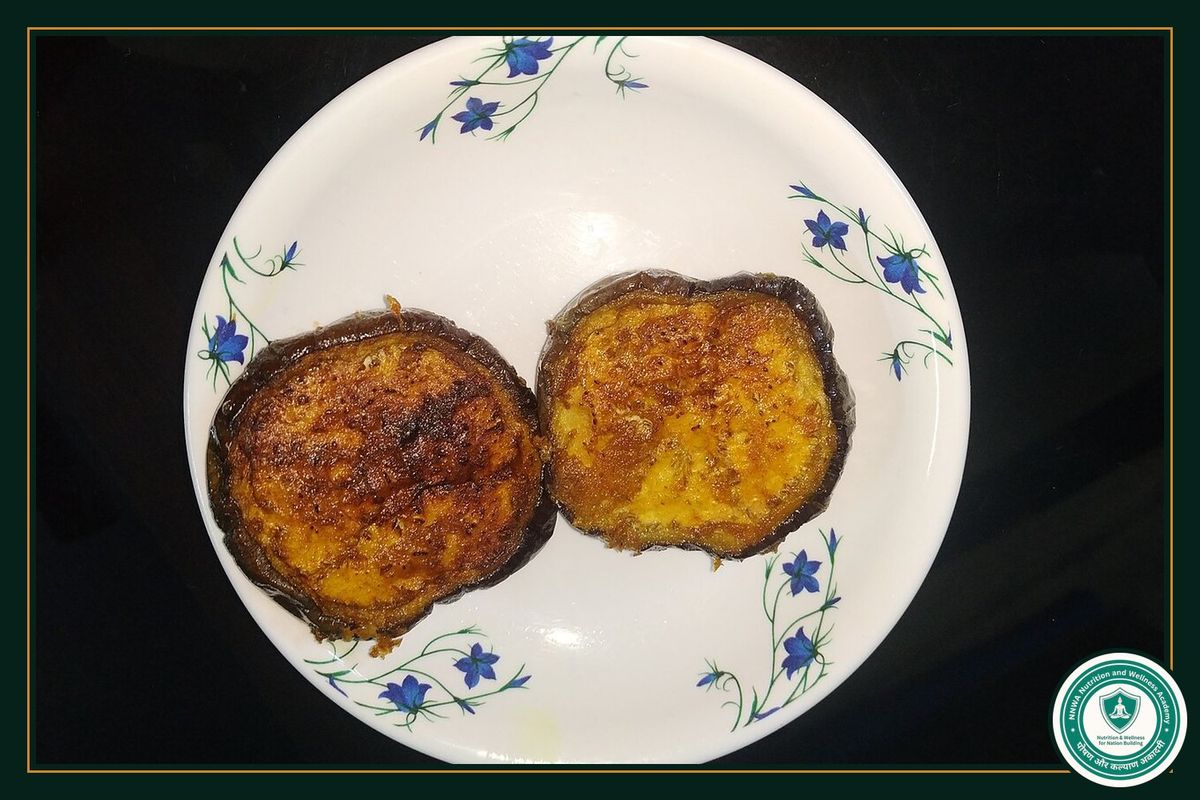
Begun bhaja is thick slices of brinjal rubbed with turmeric, salt and a little sugar, then fried in mustard oil until browned outside and creamy within. Salting and oil control decide whether it succeeds: drawn-out moisture stops the slices soaking up fat, and a lid cooks them through without extra oil.
- Prep
- 25 min
- Cook
- 20 min
- Total time
- 45 min
- Servings
- 4
- Energy per serving
- 130 kcalEstimated from this recipe's ingredients using IFCT 2017 and USDA values. Actual figures vary with portion and cooking.
- Vegetarian
- Vegan
- Gluten-free
Ingredients
- 1 large round brinjal (begun), about 500 g
- 1 teaspoon salt
- 1/2 teaspoon turmeric powder
- 1/2 teaspoon Kashmiri red chilli powder
- 1/2 teaspoon sugar
- 1 tablespoon rice flour (optional, for extra crispness)
- 5 tablespoons mustard oil
NNWA health note
Brinjal on its own is a light vegetable with some fibre, but its spongy flesh takes up fat readily, so fried brinjal is richer than it looks. Thick slices and a lid limit that, as does using only the oil given here. One slice alongside rice, dal and a green vegetable is how begun bhaja is usually eaten, and that is the sensible way to think about it: a small, tasty side to a meal rather than a dish to fill up on. Those watching their fat intake can use a lighter method, as described below.
Method
- 01
Wash the brinjal, trim off the stem and cut it into even rounds about 1.5 cm thick. You should get 8 to 10 slices. Slices of equal thickness cook evenly, so take your time over this.
- 02
Mix the salt, turmeric, chilli powder and sugar in a small bowl, and rub it all over both sides of each slice. Lay them on a plate and leave for 15 to 20 minutes, until beads of water appear on the surface.
- 03
Blot the slices thoroughly with a clean kitchen towel, pressing gently. If you are using rice flour, dust a very thin coat over both sides and tap off the excess.
- 04
Heat a wide, heavy frying pan or tawa over a medium-high flame, add the mustard oil and heat for about 2 minutes, until it just starts to smoke and the sharp smell mellows. Lower the flame to medium and wait for 30 seconds.
- 05
Lay in as many slices as fit in one layer, without overlapping. They should sizzle right away. Cook uncovered for 3 minutes, until the underside turns a deep golden brown. Do not move them around too much, so that they form a crust.
- 06
Turn each slice over and cover the pan with a lid. Lower the flame to medium-low and cook for 4 to 5 minutes, letting the steam soften the flesh.
- 07
Lift off the lid and turn the slices once more. Cook uncovered for 1 to 2 minutes on a medium flame to re-crisp both faces. The slice is ready when it is dark gold with a crisp edge and a table knife slips through the centre without resistance.
- 08
Drain on a rack or kitchen paper for a few seconds and serve hot. Fry the remaining slices the same way, adding more oil only if the pan is truly dry, about 1 teaspoon at a time.
Last reviewed on 2 November 2026.
NNWA publishes the name and qualifications of everyone who writes and checks its material. You can see the full teaching team on the faculty page.
Where does begun bhaja come from?
Bhaja means fried in Bengali, and a bhaja of some vegetable is a regular first course at a Bengali meal, eaten with rice and dal before the fish or meat arrives. Begun bhaja is the best known of them. You will find it at home on an ordinary weekday and also on the plate alongside khichuri at Durga Puja, when it is a favourite with the festival's bhog meal. It is also eaten folded into a soft luchi at a Sunday breakfast. Odisha has a close relative in baigana bhaja.
The technique: draw out water, then steam under a lid
Brinjal is full of air pockets, and that is the problem with frying it, because oil rushes into them. Salting first draws out water and gently collapses the structure, so the slices take up less oil. Blotting matters too, since wet slices spit and refuse to brown. The sugar is more than flavour: a very small amount helps the surface colour evenly and balances the slight bitterness of the vegetable. It should not taste sweet.
The lid is what stops you reaching for more oil. Trapped steam cooks the thick centre through without any more fat. Removing the lid for the last minute or two brings back the crust. This combination of frying, steaming and frying again is what gives you a creamy inside and a crisp edge. Mustard oil brings the true flavour, and heating it to the point of smoke softens its sharpness. Let it cool slightly before the slices go in, so the spices do not burn.
What goes wrong, and how do you rescue it?
A slice that soaks up all the oil at once and sits grey and limp usually went in before the oil was hot, or was not salted long enough. Do not add more oil. Instead, cover the pan, lower the flame and let it release some of that oil back as it cooks. A raw centre with a dark outside means the flame was too high, so lower it, cover and cook for a few more minutes. Burnt spices come from over-hot oil, and a bitter taste can come from a very old, seedy brinjal. Choose one that feels heavy, firm and shiny, with few seeds. If the slices fall apart when turned, they were too thin or overcooked, so turn them with a flat spatula and go gently.
Substitutions and a lighter version
Large round bharta brinjal is the traditional choice, and long purple ones also work if you slice them on the diagonal for wider pieces. Mustard oil is hard to replace for flavour, but groundnut oil gives a good result if you need a neutral taste. For crispness, some cooks dust with besan or a little semolina instead of rice flour, though semolina would no longer suit a gluten-free diet. Rice flour is a shortcut, not part of the plainest home version, and you can skip it.
For a lighter version, brush the slices with 1 teaspoon of mustard oil per side and bake in a hot oven at 200 degrees Celsius for 20 to 25 minutes, turning once, or cook in an air fryer for around 12 to 15 minutes. It does not have the same richness, but it is a pleasant side dish for regular meals. If brinjal suits you better in a different form, baingan bharta usually takes less oil.
What goes with begun bhaja?
The standard home plate is rice, a plain or lightly seasoned dal, and this on the side, followed by macher jhol. It suits cholar dal and vegetable khichdi on a rainy day, and it can open a meal with a light shukto. For guidance on building these meals around vegetables, the Bengali diet chart is a good starting point.
Storing and reheating
This dish is at its finest within 15 minutes of leaving the pan. The crust softens as it stands, but the taste stays good. Keep leftovers in a closed box in the fridge for up to 2 days, and reheat them on a dry, hot tawa for about 2 minutes per side, with no extra oil. Do not use a microwave if you can help it, because the slice turns soggy. It is not worth freezing, since thawed brinjal goes watery.
Learn the science
Culinary Nutrition (Nutrition Chef)
This dish's nutrition reasoning is taught in full in this NNWA course.
What people ask about Begun Bhaja
Should I peel the brinjal for begun bhaja?
No. The skin helps each slice hold together in the pan and turns pleasantly chewy. Peel only if a brinjal is unusually old or tough. If the skin seems bitter when you taste a little, the vegetable is past its best and a fresh one is better.
Can I fry brinjal without turmeric or chilli?
Yes, the chilli is optional, and many families leave it out altogether. Turmeric gives the familiar golden colour and earthy note, so keep it unless you have a reason not to. Do not skip the salt, since it does the real work.
Why does brinjal absorb so much oil?
Its soft, spongy flesh holds pockets of air, and hot oil fills those spaces quickly in the first minute of frying. As it cooks, those pockets collapse, and some of that oil comes back out, which is why adding more too soon is a mistake.
Is it safe to heat mustard oil until it smokes?
It is the customary step in Bengali kitchens and it softens the oil's raw pungency. Heat only until the first wisp of smoke, then lower the flame right away. Prolonged smoking breaks the oil down and spoils the flavour of the finished dish.
More recipes
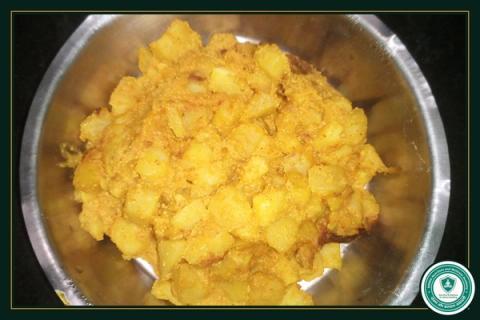
Aloo Posto (Bengali Potato & Poppy Seed Curry)
Aloo posto is a Bengali side dish from West Bengal made by simmering cubed potatoes in a ground white poppy seed paste with minimal spicing.…
VegetarianRecipe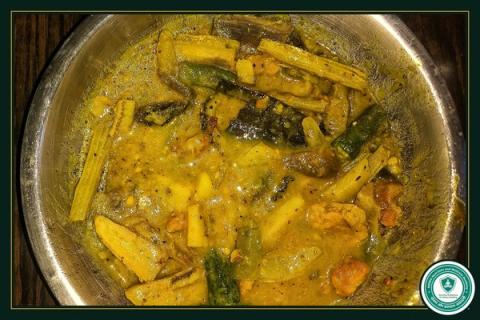
Bengali Shukto (Mixed Vegetable Bitter Curry)
Shukto is a traditional Bengali mixed vegetable curry from West Bengal, built on bitter gourd and a medley of seasonal vegetables in a light…
Vegetarian · VeganRecipe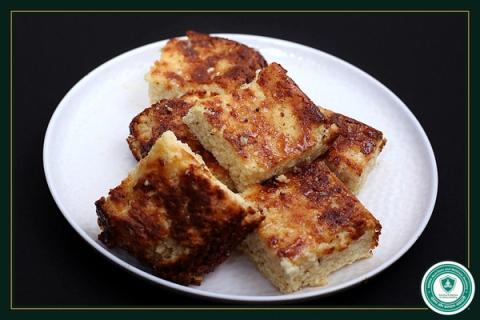
Chhena Poda
Chhena poda is the baked sweet of Odisha, made from fresh chhena, sugar, a little suji and cardamom, cooked until a dark caramelised crust e…
Vegetarian · FestiveRecipe