
East Indian · Breakfast
Luchi
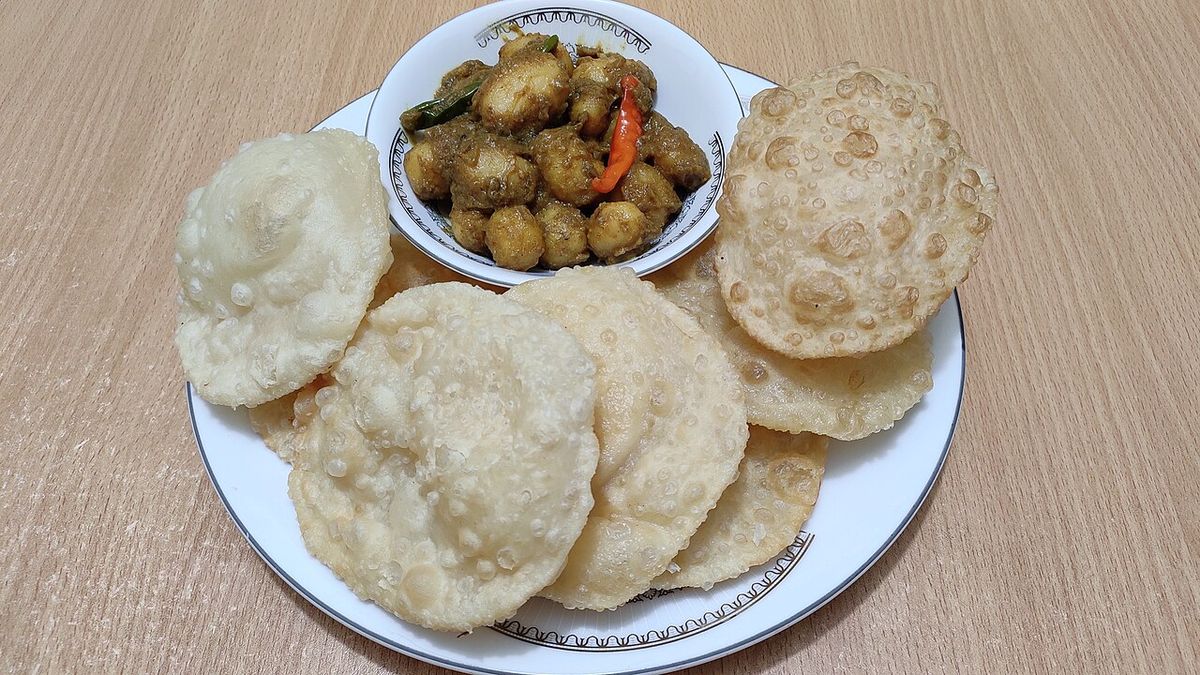
Luchi is a small, pale, puffed Bengali bread of maida with a little ghee rubbed in, rolled thin and deep-fried for seconds. Oil temperature and the dough decide whether it succeeds: a firm, rested dough in properly hot oil balloons straight away and stays white, while cool oil leaves it flat and greasy.
- Prep
- 40 min
- Cook
- 20 min
- Total time
- 1 hr
- Servings
- 4
- Vegetarian
- Festive
Ingredients
- 2 cups maida (refined wheat flour), about 250 g
- 1/2 teaspoon salt
- 1/2 teaspoon sugar
- 2 tablespoons ghee, melted
- 1/2 cup lukewarm water, about 120 ml, a little more or less as needed
- 1 tablespoon neutral oil, for rolling
- 3 cups neutral oil or ghee, for deep frying
NNWA health note
Luchi is fried white flour, and it belongs to festive mornings and family Sundays rather than the daily breakfast. It takes up oil as it fries and has little fibre. Three or four small ones with a vegetable or dal make a good meal, while a plate of ten does not. Hot oil at the right temperature keeps them less greasy, which is another reason to fry with care. Those with diabetes or high cholesterol may prefer to keep it to the occasional treat and follow their doctor's or dietitian's advice on how often.
Method
- 01
Mix the maida, salt and sugar in a wide bowl, pour in the melted ghee and rub it through with your fingertips for about 2 minutes. Squeeze a handful: it should hold together like damp sand and crumble only when pressed. If it falls apart, rub in another teaspoon of ghee.
- 02
Add the water a spoonful at a time and bring it together into a firm dough, stiffer than chapati dough. Knead for 8 to 10 minutes until it is smooth, satiny and bounces back slowly when pressed.
- 03
Smear the dough with a few drops of oil, cover it with a damp cloth and rest for 20 to 30 minutes. It will soften a little and roll out more easily.
- 04
Divide the dough into 16 equal pieces and roll each into a smooth ball with no creases. Keep the balls covered so that they do not form a skin.
- 05
Dip a ball lightly in the oil and roll it out on an oiled board into an even disc, about 10 cm across and 2 mm thick. Do not use dry flour, which falls into the oil and burns. Roll only a few at a time, keeping them under a cloth, without stacking them.
- 06
Pour the oil into a deep kadhai, no more than halfway up its sides, and heat it over a medium-high flame for about 5 minutes. Drop in a pinch of dough: it should rise to the top within 2 seconds with lively bubbles, without browning. A thermometer should read about 180 degrees Celsius.
- 07
Slide one disc gently into the oil from the side of the pan. As it rises, press it lightly with the back of a slotted spoon for 5 seconds, and it should balloon. Spoon a little oil over the top if it hesitates.
- 08
Turn it and fry for 8 to 10 seconds more, until it is cooked through but still pale, with perhaps a few faint gold marks. Lift it out, hold it against the side of the pan for a moment to drain, and place it on a rack or a plate lined with kitchen paper.
- 09
Fry the rest one at a time, letting the oil return to temperature between each. Serve immediately, while they are still puffed and soft.
Last reviewed on 2 November 2026.
NNWA publishes the name and qualifications of everyone who writes and checks its material. You can see the full teaching team on the faculty page.
Where does luchi come from?
Luchi is one of the most beloved breads of Bengal, eaten across West Bengal and Bangladesh, with close relatives in Odisha and Assam. It is usually a special breakfast or a festive meal, on Sundays and during Durga Puja and other celebrations. Its stuffed cousins include radhaballabhi, with a spiced dal filling, and koraishutir kochuri, with green peas in winter. Good luchi is white or very pale, a little smaller than most poori, and so thin that it sits soft and collapsed within minutes of leaving the oil.
How is luchi different from poori?
Poori is made mainly from atta, or atta with some semolina, and is usually fried to a golden brown. Luchi uses maida with ghee rubbed in, which gives a softer, more delicate crumb, and it should not take on colour. You can see the difference with a North Indian poori bhaji: a firmer, nuttier and browner bread. The sourced figures for fried bread like this are on the poori dish page.
The technique: moyan, stiff dough and hot oil
Bengali cooks call the fat rubbed into the flour moyan, and it makes the bread tender by coating the flour and limiting gluten. That is why you rub it first, before any water. The dough itself needs to be firm, because a soft dough soaks up oil and does not puff well. A short rest then relaxes it for rolling.
Puffing is a matter of steam. A thin, even disc goes into hot oil and the water inside flashes to steam at once, which pushes the two faces apart. An uneven disc or a torn edge lets the steam out. A little pressure from the spoon encourages it. Rolling with oil rather than dry flour keeps the frying oil clean and the bread white, and this small habit is a large part of why luchi looks the way it should.
What goes wrong, and how do you rescue it?
If the luchi does not puff, check the oil first, and let it heat for another minute. Discs that are too thick or too thin at the edges also fail to balloon, so aim for an even roll, and do not let them dry out under a loose cloth. If they turn brown, the oil has become too hot, so lower the flame slightly and work fast. If they are greasy and hard, the oil is too cool or the dough is too soft: knead in a spoonful of flour, rest it for 10 minutes and try again. If they go hard after cooling, there was too little moyan, and a bit more next time will help.
Deep frying asks for attention. Keep the oil below halfway in a heavy, stable pan, slide food in from low down, keep water well away and never leave the pan on the flame unattended. Fry one at a time until you are confident. Should the oil start to smoke, turn off the flame and let it cool for a few minutes.
Substitutions and a lighter choice
Ghee gives the best flavour for frying and is the old-fashioned choice, and refined oil is what most homes use now. A mix of the two is a sensible middle way. Half atta and half maida gives a nuttier, slightly heavier bread that some families prefer, though it is browner and closer to poori. There is no baked or air-fried luchi worth the name. If you want a lighter breakfast, it is better to make a missi roti or a phulka and save luchi for the days when it is really wanted. The Bengali diet chart shows how home meals in the region can be balanced around treats like this.
What goes with luchi?
The classic plates are alur dom, a light potato curry, for which a dum aloo is a close match, or cholar dal, a sweetish Bengal gram dal with coconut. Begun bhaja is another favourite on the plate, and for a feast it is kosha mangsho. Dessert is often sandesh, rasgulla or a spoonful of nolen gur in winter.
Storing and reheating
Luchi does not store well, and it is at its best in the first few minutes. Hold finished ones in a cloth-lined casserole for up to an hour, by which point they will be soft but flat. Leftovers can stay in a sealed box in the fridge for a day and be warmed for a few seconds per side on a dry tawa. The dough keeps, oiled and sealed, in the fridge for up to a day, and should come back to room temperature before rolling.
Learn the science
Healthy Eating & Everyday Wellness
This dish's nutrition reasoning is taught in full in this NNWA course.
What people ask about Luchi
Why is my luchi not white?
Luchi browns when the oil runs too hot, or when dry flour on the disc has burnt and left dark bits in the pan. Lower the flame slightly, skim the oil between batches, and take each one out as soon as it has cooked on both sides.
Can luchi dough be made without ghee?
Oil can replace ghee in the dough, in the same amount, and gives a good texture with a less rich flavour. Do not leave out the fat altogether, since the bread will turn tough and chewy instead of tender, and it will harden as it cools.
How much oil does it take to fry luchi?
Use enough for the bread to float freely, around 5 cm of oil in a small kadhai. Using a smaller pan reduces how much you need, but frying only one or two at a time is then essential so that the temperature holds.
Can frying oil be used again after making luchi?
Once or twice, if it is strained, kept in a clean jar away from light, and has not smoked. Luchi leaves little behind. Discard it once it turns dark, smells off or foams, since old oil breaks down and tastes unpleasant.
More recipes
Aloo Posto (Bengali Potato & Poppy Seed Curry)
Aloo posto is a Bengali side dish from West Bengal made by simmering cubed potatoes in a ground white poppy seed paste with minimal spicing.…
VegetarianRecipe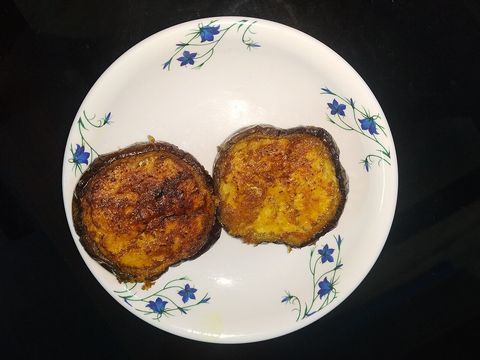
Begun Bhaja
Begun bhaja is thick slices of brinjal rubbed with turmeric, salt and a little sugar, then fried in mustard oil until browned outside and cr…
Vegetarian · VeganRecipeBengali Shukto (Mixed Vegetable Bitter Curry)
Shukto is a traditional Bengali mixed vegetable curry from West Bengal, built on bitter gourd and a medley of seasonal vegetables in a light…
Vegetarian · VeganRecipe