
North Indian · Breakfast
Poori Bhaji
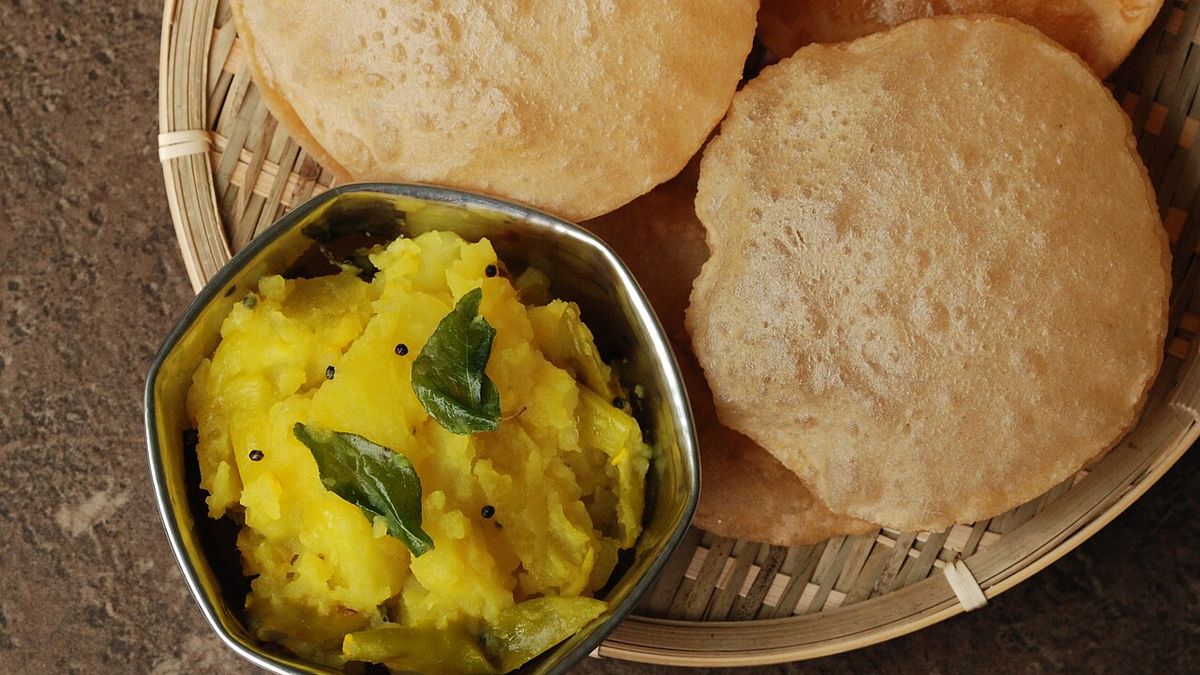
Poori bhaji is deep-fried puffed wheat bread served with a soft, turmeric-yellow potato curry, a favourite breakfast and festive meal across much of India. Success rests on two things that work together: a dough stiffer than roti dough, and oil hot enough that each poori balloons within seconds of going in.
- Prep
- 30 min
- Cook
- 35 min
- Total time
- 1 hr 5 min
- Servings
- 4
- Vegetarian
- Vegan
Ingredients
- 2 cups (about 260 g) whole wheat atta
- 1 tbsp fine sooji (rava), optional, for a crisper shell
- 1/2 tsp salt, for the dough
- 1 tbsp oil, for the dough
- 1/2 cup (about 120 ml) water, added a little at a time
- 500 ml neutral oil, for deep frying
- 500 g potatoes (about 4 medium)
- 2 tbsp oil, for the bhaji
- 1 tsp mustard seeds
- 1/2 tsp cumin seeds
- 1/4 tsp hing (asafoetida)
- 10 curry leaves
- 2 green chillies, slit
- 1 inch ginger, finely chopped
- 1 large onion (about 150 g), thinly sliced
- 1/2 tsp turmeric powder
- 1 tsp salt, for the bhaji
- 3/4 cup hot water
- 1 tbsp lemon juice
- 2 tbsp chopped fresh coriander
NNWA health note
Poori bhaji is a pleasure meal, and it is best enjoyed that way. Deep frying adds a good deal of fat to a wheat bread, and the bhaji is mostly potato, so the plate is high in refined energy and low in protein and vegetables. Two or three pooris with a bowl of curd or a side of chana makes it a more balanced breakfast. For someone managing diabetes or heart disease, it is one to discuss with a doctor or dietitian and keep for occasions.
Method
- 01
Pressure cook the potatoes in water to cover for 3 whistles on medium heat and let the pressure fall by itself. Peel them while warm and break them into rough chunks by hand, since the torn edges thicken the bhaji.
- 02
Mix the atta, sooji, salt and 1 tbsp oil, then add water a spoonful at a time and knead for 5 minutes. The dough should be smooth and distinctly firmer than roti dough, holding a thumb dent without sticking. Cover and rest it for 20 minutes.
- 03
Heat 2 tbsp oil in a pan on medium heat and add the mustard seeds. When they crackle, after about 30 seconds, add the cumin, hing, curry leaves, chillies and ginger and stir for 30 seconds until the kitchen smells sharp and gingery.
- 04
Add the onion and cook on medium heat for about 4 minutes until soft and translucent, without letting it brown. Stir in the turmeric for 20 seconds so it loses its raw, dusty smell.
- 05
Add the potatoes, salt and hot water and simmer on low heat for 6 to 8 minutes, mashing a few pieces against the pan, until the liquid turns thick and pale yellow. Take it off the heat, stir in the lemon juice and coriander, and cover.
- 06
Divide the dough into 16 balls and keep them under a damp cloth. Roll each on a lightly oiled board to about 10 cm across and 2 mm thick, keeping the edges as thick as the centre. Use a smear of oil and no dry flour, since flour burns in the oil.
- 07
Pour the frying oil into a deep kadhai, no more than half full, and heat on medium-high for 5 to 6 minutes. Drop in a pinch of dough: it should rise to the surface within 2 to 3 seconds in a lively ring of bubbles, which is roughly 180 C.
- 08
Slide in one poori away from you and press it gently with the back of a slotted spoon for a few seconds until it puffs. Flip it and fry for 20 to 30 seconds more until golden with fine blisters.
- 09
Lift it out, hold it over the kadhai for a moment to drain, and fry the rest one at a time, nudging the heat down if they colour too fast. Serve straight away with the hot bhaji, and leave the oil to cool fully before moving the kadhai.
Last reviewed on 2 November 2026.
NNWA publishes the name and qualifications of everyone who writes and checks its material. You can see the full teaching team on the faculty page.
A breakfast with many names
Fried wheat bread with potato is eaten across most of India, and each region seasons the potato its own way. This recipe gives the dry-tempered yellow version, with mustard seeds, curry leaves and no tomato, which is the bhaji of Mumbai and Gujarat and close to the poori masala of the South. In Delhi and much of Uttar Pradesh the same bread comes with a thinner aloo curry built on tomato and ground spices, and in Punjab it is often paired with suji halwa and chickpeas. It turns up at weekend breakfasts, on railway platforms, at weddings and on religious feast days, usually with the pooris arriving hot from the kadhai.
The two things that make a poori puff
A poori puffs because water in the dough turns to steam faster than it can escape, and the outer layer sets into a balloon. That requires a firm dough, an even thickness and very hot oil. A soft dough drinks oil and comes out limp. A poori rolled thin at the edges and thick in the middle leaks steam at the edge and stays flat in patches. Oil that is too cool lets the bread sit and soak before it can rise.
Roll the pooris just before frying and keep them covered, because a dry skin cracks and lets the steam out. Rolling all sixteen in one go is fine if a damp cloth is over them, and a second person frying while you roll is how most households manage it. Roll on oil, not flour. Loose flour falls into the kadhai, burns and leaves black specks on every poori that follows.
Frying safely at home
Hot oil deserves respect, especially with children around. Keep the kadhai no more than half full, on a stable burner, with the handles turned inwards. Dry the slotted spoon and your hands before you start, because water makes hot oil spit. If the oil begins to smoke, turn the flame off and let it settle. If it ever catches fire, turn off the gas and cover the pan with a metal lid; never pour water on it. Filter leftover oil once it is cold and use it for a sabzi soon after, and throw it away once it turns dark, foams or smells stale. There is more on choosing oil in the cooking oil guide.
Rescuing pooris and bhaji
Pooris that drink oil usually mean the dough is too soft or the oil too cool. Knead a spoonful of dry atta into the remaining dough, rest it for five minutes and raise the heat. Pooris that darken before they puff mean the oil is too hot, so lower the flame and test again with a pinch of dough. If they puff and then collapse on the plate, that is normal for a thin poori; a slightly thicker roll holds its shape longer.
A bhaji that tastes flat almost always needs more salt or lemon rather than more spice. If it has become gluey, loosen it with a splash of hot water. If it has gone watery, mash a few more pieces of potato and simmer for two minutes.
Substitutions and a lighter plate
If curry leaves are hard to find, leave them out and add a little extra coriander at the end. Ghee is a traditional frying medium in some homes and gives a lovely smell, but the dish is then no longer vegan. Mustard oil suits an eastern version; heat it until it just smokes, then let it cool slightly before adding the temper.
There is no honest light poori. An air fryer or a shallow pan will not produce the puff, and the result is simply a hard roti. The lighter way to eat this meal is to keep the bhaji and serve it with phulkas or multigrain roti, or to eat fewer pooris with a bowl of curd on the side. The sourced figures on the puri dish page show what each one adds.
Serving and storing
Serve with a pickle, sliced onion and a glass of spiced buttermilk, which cuts the richness well. Pooris are at their best in the first ten minutes. For a journey, roll them a little thicker and fry them slightly longer so they stay soft rather than leathery. They keep for a day wrapped in a clean cloth at room temperature, and a brief warm on a dry tawa brings back some softness.
The bhaji keeps for two days in a closed container in the refrigerator if it is cooled and put away within two hours. It thickens when cold, so add a splash of water and reheat on low heat until steaming hot right through, then finish with a squeeze of fresh lemon.
Learn the science
Healthy Eating & Everyday Wellness
This dish's nutrition reasoning is taught in full in this NNWA course.
What people ask about Poori Bhaji
Can the poori dough be made the night before?
It can, but it softens in the refrigerator as the flour absorbs water and the pooris take on more oil. If you do, knead in a spoonful of dry atta the next morning and let the dough come to room temperature before rolling.
Why do my pooris go hard after a few minutes?
They were usually rolled too thin or fried too long at too low a heat, which dries the bread out. A slightly thicker poori fried quickly in hotter oil stays tender for longer, and a teaspoon of oil in the dough helps as well.
Is it possible to make poori with maida?
Yes, and maida pooris are paler and softer, closer to the Bengali luchi. Whole wheat atta gives the nuttier taste and slightly firmer bite this recipe is written for. A half-and-half mix is common in some homes and works without any other change.
How many pooris does this make per person?
The dough makes about 16 pooris of around 10 cm, which is four each for four people as a full meal. For a breakfast with other dishes on the table, two or three each is generous, so the recipe stretches further.
Should the bhaji be thick or runny?
It should be loose enough to scoop but thick enough to cling to the bread, like a soft mash with chunks in it. It tightens as it sits, so stop cooking while it still looks slightly looser than you want.
More recipes
Aam Panna
Aam panna is a summer cooler made from cooked raw mango pulp, jaggery, roasted cumin and black salt, diluted with cold water when you want a…
Vegetarian · VeganRecipeAloo Gobi (Potato & Cauliflower Dry Curry)
Aloo gobi is a North Indian dry curry of potatoes and cauliflower cooked together with turmeric, cumin and a light blend of spices until ten…
Vegetarian · VeganRecipeAloo Matar
Aloo matar is a simple North Indian curry of potatoes and green peas in an onion and tomato base. It is one of the most commonly cooked home…
Vegetarian · VeganRecipe