
East Indian · Main course
Kosha Mangsho
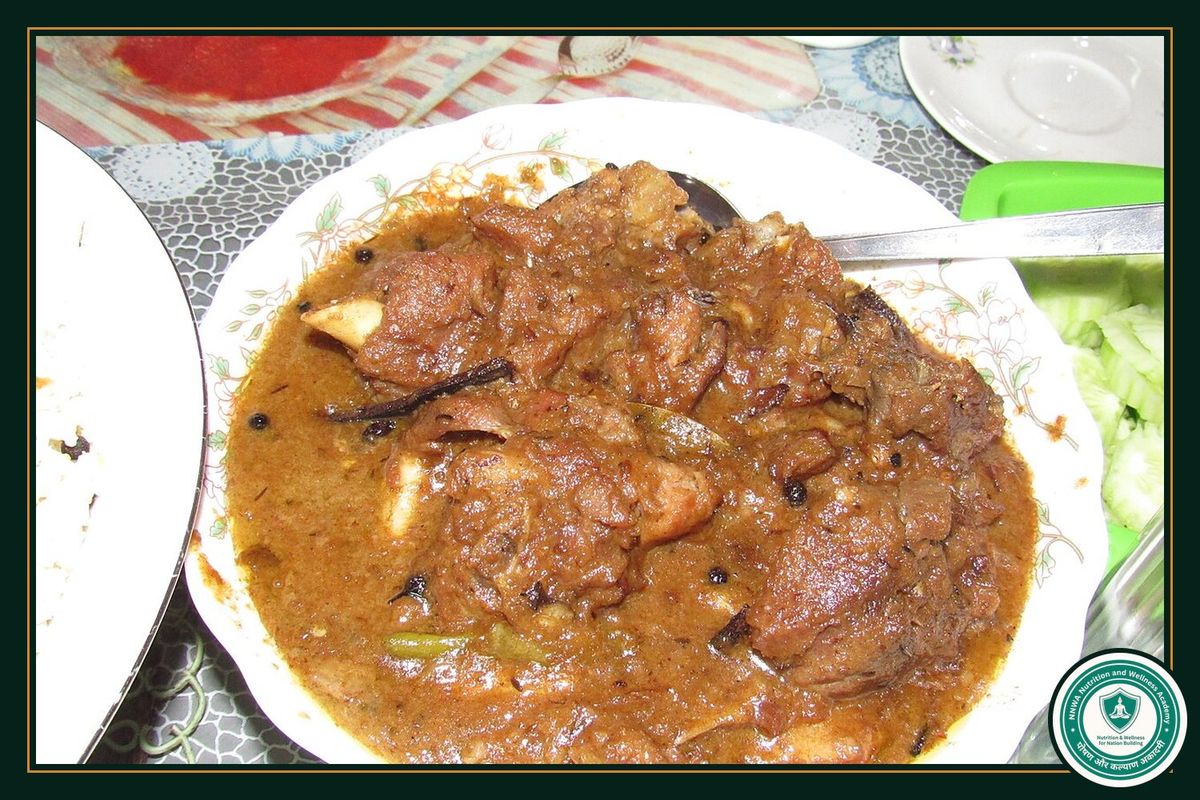
Kosha mangsho is a dark, thick Bengali mutton curry, made by slowly stirring marinated meat with browned onions in mustard oil until the masala clings to it. The koshano decides whether it succeeds: that long, patient frying over a low flame, an hour or so, builds the colour and depth no spice can replace.
- Prep
- 20 min
- Cook
- 2 hr
- Total time
- 2 hr 20 min
- Servings
- 4
- Energy per serving
- 582 kcalEstimated from this recipe's ingredients using IFCT 2017 and USDA values. Actual figures vary with portion and cooking.
- High-protein
- Gluten-free
- Festive
Ingredients
- 750 g goat mutton, curry cut, with bone
- 1/2 cup thick curd, whisked smooth
- 1 tablespoon ginger paste
- 1 tablespoon garlic paste
- 1 teaspoon turmeric powder
- 2 teaspoons Kashmiri red chilli powder
- 1 1/2 teaspoons salt, then to taste
- 1/2 cup mustard oil, divided
- 4 medium onions, about 400 g, thinly sliced
- 2 bay leaves (tej pata)
- 4 green cardamom pods
- 4 cloves
- 1 piece cinnamon, about 3 cm
- 1 teaspoon sugar
- 2 green chillies, slit
- 1 teaspoon cumin powder
- 1 teaspoon coriander powder
- 1 1/2 cups hot water, added in stages
- 1/2 teaspoon garam masala powder
- 1 teaspoon ghee (optional)
NNWA health note
Kosha mangsho gives you plenty of protein and iron from the mutton, but the fat is also substantial, both from the meat and from the mustard oil, so it is a feast dish rather than a weekday one. A sensible serving is two or three pieces with a good amount of vegetables and salad alongside, and less of the oily gravy. Choosing leaner cuts and spooning off the separated oil at the end makes a real difference. Anyone with raised cholesterol, heart disease or kidney disease should check with their doctor or dietitian how often red meat fits their diet.
Method
- 01
Rinse and pat the mutton dry. Rub it with the curd, ginger and garlic pastes, turmeric, chilli powder, salt and 2 tablespoons of the mustard oil. Cover and refrigerate for at least 2 hours, or overnight, then let it come to room temperature for 30 minutes.
- 02
Heat the remaining mustard oil in a heavy, wide kadhai over a medium-high flame for about 2 minutes until it just starts to smoke. Lower the flame to medium and wait 30 seconds. Add the bay leaves, cardamom, cloves, cinnamon and sugar, and stir for 30 seconds until the sugar turns amber and the spices smell warm.
- 03
Add the onions and fry over a medium flame for 15 to 18 minutes, stirring often, until they are evenly deep golden brown, with no pale patches. Keep going, and do not hurry this stage, since the colour of the final dish starts here.
- 04
Add the green chillies and the mutton along with all its marinade. Raise the flame to medium-high and stir for 5 minutes until the meat loses its raw pink and the liquid begins to boil.
- 05
Stir in the cumin and coriander powders, then lower the flame to medium-low. Now the koshano begins: cook uncovered for 45 to 60 minutes, stirring every couple of minutes and scraping the bottom. When the masala starts to stick, splash in 2 tablespoons of the hot water and scrape it free.
- 06
Watch the colour move from orange to brick red to a deep brown. The dish is ready for the next stage when the oil separates clearly at the edges, the masala clings to the meat and the smell has turned rich and roasted with no raw edge.
- 07
Add 1 cup of the hot water, stir, cover and simmer on a low flame for 30 to 45 minutes, checking every 10 minutes, until a knife slips easily through the thickest piece and the meat is coming away from the bone. Add a little hot water if it dries out too soon.
- 08
Uncover, raise the flame to medium and cook for 3 to 5 minutes, stirring, until the gravy is thick and dark and coats each piece, with oil pooling at the side. There should be no thin liquid left.
- 09
Stir in the garam masala and the ghee, if using. Turn off the flame, cover the pan and rest for at least 15 minutes before serving.
Last reviewed on 2 November 2026.
NNWA publishes the name and qualifications of everyone who writes and checks its material. You can see the full teaching team on the faculty page.
Where does kosha mangsho come from?
Mangsho means meat in Bengali, and for many Bengali families it means goat. Kosha comes from koshano, the slow frying and stirring of meat and masala. A Sunday lunch of mutton is an old Bengali custom, and this dish is its grandest form, with its dark, nearly dry gravy. It has been made famous well beyond the home by the old restaurants of Kolkata, which serve it with parathas, and it also turns up at weddings and during Durga Puja. It is rich, spicy and concentrated, unlike the thinner, potato-studded home-style mutton curry also known across Bengal.
The version given here is the classic home version: no tomato, plenty of onion, mustard oil and curd. Many households add a couple of halved potatoes after the koshano stage, and that is perfectly traditional too. Others add a little tomato or use more garam masala, which is a matter of family taste.
The technique that matters: koshano
This is one of those recipes where time is the main ingredient. With constant stirring on a low flame, the water in the marinade and onions evaporates, the sugars brown, and the meat's own juices reduce onto its surface. That slow browning builds the deep flavour and colour. A burst of high heat only scorches the masala and leaves the centre of the meat tough. A wide, heavy kadhai helps, because it gives moisture room to escape and it holds an even heat.
The splash of hot water is the key habit. When the masala sticks, a spoonful releases the browned layer from the pan and folds it back in, and this repeats many times. Cold water shocks the meat and slows cooking, so keep a pan of hot water nearby. A heavy hand with water at this stage turns it into a boil, so hold back until the koshano is done.
What goes wrong, and how do you rescue it?
If the curd splits and looks grainy at the start, that is usually because the marinade was cold or the flame too high. The grains melt into the gravy during koshano, so keep cooking. If the masala burns, stop stirring so the burnt layer stays on the bottom, tip the rest straight into a clean pan and continue. If the meat is still tough after the simmer, the animal was older, so add hot water, cover and give it another 20 to 30 minutes. If the gravy is pale, you rushed the onions or the koshano, and an extra 10 minutes of stirring with the lid off will help a great deal. If it tastes too salty, add a little more whisked curd or a potato with some hot water, and simmer until the taste softens.
Substitutions and a quicker or lighter way
Goat on the bone is traditional and gives the best gravy, and cuts from the shoulder or leg work very well. Lamb cooks quicker. Pressure cooking is a real time-saver and a recognised shortcut: complete the koshano for about 30 minutes, add 1 cup of hot water, pressure-cook over a medium flame for 3 to 4 whistles, let the pressure fall on its own, then cook off any liquid uncovered. It is a little less deep, but very good. Chicken also takes the method, with about half the time, but it is then kosha murgi and a different dish.
To lighten it honestly, reduce the mustard oil to 1/3 cup, use lean pieces, and spoon off the oil that collects at the end. Keep the onions and the time. If mustard oil is not to your taste, groundnut oil is a workable swap, but the dish will lose some of its Bengali character.
What goes with kosha mangsho?
The classic companions are soft luchi, a plain paratha, or steamed rice with a little of the gravy. Keep the rest of the plate simple: a sliced onion and cucumber salad with lemon, and a plain cholar dal if you want something more. Mishti doi in a small bowl is the traditional close to the meal. The Bengali diet chart shows how a heavy dish like this can sit within a wider week of eating, and for those comparing rich mutton dishes, rogan josh is a good one to read beside it.
Storing and reheating
Kosha mangsho often tastes better the next day, as the spices settle. Cool it quickly and refrigerate within 2 hours in a closed container, where it will keep for 3 days. Reheat it only once, in a pan with a few tablespoons of water, over a low flame, until it is steaming hot right through to the bone. It freezes well for up to 2 months. Thaw it overnight in the fridge and heat it thoroughly.
Learn the science
Sports Nutrition
This dish's nutrition reasoning is taught in full in this NNWA course.
What people ask about Kosha Mangsho
Is kosha mangsho the same as mutton curry?
They share a base, but kosha mangsho is cooked until nearly dry, so the gravy clings to the meat. A Bengali mangshor jhol is thinner, usually with potatoes, and is meant to be eaten over rice with plenty of its light, peppery gravy.
Can I use a pressure cooker for the whole recipe?
You can do the browning in an open cooker and then close the lid, but stirring in a wide kadhai gives a better colour since moisture escapes more quickly. Finish the slow frying before closing the cooker, or the taste stays flat.
Why add sugar to kosha mangsho?
The small spoonful caramelises in the hot oil and gives the gravy a dark colour with a faint, pleasant bitterness. It does not make the dish sweet. It is a traditional Bengali step, and leaving it out will only lighten the colour slightly.
Does mutton need to be marinated overnight?
Overnight gives deeper flavour and a little more tenderness, but it is not essential. Two hours in the fridge is a workable minimum. Keep raw meat covered and on the lowest shelf, and never marinate it at room temperature in warm weather.
Which cut of mutton should I ask the butcher for?
Ask for a curry cut from the shoulder or leg, with some bone and a little fat, in pieces of about 40 to 50 g. Young goat cooks faster and more tenderly, and an older animal will need a longer simmer at the end.
More recipes
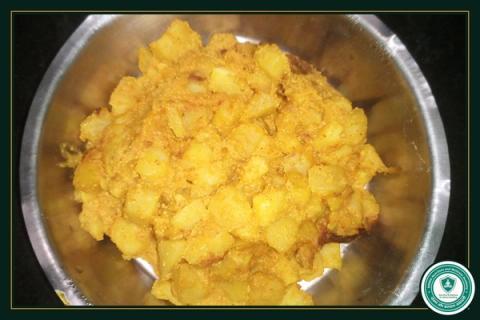
Aloo Posto (Bengali Potato & Poppy Seed Curry)
Aloo posto is a Bengali side dish from West Bengal made by simmering cubed potatoes in a ground white poppy seed paste with minimal spicing.…
VegetarianRecipe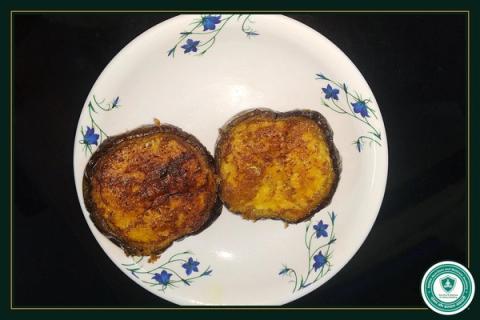
Begun Bhaja
Begun bhaja is thick slices of brinjal rubbed with turmeric, salt and a little sugar, then fried in mustard oil until browned outside and cr…
Vegetarian · VeganRecipe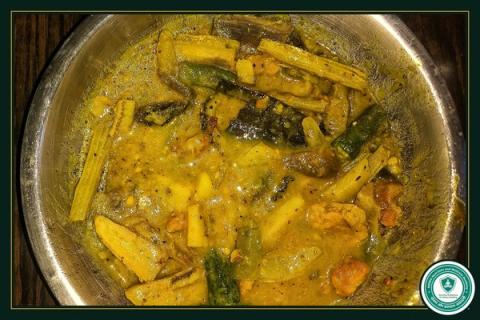
Bengali Shukto (Mixed Vegetable Bitter Curry)
Shukto is a traditional Bengali mixed vegetable curry from West Bengal, built on bitter gourd and a medley of seasonal vegetables in a light…
Vegetarian · VeganRecipe