
East Indian · Dessert
Chhena Poda
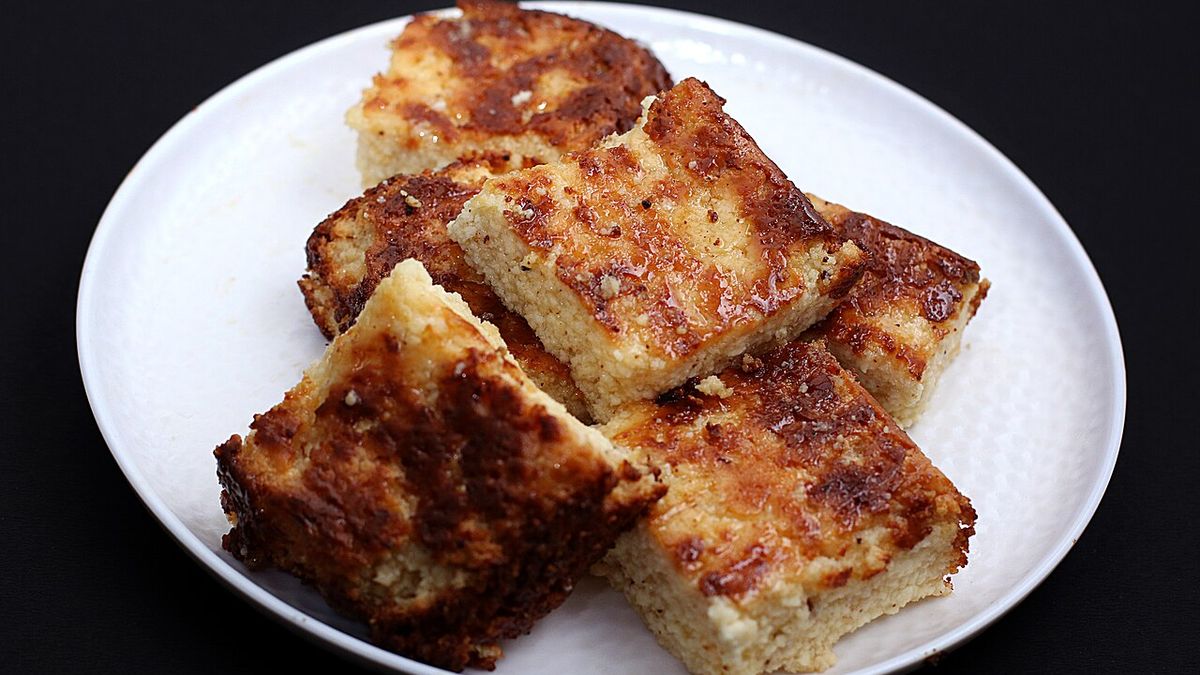
Chhena poda is the baked sweet of Odisha, made from fresh chhena, sugar, a little suji and cardamom, cooked until a dark caramelised crust encloses a soft, moist centre. Poda means burnt, and the dish depends on chhena that is drained but not squeezed dry, followed by a long, steady bake.
- Prep
- 1 hr 15 min
- Cook
- 55 min
- Total time
- 2 hr 10 min
- Servings
- 8
- Vegetarian
- Festive
Ingredients
- 2 litres full-fat milk
- 4 tablespoons lemon juice, mixed with 4 tablespoons water
- 3/4 cup (150 g) sugar
- 2 tablespoons fine suji (semolina)
- 1/2 teaspoon cardamom powder
- 2 tablespoons cashews, chopped
- 1 tablespoon raisins
- 1 tablespoon ghee, plus extra for the tin
- 1 large piece of banana leaf or sal leaves, to line the tin, optional
NNWA health note
Chhena poda is a sweet, and a rich one, with plenty of sugar and milk fat in each slice. It does carry milk protein and calcium, and it involves no deep frying, but that does not make it an everyday food. Think of a small wedge as a treat for a festival or a family visit. Cutting the sugar sharply will change the crust, so eat a smaller slice instead. Anyone with diabetes should follow their doctor or dietitian on sweets like this one.
Method
- 01
Bring the milk to a full boil in a heavy pot, stirring so it does not catch. Turn off the heat, wait 1 minute, then add the lemon water a spoonful at a time while stirring gently, until white curds separate from clear greenish whey.
- 02
Pour through a muslin-lined colander and rinse briefly under cold water to remove the lemon taste. Gather the cloth and hang it for 30 to 40 minutes. It should feel soft and moist but not dripping, and you should have about 400 g of chhena.
- 03
Tip the chhena onto a clean work surface or large plate and knead with the heel of your hand for 4 to 5 minutes, until there are no big grains and it feels smooth and slightly greasy on the palm.
- 04
Add the sugar, suji, cardamom, cashews, raisins and the ghee and mix thoroughly with your hand. The mixture will turn wetter and looser as the sugar dissolves, which is correct. Cover and rest for 15 minutes so the suji can absorb the moisture.
- 05
Heat the oven to 180 C with the rack in the middle. Grease a 7 inch round cake tin and line the base and sides with softened banana leaf or baking paper. To soften a banana leaf, pass it over a low flame for a few seconds until it turns glossy.
- 06
Pour in the mixture, level the top with a wet spoon and tap the tin on the counter twice. It should be about 1 1/2 inches deep, so that the centre stays moist while the outside browns.
- 07
Bake for 50 to 55 minutes, until the top is deep brown with dark patches, the edges are pulling away and a skewer in the centre comes out with only moist crumbs. If the top goes nearly black before 40 minutes, cover it loosely with foil.
- 08
Cool in the tin for at least 1 hour; it will set as it cools, and turning it out warm will break it. Run a knife around the edge, unmould onto a plate, and peel away the leaf or paper before cutting into wedges.
Last reviewed on 2 November 2026.
NNWA publishes the name and qualifications of everyone who writes and checks its material. You can see the full teaching team on the faculty page.
The dish and how it is eaten
Chhena poda comes from Odisha, and the Nayagarh district is commonly named as its home, where the story goes that a sweet maker put leftover chhena near the cooling fire overnight. Whether or not that is exactly how it began, the name is plain enough: poda means burnt. Traditional sweet shops wrap the mixture in sal leaves and bake it slowly in a wood-fired oven, which adds a smoky edge that a home kitchen will not quite match. It is sold by weight, eaten at room temperature and often offered on festivals, and unlike most Indian sweets it is baked rather than fried or simmered in syrup.
Getting the chhena right
The chhena for this dish is wetter than the kind you make for rasgulla or sandesh. Those need firm, kneaded curd that holds a shape. Here you are aiming for something closer to a thick batter once the sugar has gone in. Do not squeeze the cloth hard, and do not hang the curd for hours, since dry chhena bakes into a crumbly, chewy cake. Knead only until smooth. Full-fat milk matters too. Toned milk gives less chhena, and a tougher result. Rinsing out the lemon takes seconds and prevents any sour note in the finished sweet.
The bake and the crust
The dark crust is not a fault; it is the point. Sugar in the mixture caramelises against the hot tin, leaving a bitter-sweet edge that balances the milky centre. A pale chhena poda is an underbaked one, and often wet in the middle. Oven temperatures vary, so judge by colour and by the skewer rather than the clock. Line the tin well, because the sugar glues itself to bare metal. Some cooks caramelise an extra two tablespoons of sugar in the tin first to get a glossy top after turning out, which is a fine addition if you want it.
Cooking without an oven
A stove version works, and many home cooks in Odisha use it. Pour the mixture into a greased, lined heavy kadhai or an old aluminium pan with a tight lid, and rest that on a flat iron tawa over the lowest flame. Cook covered for 45 to 55 minutes without lifting the lid in the first half hour. The base will be the dark side, so turn it out upside down, and if you like, brown the pale top in a dry pan for a few minutes. A pressure cooker without its whistle and gasket can also serve as the pan, on the same low flame. It takes some attention, since there is no way to see inside.
Common mistakes and their rescues
If the centre is wet after the skewer test, return it to the oven at 160 C for 10 to 15 minutes with foil over the top. A sweet that is dry and crumbly usually began with over-drained chhena; it cannot be repaired, but warmed slices with a spoon of rice kheer make a good dessert out of it. A very sour result means the lemon was not rinsed out. If the base has burnt badly, trim it with a serrated knife once it is cold, since the bitter layer comes away cleanly. Cracks on top do no harm and are part of the look.
Substitutions and storing
Lemon juice can be swapped for 3 tablespoons of white vinegar in water, or for sour curd whey saved from a previous batch. Bought fresh paneer can stand in if it is soft, unpressed and very fresh, but it should be blended with a splash of milk first. It gives a denser result than home-made chhena. Use jaggery for part of the sugar and you get a deeper colour and an earthier flavour, though no real nutritional advantage. Refrigerate it covered for up to 4 days. Bring it back to room temperature before eating, or warm slices for a few seconds. Many people find the flavour deeper on the second day. It freezes reasonably well for a month, wrapped tightly in slices.
Learn the science
Culinary Nutrition (Nutrition Chef)
This dish's nutrition reasoning is taught in full in this NNWA course.
What people ask about Chhena Poda
Why did my chhena poda turn out rubbery?
Rubberiness usually comes from overcooking the milk curds in the first stage, or from adding too much acid while the milk is still on the flame. Take the pot off the heat first and add lemon only until the whey runs clear.
Can I reduce the sugar in chhena poda?
A modest cut, say to 120 g, still works, but the crust gets paler and the texture slightly drier because the sugar helps hold moisture. Below that the sweet stops behaving as it should, so a smaller slice is the better answer.
Does chhena poda need baking powder?
No. This is not a cake and needs no leavening. The small amount of suji only soaks up moisture and helps the wedge hold its shape, and adding raising agents would make a spongy texture that is far from the original.
Can chhena poda be made in a microwave?
A microwave cooks it through but gives no real crust, so the taste of caramel is missing. If that is all you have, use a convection mode, or brown the top and base in a dry heavy pan afterwards.
How do I know the milk is fresh enough to split cleanly?
Fresh full-fat milk boils smoothly and splits into firm white curds with clear whey. If the whey stays milky even after more lemon, the milk may be heavily processed; a long-life carton often gives a poor, soft yield of chhena.
More recipes
Aloo Posto (Bengali Potato & Poppy Seed Curry)
Aloo posto is a Bengali side dish from West Bengal made by simmering cubed potatoes in a ground white poppy seed paste with minimal spicing.…
VegetarianRecipe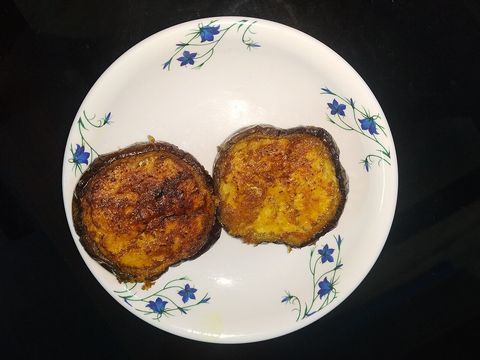
Begun Bhaja
Begun bhaja is thick slices of brinjal rubbed with turmeric, salt and a little sugar, then fried in mustard oil until browned outside and cr…
Vegetarian · VeganRecipeBengali Shukto (Mixed Vegetable Bitter Curry)
Shukto is a traditional Bengali mixed vegetable curry from West Bengal, built on bitter gourd and a medley of seasonal vegetables in a light…
Vegetarian · VeganRecipe