
North Indian · Breakfast
Gobi Paratha
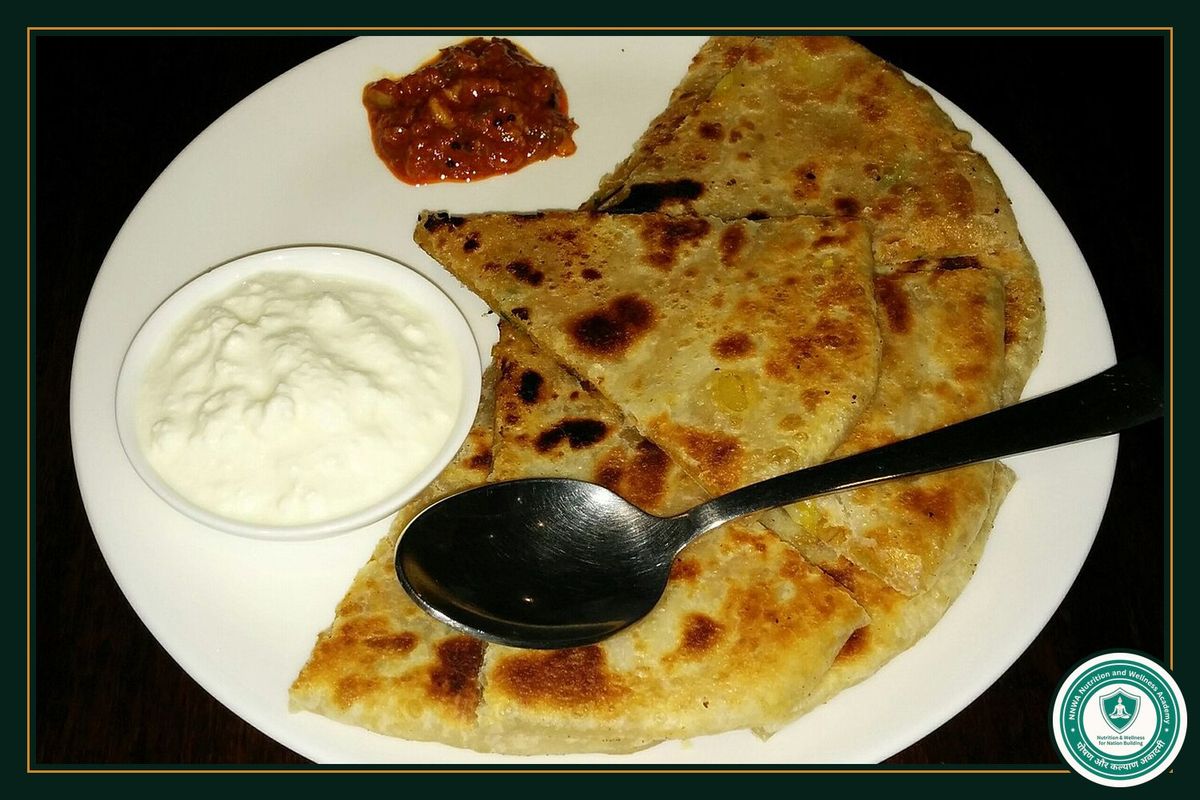
Gobi paratha is a Punjabi breakfast flatbread of whole wheat dough stuffed with finely grated, spiced cauliflower and cooked on a tawa with ghee. Moisture decides everything: salt the stuffing only at the last minute, because salted cauliflower weeps water within minutes, and a wet filling tears the dough as you roll it.
- Prep
- 35 min
- Cook
- 25 min
- Total time
- 1 hr
- Servings
- 3
- Energy
- 181 kcal, 1 gobi paratha
- Vegetarian
- Kid-friendly
Ingredients
- 2 cups (about 260 g) whole wheat atta, plus 1/4 cup for dusting
- 1/2 tsp salt, for the dough
- 1 tsp oil, for the dough
- 2/3 cup (about 160 ml) water, added a little at a time
- 1 small cauliflower (about 400 g florets), finely grated
- 1 tsp oil, for the stuffing
- 1/2 tsp ajwain (carom seeds)
- 1 green chilli, finely chopped
- 1 inch ginger, grated
- 2 tbsp finely chopped fresh coriander
- 1/2 tsp Kashmiri red chilli powder
- 1/2 tsp roasted cumin powder
- 1/2 tsp amchur (dried mango powder)
- 1/4 tsp garam masala
- 3/4 tsp salt, for the stuffing
- 2 to 3 tbsp ghee, for cooking
NNWA health note
A gobi paratha is more nourishing than its reputation suggests: whole wheat provides fibre and steady energy, and the cauliflower adds vitamin C and more fibre for not much extra energy. What decides its place in a daily diet is the amount of ghee and how many you eat. One or two parathas with curd and a little ghee make a solid breakfast, and a bowl of curd also adds the protein this meal is short of. Anyone managing blood sugar should stick to one with plenty of curd and salad, and take personal advice on portions from their dietitian.
Method
- 01
Mix the atta, 1/2 tsp salt and 1 tsp oil, then add water a little at a time and knead for 5 minutes into a soft, smooth dough, softer than poori dough and about like roti dough. Cover and rest for 20 minutes.
- 02
Grate the cauliflower florets and tender stalks on the fine holes of a box grater until they look like coarse rice. Heat 1 tsp oil in a wide pan on medium heat, add the ajwain for 15 seconds, then the cauliflower, and stir for 4 to 5 minutes until dry and no longer raw-smelling.
- 03
Spread the cauliflower on a plate and cool it fully, about 10 minutes, then mix in the chilli, ginger, coriander and dry spices. Hold back the salt. Taste it once you have salted a spoonful, to check the seasoning.
- 04
Divide the dough and the stuffing into 6 portions each. Roll a dough ball to about 10 cm across with a thick centre. Stir the salt through the filling now, right before you start stuffing, then place one portion in the middle.
- 05
Pull the edges up and over the filling, pinch them together firmly at the top and twist off any extra dough. Flatten the ball between your palms, seam-side down, and dust generously with dry atta.
- 06
Roll gently with light, even pressure into a 15 to 18 cm circle, turning often and dusting as needed. If the filling shows through a small tear, patch it with a pinch of dry flour and keep going without pressing harder.
- 07
Heat a tawa on medium-high heat for 2 minutes, until a sprinkle of atta browns in about 10 seconds. Lay the paratha on the tawa and cook for 30 to 40 seconds until small bubbles appear, then flip it.
- 08
Spread 1/2 tsp ghee on the top, cook for 45 seconds, flip again and ghee the other side. Press the edges with a flat spatula for about 1 to 2 minutes in total, turning, until golden brown spots cover both sides and it smells toasty.
- 09
Move it to a plate lined with a clean cloth and repeat with the remaining dough. Stack the parathas loosely, and serve hot with curd and pickle.
Last reviewed on 2 November 2026.
NNWA publishes the name and qualifications of everyone who writes and checks its material. You can see the full teaching team on the faculty page.
A winter breakfast from Punjab
Stuffed parathas are at the heart of the Punjabi breakfast, and gobi is the winter version, cooked when the cauliflower in the market is white, tight and cheap. The same technique produces aloo paratha and paneer paratha, but cauliflower is the trickiest of the three, because it is wet, loose and has no starch to hold it together. Across North India, gobi paratha is commonly eaten at breakfast with a blob of white butter, curd and pickle, and packed in tiffins for lunch. Dhabas along the highways also serve them through the cooler months.
Controlling the water
Cauliflower is full of water, and salt pulls it out quickly. Salted and left for ten minutes, a bowl of grated gobi sits in a small puddle, and that liquid will tear the dough or leak onto the tawa. The older dhaba method handles this by squeezing the grated gobi after salting and stuffing it raw, or by salting it right at the end and working fast. That method works for practised hands and gives a fresh, slightly crunchy filling.
This recipe gives the gobi four minutes in a hot pan before spicing, a shortcut that makes life far easier for a first-timer. The filling is drier, the raw cabbage-like smell is gone, and it binds better, at the cost of a little freshness. Salt still goes in last, stirred through right before you start rolling. If you are working in batches, salt only a third of the filling at a time.
Grate finely. Coarse pieces of floret act like small stones and push through the dough. A food processor on short pulses works well, but stop as soon as the pieces look like rice, or you will end up with a wet paste.
Sealing and rolling
A soft dough stretches around the filling without cracking, so resist the urge to make it firmer. The dough circle should be thick in the middle, because that is the part under most strain. Keep the filling a little smaller than feels right. A first-timer does best with a stuffing ball roughly the same size as the dough ball. Experienced cooks can manage more. Roll using the weight of the pin alone, moving from the middle outwards, and lift and turn the paratha often so that it does not stick.
Rescuing a torn paratha
A small tear is no disaster. Press a pinch of dry flour on it and roll on; the patch cooks in with no trouble. A big tear means the stuffing was wet or too much. Scoop out some of the filling, press the sides back together and roll again more thickly. If the filling has gone wet in the bowl, drain it through a sieve, squeeze it in a cloth, and sprinkle in a spoonful of roasted besan or atta to soak up what is left. If your parathas turn out leathery, the dough was too stiff or the tawa too cool, since the bread dried out before it browned. Raise the heat and shorten the time.
Swaps and a lighter version
Finely grated radish, known as mooli, or grated carrot can be mixed in, with a similar water warning. Chopped methi leaves make a nice addition in winter, and amchur can be swapped for a squeeze of lemon. Oil can replace ghee to make a vegan paratha, as long as nothing dairy goes on the plate. Mixing some besan or a multigrain flour into the atta works, but the dough tears more easily, so roll it thicker. To lighten the meal, cook with a dry tawa until almost done, then brush lightly with half a teaspoon of ghee per paratha. They stay nearly as tasty, and the gobi paratha dish page gives sourced figures per piece for comparison.
Serving and storing
Serve straight from the tawa with thick curd, a sharp pickle and a dab of white butter if it is an occasion. A cup of masala chai is the common morning pairing, while a glass of spiced buttermilk fits a lunch. For a balanced everyday plate, the healthy eating essentials course looks at how a dish like this can fit into a normal week.
Cooked parathas keep for a day at room temperature in a closed box, or two days in the refrigerator, wrapped in a clean cloth. Warm them on a hot tawa for a minute on each side. Half-cooked parathas freeze well for a month. Cook them dry on the tawa until just set with no colour, cool them, stack with baking paper between each and freeze them in a bag. They can go straight from the freezer onto a medium tawa with a little ghee. Unsalted, cooled filling keeps for a day in the refrigerator, and the dough for two days, so most of the work can be done the night before.
Learn the science
Healthy Eating & Everyday Wellness
This dish's nutrition reasoning is taught in full in this NNWA course.
What people ask about Gobi Paratha
Should the cauliflower be boiled first?
No. Boiled cauliflower holds far too much water and turns mushy, which is what most torn parathas trace back to. Grating it raw and either dry-frying it briefly or salting at the last moment keeps the filling workable and full of flavour.
Can the stuffing be made the night before?
Yes, as long as the salt stays out until you are ready to roll. Keep the cooled, spiced cauliflower in a closed box in the refrigerator. Next morning, let it come to room temperature, then stir in the salt and begin stuffing at once.
Why does the filling taste bland inside the paratha?
The bread dulls the seasoning, so the filling should taste a bit too strong on its own. Add a little more amchur, chilli or salt until it tastes sharper than you would want in a sabzi, and the finished paratha will be balanced.
Can children eat gobi paratha?
It is a good way to get vegetables into a child, and most children like it. Leave out the green chilli and use less red chilli powder, roll it a little smaller and cool it slightly first, as the steam inside stays hot for a while.
The ingredients, by the numbers
More recipes
Aam Panna
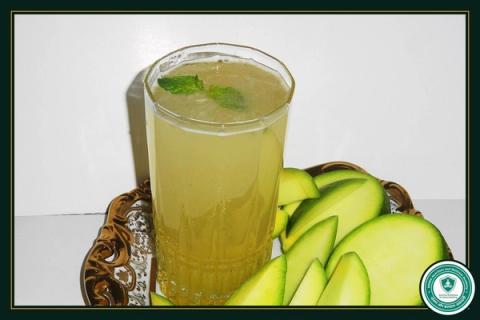
Aam panna is a summer cooler made from cooked raw mango pulp, jaggery, roasted cumin and black salt, diluted with cold water when you want a…
Vegetarian · VeganRecipe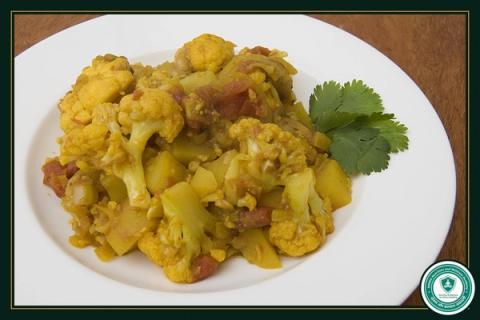
Aloo Gobi (Potato & Cauliflower Dry Curry)
Aloo gobi is a North Indian dry curry of potatoes and cauliflower cooked together with turmeric, cumin and a light blend of spices until ten…
Vegetarian · VeganRecipe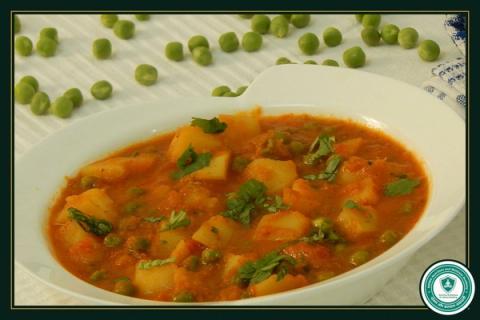
Aloo Matar
Aloo matar is a simple North Indian curry of potatoes and green peas in an onion and tomato base. It is one of the most commonly cooked home…
Vegetarian · VeganRecipe