
West Indian · Main course
Dal Dhokli
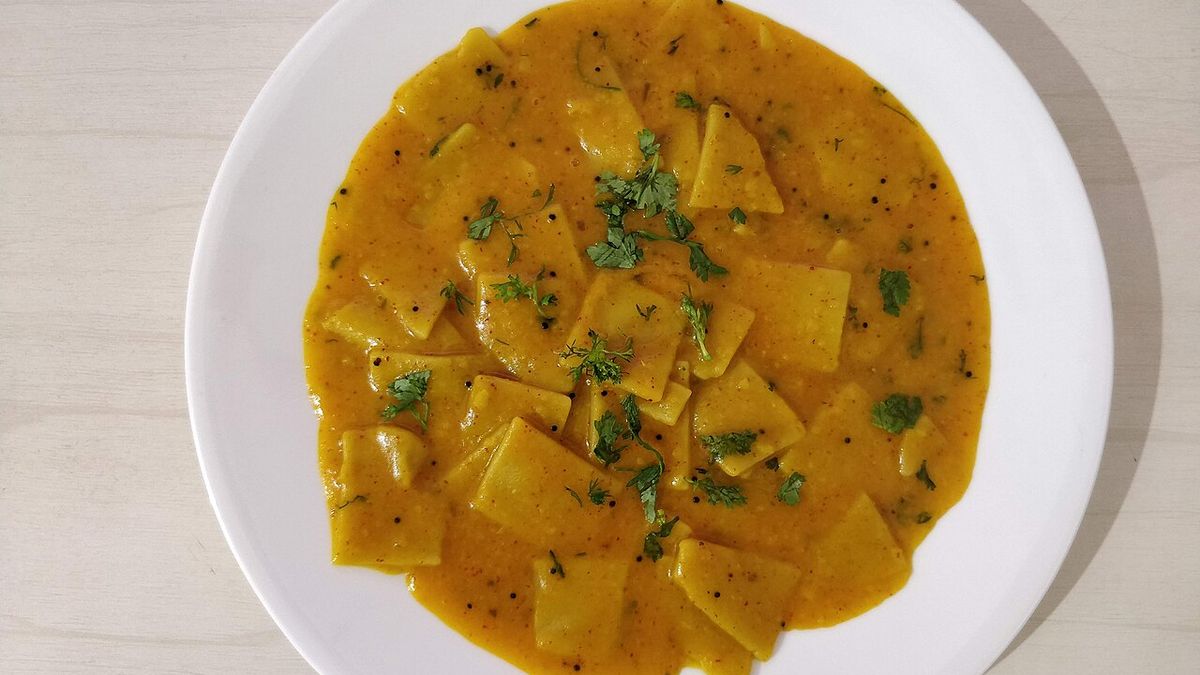
Dal dhokli is a Gujarati one-pot meal of spiced wheat flour diamonds simmered in thin, sweet and sour toor dal with peanuts. It depends on keeping the dal loose and at a rolling boil when the dhokli go in, so they cook through without sticking or turning the pot into paste.
- Prep
- 25 min
- Cook
- 40 min
- Total time
- 1 hr 5 min
- Servings
- 4
- Vegetarian
Ingredients
- 3/4 cup (150 g) toor dal, rinsed and soaked for 20 minutes
- 1/2 teaspoon turmeric powder, for the dal
- 5 cups water, plus hot water to adjust
- 1 cup whole wheat atta, for the dhokli
- 2 tablespoons besan, for the dhokli
- 1/4 teaspoon ajwain
- 1/4 teaspoon turmeric powder, for the dhokli
- 1/2 teaspoon Kashmiri chilli powder, for the dhokli
- 1/2 teaspoon salt, for the dhokli
- 1 tablespoon oil, for the dhokli
- 1/4 cup raw peanuts
- 2 tablespoons ghee
- 1 teaspoon mustard seeds
- 1/2 teaspoon cumin seeds
- 1/4 teaspoon fenugreek seeds
- 2 cloves and 1 small piece of cinnamon
- 2 dried red chillies
- A pinch of hing
- 8 curry leaves
- 1 medium tomato, chopped
- 1 inch ginger and 1 green chilli, crushed together
- 1 1/2 teaspoons Kashmiri chilli powder, for the dal
- 1 1/2 teaspoons salt, or to taste
- 4 kokum petals, or 1 tablespoon tamarind pulp
- 2 tablespoons grated jaggery
- 2 tablespoons coriander leaves, chopped
NNWA health note
Dal dhokli is a complete and comforting bowl: toor dal, peanuts and wheat together give a fair amount of protein and fibre, with no need for rice or roti alongside. Keep the portion in mind, though, since the dish combines grain and pulse and carries jaggery in the broth. A moderate bowl with a raw salad or a bit of cooked vegetable is a better plate than a very large helping on its own. Anyone with a nut allergy should leave the peanuts out, and those managing blood sugar can use less jaggery.
Method
- 01
Mix the atta, besan, ajwain, turmeric, chilli powder and salt in a bowl, rub in the oil and add about 1/3 cup of water a little at a time. Knead for 3 minutes into a dough firmer than chapati dough, cover and rest for 15 minutes.
- 02
Pressure cook the drained dal with the turmeric, peanuts and 3 cups of the water on medium heat for 3 whistles, then on low for 3 minutes. Let the pressure fall naturally, then whisk until the dal is smooth. The peanuts should be soft enough to bite through easily.
- 03
Heat the ghee in a wide, heavy pot on medium heat. Add the mustard seeds and let them pop for about 20 seconds, then add the cumin, fenugreek, cloves, cinnamon and red chillies and stir for 15 seconds. Add the hing and curry leaves, standing back as they sputter.
- 04
Add the tomato, ginger and green chilli with the chilli powder and cook for 4 minutes, until the tomato softens and the ghee separates at the edges. Pour in the dal and the remaining 2 cups of water, and add the salt, kokum and jaggery.
- 05
Bring to a simmer on medium heat and cook for 8 minutes, stirring now and then, until the sweet, sour and hot notes come together. The dal should look like a thin soup, so add hot water if it coats the spoon, because the dhokli will thicken it a good deal.
- 06
Divide the dough into 3 balls. Roll each into a thin 8 inch chapati, about the thickness of a coin, and let it dry for a minute or two. Cut into diamonds about 1 1/2 inches wide with a knife, keeping the pieces loosely separated.
- 07
Raise the heat so that the dal is at a rolling boil. Drop the dhokli in a few at a time, stirring gently between handfuls so they do not clump. Boil for 3 minutes without covering and stir once from the base.
- 08
Lower the heat to medium-low and simmer uncovered for 10 to 12 minutes, stirring every few minutes from the bottom, until a piece cut in half shows no pale dry core, and the dal is the consistency of a thick soup. Add hot water if it gets too heavy.
- 09
Taste for salt, sourness and sweetness and adjust. Scatter over the coriander, turn off the heat and rest for 5 minutes before ladling into deep bowls.
Last reviewed on 2 November 2026.
NNWA publishes the name and qualifications of everyone who writes and checks its material. You can see the full teaching team on the faculty page.
The dish and how it is eaten
Dal dhokli, sometimes called varan phal in Maharashtra and with a close relative in Rajasthan, is a Gujarati comfort meal: a pot of thin, gently sweet and sour dal in which pieces of spiced wheat dough are simmered like pasta. Families often make it from leftover dal on a day when no one wants to make rotis, and it is served in deep bowls with a generous spoon of ghee on top. This recipe gives the Gujarati version, with kokum and jaggery in the broth and peanuts for bite. Maharashtrian versions are usually less sweet. It is one of those dishes where each household has opinions on how sweet it should be, so taste as you go.
The dough and the boil
Dhokli dough is firmer than chapati dough, so that the pieces keep their shape in simmering liquid. Roll it thin, since thick diamonds stay stodgy in the middle and take far longer than the dal can stand. A short rest on the board after rolling helps stop them sticking to each other. The key moment is the drop. The dal needs to be boiling hard when the dhokli go in, as that sets their outsides before they can glue together, and you should add them in stages. A wide, heavy pot gives them room to move, and it makes a big difference to the finish, because a narrow one encourages clumping.
Common mistakes and their rescues
Too thick is by far the most common complaint. As flour leaches from the dhokli, the dal thickens steadily, even after the heat is off. Keep hot water to hand and thin it without fear, then correct the salt and jaggery. If the dhokli have clumped into a mass, use a spoon to separate them, and simmer for a few minutes more. If they are doughy at the centre, they were rolled too thick or cooked too briefly; continue on a low simmer with extra water. If the pot has caught on the base, do not scrape, but ladle the good part into a clean pot, leaving the burnt layer behind. Gummy dhokli usually mean the dough was too soft, and a touch more atta next time will fix it.
Substitutions and a lighter version
Kokum gives a gentler sourness, and tamarind or a tablespoon of lemon juice can stand in. Amchur is another reasonable option if nothing else is available. If you have leftover plain dal tadka you can thin it and make a quick version, a shortcut many Gujarati kitchens rely on, adding the sweet and sour notes at the same time. Leftover chapatis cut into strips can replace the dough on a very busy night, and they need only 5 minutes in the pot, though they soften and lack bite. To make it vegan, temper in oil rather than ghee. For a lighter bowl, reduce the ghee to 1 tablespoon, halve the peanuts, stir in a cup of chopped bottle gourd or spinach with the dal, and use less dhokli and more dal. It keeps the comfort of the original with more vegetables in the pot.
Serving it
Dal dhokli needs little more than a spoon of ghee and perhaps a piece of papad, with some raw onion or a salad on the side. Many Gujarati families also serve plain rice for the last of the dal, and a glass of masala chaas is a welcome cool contrast. A small starter of dhokla fits if you are feeding guests. The serving-level figures are on the dal dhokli dish page.
Storing and reheating
Dal dhokli is at its best fresh, as the dhokli keep drinking up liquid and soften as they stand. It keeps for up to 2 days in a closed container in the fridge, and you should cool it within two hours. The pot sets into a near-solid mass, so add plenty of hot water, then heat it on low, stirring gently, until it bubbles, and adjust the seasoning. Do not freeze the finished dish, as the dough breaks down. Instead, freeze the sweet and sour dal base for a month, and make the dhokli fresh on the day.
Learn the science
Healthy Eating & Everyday Wellness
This dish's nutrition reasoning is taught in full in this NNWA course.
What people ask about Dal Dhokli
Can I use masoor or moong dal instead of toor?
Moong dal works well and gives a lighter result, though it lacks the slightly earthy depth of toor. Masoor tends to break down into a thick paste, which leaves less room for the dhokli, so thin it considerably more than you would otherwise.
Is dal dhokli supposed to be sweet?
A Gujarati version carries a clear but gentle sweetness that plays against the sour kokum. Maharashtrian cooks often use less or none, so taste and adjust; you can start with a tablespoon of jaggery and add more if needed.
Can I make the dhokli dough the night before?
Yes. Wrap it tightly, keep it in the fridge, and let it return to room temperature for 20 minutes before rolling. A chilled dough resists the rolling pin, and rolling it too thick is what leads to stodgy pieces.
What shape should the dhokli be cut in?
Diamonds are traditional, because they cook evenly and look attractive, but squares or strips cook the same as long as the thickness stays consistent. Avoid very large pieces, which tend to fold and stick together in the pot.
More recipes
Bharli Vangi
Bharli vangi is the Maharashtrian dish of small brinjals stuffed with a roasted peanut, sesame and dry coconut masala, then simmered until s…
Vegetarian · VeganRecipeBhel Puri
Bhel puri is puffed rice tossed with sev, crushed puris, chopped onion, tomato and potato, and three chutneys: sweet tamarind, green coriand…
Vegetarian · VeganRecipe
Chicken Xacuti
Chicken xacuti is a Goan curry of chicken in a dark gravy built from coconut and a long list of whole spices, all roasted and ground. Pronou…
High-protein · Gluten-freeRecipe