
West Indian · Main course
Bharli Vangi
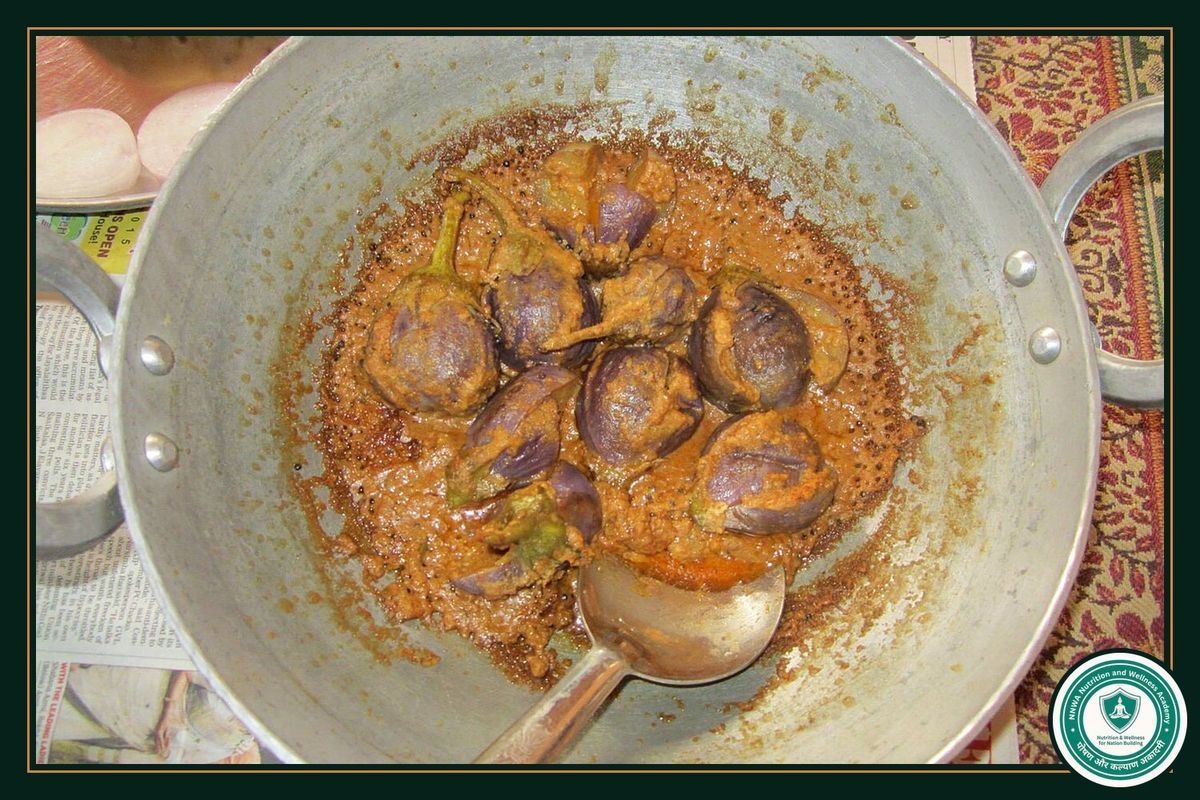
Bharli vangi is the Maharashtrian dish of small brinjals stuffed with a roasted peanut, sesame and dry coconut masala, then simmered until soft in a tangy gravy. It depends on roasting the masala slowly and cooking the brinjals over low heat, covered, so that they become tender right through without bursting.
- Prep
- 25 min
- Cook
- 40 min
- Total time
- 1 hr 5 min
- Servings
- 4
- Energy per serving
- 328 kcalEstimated from this recipe's ingredients using IFCT 2017 values. Actual figures vary with portion and cooking.
- Vegetarian
- Vegan
Ingredients
- 500 g small round brinjals (about 10), purple or green
- 1/4 cup raw peanuts
- 2 tablespoons white sesame seeds
- 1/3 cup grated dry coconut (khobra)
- 1 large onion, thinly sliced
- 5 garlic cloves
- 1 inch ginger, sliced
- 1/4 cup coriander leaves, chopped, plus more to garnish
- 1 tablespoon goda masala
- 1 teaspoon red chilli powder
- 1/2 teaspoon turmeric powder
- 1 1/2 tablespoons grated jaggery
- 1 1/2 tablespoons thick tamarind pulp
- 1 1/2 teaspoons salt, or to taste
- 4 tablespoons oil
- 1 teaspoon mustard seeds
- 1/4 teaspoon hing (asafoetida)
- 8 curry leaves
- 1 1/2 cups hot water
NNWA health note
Brinjal itself is light and adds fibre, while peanuts, sesame and coconut bring protein, fibre and a good measure of fat. That makes bharli vangi a rich vegetable dish rather than a light one, and most of its oil and nuts stay in the gravy. A sensible helping with jowar bhakri and a salad is a balanced meal, and whole grain bhakri makes the fibre go further. Anyone with a peanut or sesame allergy should note that this masala cannot be made safely by simply reducing them, so choose another dish instead.
Method
- 01
Wash and dry the brinjals, keeping the stems on. From the base, cut a deep cross reaching about three quarters of the way to the stem, so that the four quarters stay joined. Drop them into a bowl of salted water for 10 minutes to stop them from browning.
- 02
In a dry kadhai on medium-low heat, roast the peanuts for 4 to 5 minutes until the skins start to blister. Add the sesame and khobra and roast for 2 minutes more, stirring constantly, until the coconut turns pale gold and the sesame begins to pop. Tip onto a plate.
- 03
In the same kadhai, heat 1 tablespoon of the oil on medium. Fry the onion for 8 to 10 minutes until a deep golden brown, then add the garlic and ginger for 1 more minute. Let everything cool for a few minutes.
- 04
Grind the roasted nuts, coconut, fried onion, garlic, ginger and coriander to a coarse, thick paste, using only a tablespoon or two of water. Stir in the goda masala, chilli powder, turmeric, jaggery, tamarind and salt. Taste it: it should be strong, sweet, sour and hot.
- 05
Drain the brinjals and pat dry. Hold each open with your fingers and press a heaped teaspoon or more of the masala into the cuts, then close it again. Keep any leftover masala, which will form the gravy.
- 06
Heat the remaining oil in a wide heavy pan on medium heat. Add the mustard seeds and when they pop after about 20 seconds, add the hing and curry leaves, then lay in the brinjals in one layer.
- 07
Fry the brinjals for 6 to 8 minutes, turning gently with a spoon so that all sides pick up colour and the skin wrinkles and darkens slightly. Do not hurry this; browning here gives the dish its deep savoury note.
- 08
Add the leftover masala and stir for about 2 minutes on medium-low, until it smells toasted and oil starts to come out at the sides. Pour in the hot water, scrape the pan, and bring it to a gentle simmer.
- 09
Cover and cook on low heat for 15 to 20 minutes, carefully turning the brinjals halfway, until a knife slides through the thickest part and the gravy is thick with oil on top. Add a splash of hot water if the base starts to catch. Scatter over coriander and rest for 5 minutes before serving.
Last reviewed on 2 November 2026.
NNWA publishes the name and qualifications of everyone who writes and checks its material. You can see the full teaching team on the faculty page.
The dish and how it is eaten
Bharli means stuffed and vangi means brinjal, and this is one of the classic vegetable dishes of Maharashtra, cooked for festive meals as well as ordinary lunches. Recipes differ by region. In Pune and on the Deccan plateau, sweet-sour goda masala gives the warm, gently aromatic version offered here. Around Kolhapur, kanda lasun masala gives a hotter, redder result, and coastal and Konkan cooks may use more coconut. Small round brinjals are the usual choice, and some families cook them with potatoes in the pot or almost dry, with no real gravy at all.
The stuffing and the slow cook
Three things decide this dish. First, the brinjals must be small and young, with glossy skin and few seeds. Second, the peanut, sesame and khobra need to be roasted slowly and fully, since a raw nutty taste will carry through to the plate. Third, the heat stays low. Brinjals cooked too fast split and leak their stuffing, and the outside collapses before the core softens. Frying them first gives them a skin that protects the flesh, and the covered simmer that follows does the rest. Keep the lid closed and turn them only with a soft spoon. Press the filling in firmly, but do not overstuff or the cross cuts will tear open.
Common mistakes and their rescues
If the masala catches on the bottom during the simmer, take the pan off the heat, lift the brinjals out, loosen the base with hot water and scrape up only what comes away easily. Leave anything burnt behind. A bitter brinjal is usually an old one with many seeds; a little more jaggery helps, but it pays to pick well at the shop. If the gravy looks thin at the end, take off the lid and cook for 5 minutes on medium, shaking the pan rather than stirring. If it tastes flat, a little extra tamarind and salt usually does more than extra spice. Brinjals that have fallen apart still taste right, so mash them lightly into the gravy and call it a bharit-style dish.
Substitutions and a lighter version
Goda masala is the Maharashtrian spice blend with roasted coconut, sesame and stone flower, and it is sold at most Indian grocers. If you have none, garam masala with a pinch of cinnamon and clove and a little more roasted coconut makes an acceptable substitute, though you lose the distinctive smoky note. Kanda lasun masala is a fair swap too; use less, since it is hotter, and leave out the chilli powder. Fresh coconut can replace khobra, but toast it for longer. If you cannot find small brinjals, use the slim long kind, cut in 3-inch lengths and slit lengthwise. To lighten the dish, cut the oil to 2 tablespoons, halve the peanuts, and cook in a non-stick pan with the lid on; the gravy will be less glossy, though still good. Hing often contains wheat flour, and goda masala blends vary, which is why this recipe is not tagged gluten-free.
Serving it
Jowar or bajra bhakri, the kind served with pithla, is the classic partner, and its slightly dry, earthy bite suits a rich gravy. Chapatis, multigrain roti or thalipeeth also work. Masale bhat is the traditional choice at weddings and on feast days, while plain rice and a thin varan make a simpler meal. A plain koshimbir salad of cucumber and tomato, or a bowl of curd for those not keeping it vegan, balances the nuts and spice.
Storing and reheating
This is a good make-ahead dish because the masala soaks further into the brinjals overnight. Cool and refrigerate within two hours, and it will keep in a closed container for up to 3 days. Reheat gently in a wide pan with a splash of hot water on low heat, turning the brinjals carefully so they do not break, until bubbling. The stuffing paste can be made in advance and kept for 3 days in the fridge, or frozen for a month in small portions. Cooked brinjals turn watery and spongy after freezing, so avoid that.
Learn the science
Culinary Nutrition (Nutrition Chef)
This dish's nutrition reasoning is taught in full in this NNWA course.
What people ask about Bharli Vangi
How do I choose brinjals for stuffing?
Pick small round brinjals about the size of a lime, firm and heavy for their size, with shiny, unwrinkled skin and fresh green stems. Older or lightweight ones tend to be spongy and full of hard seeds, and they often taste bitter.
Should the stems be removed from the brinjals?
Leave them on, trimming only the thorny cap and the woody end. The stem holds the quarters together while they cook and gives you something to pick up, and it looks better on the plate at the end.
Can bharli vangi be made without peanuts?
Yes, a version of roasted sesame and khobra alone can work, with cashews or more coconut standing in for bulk. The flavour is less nutty, so use the full measure of goda masala and tamarind to keep it lively.
Why is my gravy oily even though I followed the recipe?
Peanuts, sesame and coconut all release their own oil as they cook, so some shine on top is correct. To reduce it, chill the gravy overnight and skim a little off, or reduce the frying oil next time you make it.
Can I cook bharli vangi in a pressure cooker?
A quick version is possible by cooking for one whistle on low heat, but the brinjals often burst and the stuffing clouds the gravy. An open pan takes only a little longer and gives you much more control over the texture.
More recipes
Bhel Puri
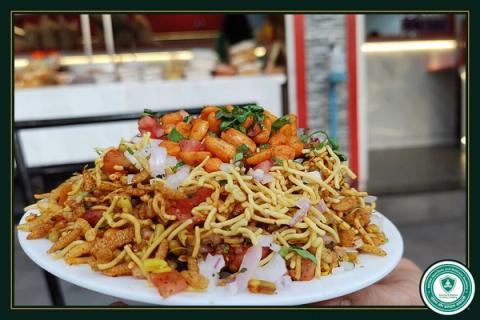
Bhel puri is puffed rice tossed with sev, crushed puris, chopped onion, tomato and potato, and three chutneys: sweet tamarind, green coriand…
Vegetarian · VeganRecipe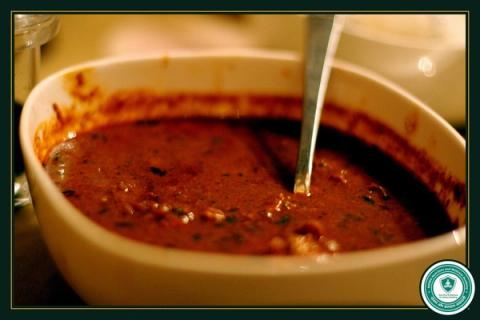
Chicken Xacuti
Chicken xacuti is a Goan curry of chicken in a dark gravy built from coconut and a long list of whole spices, all roasted and ground. Pronou…
High-protein · Gluten-freeRecipe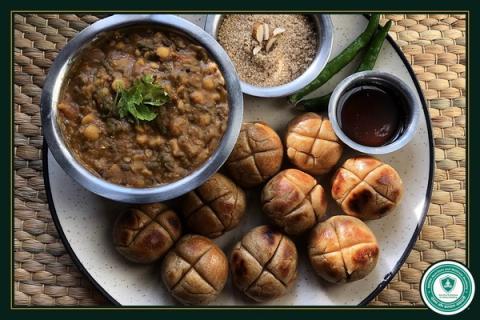
Dal Baati Churma
Dal baati churma is the Rajasthani meal of hard-crusted wheat dumplings baked and dunked in ghee, eaten with five-lentil dal and a sweet cru…
Vegetarian · FestiveRecipe