
West Indian · Main course
Pithla Bhakri
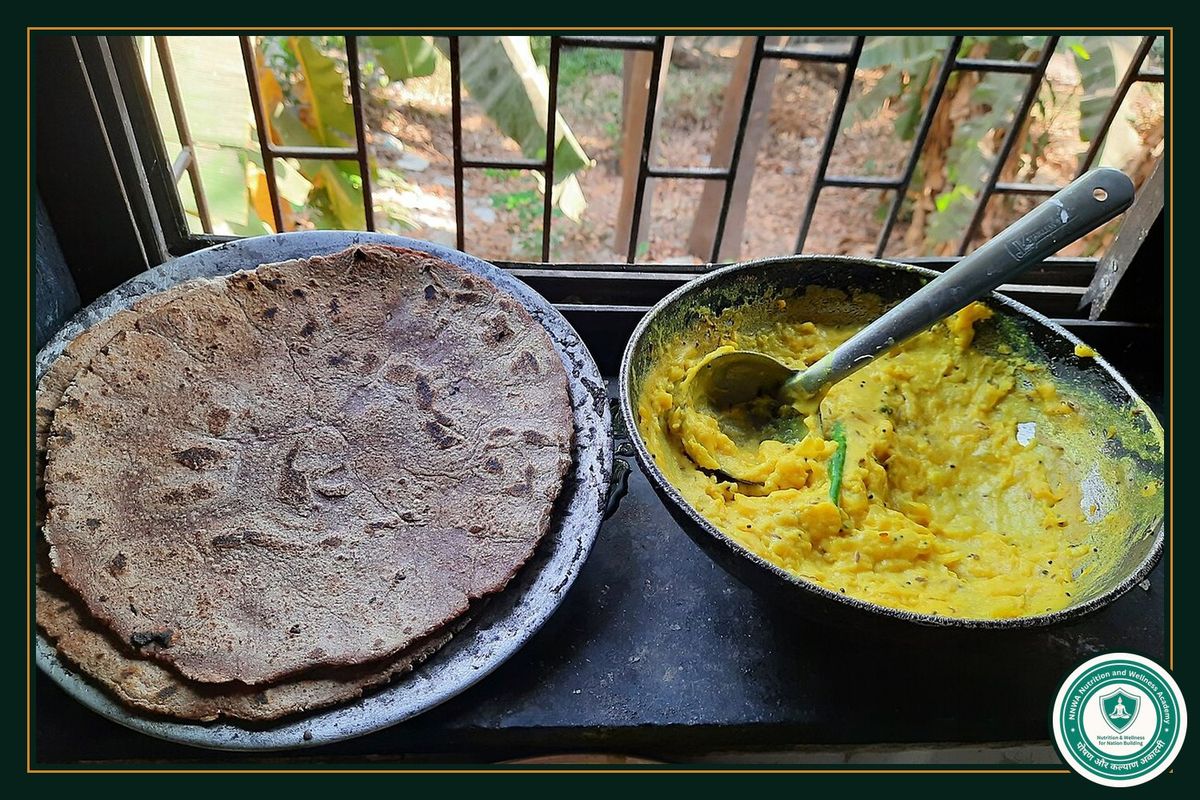
Pithla bhakri is the plain, much-loved Maharashtrian meal of a garlicky besan curry eaten with hand-patted jowar flatbread. The pithla succeeds if the besan is whisked smooth in cold water and simmered until the raw taste has gone, and the bhakri if the dough is kneaded fresh with hot water, in small batches.
- Prep
- 15 min
- Cook
- 40 min
- Total time
- 55 min
- Servings
- 4
- Energy per serving
- 472 kcalEstimated from this recipe's ingredients using IFCT 2017 and USDA values. Actual figures vary with portion and cooking.
- Vegetarian
- Vegan
- Gluten-free
Ingredients
- 3/4 cup (90 g) besan (gram flour)
- 3 cups water, for the pithla
- 2 tablespoons oil
- 1 teaspoon mustard seeds
- 1/2 teaspoon cumin seeds
- A pinch of hing, gluten-free if needed
- 8 curry leaves
- 6 garlic cloves, crushed
- 2 green chillies, slit
- 1 medium onion, finely chopped
- 1/2 teaspoon turmeric powder
- 3/4 teaspoon salt, for the pithla, or to taste
- 2 tablespoons coriander leaves, chopped
- 3 cups (360 g) jowar flour (sorghum), plus extra for patting
- 3/4 teaspoon salt, for the bhakri
- 1 1/2 cups hot water, approximately, for the bhakri
NNWA health note
This is a plain and rather good meal. Besan is a pulse flour that gives protein and fibre in a simple curry, and jowar is a whole grain with no gluten that carries more fibre than polished rice. Together they are filling, inexpensive and low in added fat when cooked this way. Pithla does not carry a large amount of protein per bowl because it is mostly water, so a side of curd or a sprout salad adds more. Those with coeliac disease should check their hing, as compounded hing blends often contain wheat flour.
Method
- 01
Put the besan in a bowl and add 1 cup of the cold water, whisking with a fork or your fingers until completely smooth. Add the rest of the water and whisk again. Press any lumps against the bowl, or strain the mixture if needed.
- 02
Heat the oil in a heavy kadhai on medium heat. Add the mustard seeds and when they pop after about 20 seconds, add the cumin, hing and curry leaves. Stir in the garlic and chillies and fry for about a minute, until the garlic turns pale gold.
- 03
Add the onion and cook on medium heat for 4 to 5 minutes, until soft and just starting to colour at the edges. Stir in the turmeric and salt and cook for a further 30 seconds, without letting it darken.
- 04
Lower the heat to low. Stir the besan water once more, since the flour settles, then pour it in slowly, stirring all the time with your other hand to avoid lumps. Continue to stir as the mixture warms and starts to thicken, about 5 minutes.
- 05
Cook uncovered on low heat, stirring often, for 8 to 10 minutes, until the raw flour smell is gone and the pithla looks glossy and falls off a spoon in a slow ribbon. Add a splash of hot water if it tightens too much. Finish with coriander, cover and keep warm.
- 06
For the bhakri, which makes 8, mix a heaped 1/3 cup of jowar flour with a good pinch of the salt in a wide plate. Add about 3 tablespoons of hot water and mix with a spoon, and when cool enough to touch, knead with the heel of your hand for 2 minutes, until smooth and free of cracks.
- 07
Heat a tawa on medium-high until a drop of water sizzles away. Dust a board with dry jowar flour, and pat the dough ball out with your fingertips and palm, turning it as you go, to a 6 to 7 inch round. Patch small cracks with a wet finger.
- 08
Lay the bhakri on the tawa with the floury side up, and spread a little water over the top with your fingers. Cook for about a minute until the water dries and the base firms, then flip and cook 1 to 2 minutes more, until brown spots appear.
- 09
Lift the bhakri with tongs and hold over a medium open flame, the first side down, for a few seconds until it puffs. Alternatively, press it on the tawa with a clean cloth. Repeat with the remaining flour, kneading each portion fresh, and serve hot with the pithla.
Last reviewed on 2 November 2026.
NNWA publishes the name and qualifications of everyone who writes and checks its material. You can see the full teaching team on the faculty page.
The dish and how it is eaten
In rural Maharashtra, pithla bhakri has long been farmer's food: cheap, quick and made from what is already in the kitchen. It has also become a treat in its own right: trekkers on Sahyadri forts such as Sinhagad near Pune eat it at hilltop stalls, with raw onion and thecha on the side. Pithla comes in two common styles. This recipe gives the softer patal pithla, a pourable curry. A thicker version, close to zunka or tava pithla, is cooked with less water until it can be scooped. Bhakri is usually jowar in the Deccan, bajra in drier parts and rice in the Konkan, and is pretty much always eaten by hand.
Keeping pithla smooth
A lumpy pithla is what most beginners fear. It is easy to avoid if you mix the besan into cold water first, instead of sprinkling it into a hot pan, and if you stir without stopping while the mixture thickens. Keep the heat low at that moment. You will see it go from thin to creamy quite suddenly, around the 4 or 5 minute mark. Then comes the second thing: it needs the full cooking time. Besan that is just thickened tastes of raw flour even if it looks finished. Smell it and taste it; it should smell toasty and savoury rather than like wet flour, and it often helps to let it stand for a few minutes covered.
Patting jowar bhakri
Jowar has no gluten, so the dough has no stretch at all. That is why you knead each bhakri fresh; a large batch dries out and cracks before you reach the end. Hot water gelatinises the starch and gives the dough the only cohesion it will ever have. Knead with the heel of your hand until the surface looks smooth. Beginners should start with a thick 5 inch bhakri and aim for thinner rounds once the hands understand it. If patting feels impossible, press it between two sheets of baking paper, or roll with a rolling pin over a dusting of flour. Those are shortcuts, but they will still give you a good meal.
Common mistakes and their rescues
If lumps appear in the pithla, turn off the heat and whisk hard for a minute, or press it through a strainer into a clean pan and cook on. If it gets thick and gluey, stir in hot water a quarter cup at a time. If it tastes flat, add more garlic fried in a little oil, or a squeeze of lime. A bhakri that cracks at the edges usually means dry dough; wet your hands and knead again. If it stays stiff and does not puff, the tawa was too cool or the water layer too thin. A hard bhakri softens when wrapped in a cloth for a few minutes, and it is still good dipped in the warm pithla.
Substitutions and a lighter version
Bajra flour works the same way and suits winter meals, while ragi flour gives a darker bhakri. Rice flour makes the softer Konkan type, using boiling water and a brief steam. If you have a jar of thecha, the coarse pounded relish of green chilli, garlic and peanuts, do bring it out; a spoonful sits at the edge of the plate. Pithla is already light. To make it lighter still, use 1 tablespoon of oil and more water. To add protein, stir in chopped spinach at the onion stage, or eat it with sprouts salad. This is plain vegan food as written, though some cooks finish it with a spoon of ghee, which you would then need to leave out.
Serving it
Serve the pithla in a thali with a hot bhakri, a slice or two of raw onion and a green chilli, and make a small well in the curry if you like. Thecha, a lump of jaggery and some curd are common on the side, and so is bharli vangi on a day with more time. It also goes well with hot rice and a little thalipeeth on the side.
Storing and reheating
Pithla sets firmly as it cools, so reheat it on low with a splash of hot water, whisking until it loosens and starts to bubble. It keeps for 1 to 2 days in the fridge in a closed container. Bhakri is best fresh. Wrapped in a clean cloth, it stays good for a few hours, and once cold it gets hard but softens if warmed on a tawa with a sprinkle of water. Do not freeze it, as it crumbles.
Learn the science
Plant-Based Nutrition
This dish's nutrition reasoning is taught in full in this NNWA course.
What people ask about Pithla Bhakri
What is the difference between pithla and zunka?
Both start with besan and a garlic tempering. Pithla is usually softer, and zunka is drier and crumbly, stirred with much less water until it comes together in clumps, and often served as a side with a thin dal.
Can I make the bhakri dough in advance?
It is better not to. Jowar dough loses moisture and cracks within minutes, so measure your flour out ahead of time and only mix water into a portion when the tawa is hot and you are ready to pat it.
Why does my bhakri not puff up?
A bhakri puffs if the dough is smooth and the first side has been dried out well before the open flame. Puffing is pleasant but not essential, and a flat bhakri with brown spots still tastes exactly right.
How thick should pithla be for a thali?
Aim for slow-ribbon consistency when it is hot, since it continues to thicken on the plate. A spoon drawn through should leave a brief track, which then closes on its own, while a pool at the bottom suggests it needs more cooking.
More recipes
Bharli Vangi
Bharli vangi is the Maharashtrian dish of small brinjals stuffed with a roasted peanut, sesame and dry coconut masala, then simmered until s…
Vegetarian · VeganRecipe
Bhel Puri
Bhel puri is puffed rice tossed with sev, crushed puris, chopped onion, tomato and potato, and three chutneys: sweet tamarind, green coriand…
Vegetarian · VeganRecipe
Chicken Xacuti
Chicken xacuti is a Goan curry of chicken in a dark gravy built from coconut and a long list of whole spices, all roasted and ground. Pronou…
High-protein · Gluten-freeRecipe