
Pan-Indian · Snack
Bread Pakora
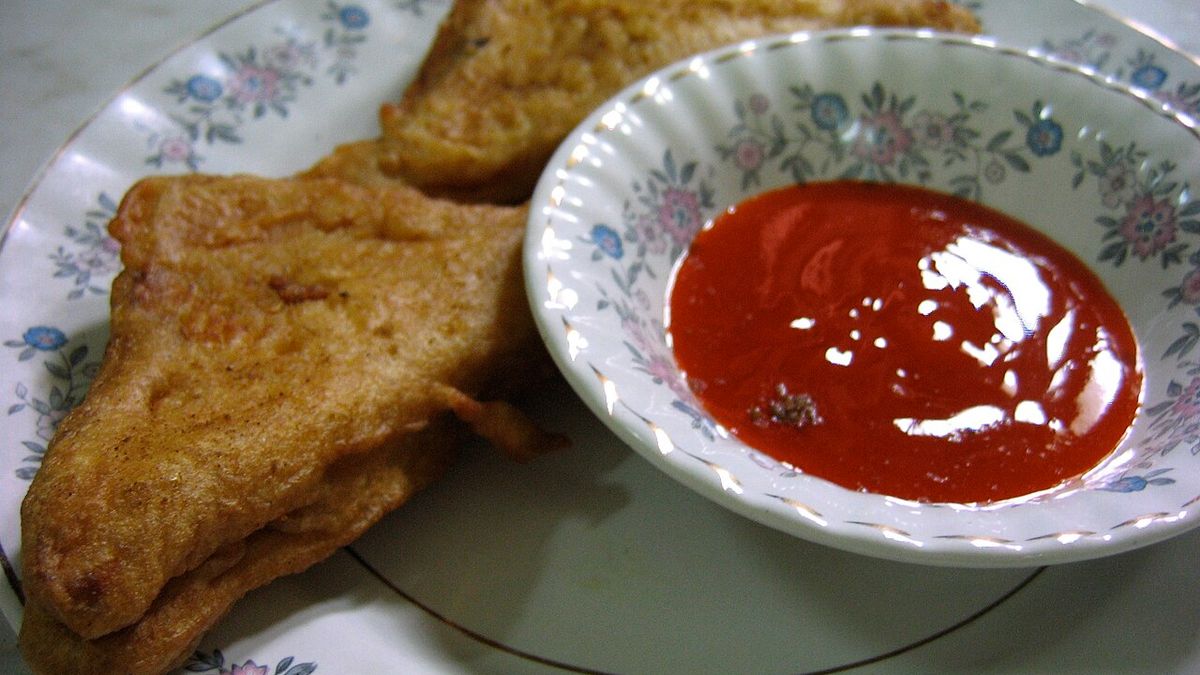
Bread pakora is a North Indian tea-stall snack: slices of bread sandwiched with spiced potato, dipped in gram flour batter and deep fried. It succeeds on batter and oil together: a batter thick enough to coat the bread in one even layer, with oil hot enough at about 175 C to seal it before the bread soaks up fat.
- Prep
- 25 min
- Cook
- 25 min
- Total time
- 50 min
- Servings
- 4
- Vegetarian
Ingredients
- 8 slices white or brown sandwich bread, a day old if possible
- 3 medium potatoes (about 400 g), boiled, peeled and mashed
- 1 tablespoon oil, for the stuffing
- 1/2 teaspoon cumin seeds
- 1 small onion, finely chopped
- 1 teaspoon grated ginger
- 2 green chillies, finely chopped
- 1/4 teaspoon turmeric powder for the stuffing
- 1/2 teaspoon garam masala
- 1 teaspoon amchur (dry mango powder)
- 2 tablespoons chopped coriander leaves
- 1/2 teaspoon salt for the stuffing
- 3 tablespoons green chutney, thick
- 1 1/2 cups besan (gram flour, about 150 g)
- 2 tablespoons rice flour, for crispness
- 1/2 teaspoon ajwain (carom seeds)
- 1/2 teaspoon red chilli powder
- 1/4 teaspoon turmeric powder for the batter
- A pinch of hing (asafoetida)
- A pinch of baking soda
- 1/2 teaspoon salt for the batter
- About 3/4 cup water
- Oil for deep frying, about 3 cups
NNWA health note
Bread pakora is a treat, and a good one, so enjoy it warmly and on purpose. White bread and potato make for a lot of quick-digesting starch, and frying adds a great deal of fat. Besan brings a little protein and fibre but does not change the overall picture. Eating one or two pieces with a large cup of tea, rather than a plateful, is the sensible approach. Using brown bread, adding vegetables or paneer to the stuffing and frying in fresh oil make small improvements. Avoid oil that has been heated repeatedly, as it degrades.
Method
- 01
Heat 1 tablespoon of oil on medium, add the cumin until it crackles, about 20 seconds, then the onion, and fry for 3 to 4 minutes until soft and pale gold. Add the ginger and chillies and stir for 30 seconds until fragrant.
- 02
Add the turmeric, mashed potato, garam masala, amchur and salt, and cook on medium for 3 minutes, stirring, until the mix feels dry and comes together in a mass. Stir in the coriander and let it cool for 10 minutes.
- 03
Spread a thin layer of green chutney on 4 slices of bread. Divide the potato evenly over them, pressing it to about 1 cm thick and stopping a little short of the edges, then close with the other 4 slices and press firmly for a few seconds.
- 04
Cut each sandwich in half corner to corner with a sharp knife, so that you have 8 triangles, and press the cut edges with your fingers to seal in the stuffing.
- 05
Whisk the besan, rice flour, ajwain, chilli powder, turmeric, hing and salt with the water, adding it slowly, for 2 minutes until smooth with no lumps. The batter should be thick enough to coat a spoon and fall in a slow ribbon. Stir in the baking soda just before frying.
- 06
Pour the oil into a deep, heavy kadai so it fills no more than a third of the way up, and heat on medium for about 6 minutes to 175 C. Without a thermometer, drop in a little batter: it should sink slightly, then rise to the top within 2 or 3 seconds, with a lively sizzle.
- 07
Dip each triangle into the batter with your hand, coating all sides including the edges, and let the excess drip for 2 seconds. Slide it in gently, away from you, without dropping it from a height. Fry 2 or 3 at a time so the oil stays hot.
- 08
Fry on medium for 2 to 3 minutes on each side, turning once with a slotted spoon, until the crust is deep golden and firm and sounds crisp when tapped. Lift out and drain on a wire rack or paper for 1 minute. Serve hot with chutney and chai, and turn off the flame before leaving the kitchen.
Last reviewed on 2 November 2026.
NNWA publishes the name and qualifications of everyone who writes and checks its material. You can see the full teaching team on the faculty page.
A snack from the tea stalls
Bread pakora is a staple of North Indian tea stalls, college canteens and railway platforms, especially in Delhi, Punjab and Uttar Pradesh. It is also a home favourite on rainy days, when something fried with hot tea is hard to refuse. Stalls make it in a few forms: plain bread dipped and fried, or stuffed with potato, or filled with paneer as a more filling version. This recipe gives the potato-stuffed form with green chutney, which is what most people picture, and it is not far from what a good tea stall will serve you with a small dish of sweet tamarind chutney.
Batter and oil do the work
Bread is a sponge, and the batter is its waterproof coat. A batter that is too thin soaks in and leaves gaps, and the bread drinks oil through every one of them. A batter that is too thick gives a heavy, doughy shell that stays raw on the inside. The spoon test in the method is the one to use: thick enough to coat, slow to fall. Coat the cut edges with special care, as this is where oil gets in.
Oil temperature matters just as much. Around 175 C, the batter sets at once and the steam rising from the bread pushes oil out, so very little comes in. Below 160 C, the batter sits soaking and absorbs fat, while at 190 C and over, the outside browns before the inside has warmed through. A cheap kitchen thermometer takes out the guesswork. Otherwise, use the drop test before each batch, and give the oil a minute to recover between batches.
Frying safely
Keep the kadai on a back burner with the handles turned inwards, and fill it no more than a third deep. Lower each piece in gently and pull your hand back as it enters the oil. Water makes hot oil spit, so have dry hands and a dry slotted spoon. If the oil begins to smoke, turn off the flame and let it cool for a few minutes. In case of a fire, turn off the gas and cover the pan with a lid; never pour water on it. Keep children out of the kitchen while you fry.
Common faults and how to fix them
Oily pakoras are the most common complaint, and a too-cool oil or a too-thin batter is usually to blame. Whisk a spoon or two of besan into the batter, reheat the oil and test again. Pakoras that burst have a stuffing that was too wet or too thick, or sandwiches that were not pressed firmly. Dry the potato mix further in the pan, and keep to a 1 cm layer. If the coating slides off, the bread may be too fresh and damp, so toast the slices lightly on a dry tawa first. A soggy batch can be crisped up in a 180 C oven or air fryer for 5 minutes.
Swaps and a lighter version
Slices of paneer between the bread, or a filling of mashed peas, work well and bring in more protein. For a lighter version, coat the sandwiches as usual and cook on a tawa with 2 tablespoons of oil across the batch, or air-fry them on a lined tray at 190 C for about 12 minutes, turning once, brushed lightly with oil. The result is more like a toasted sandwich and does not have the same crisp shell, so treat it as a different dish rather than a substitute. Anyone avoiding wheat can use gluten-free bread, keeping in mind that some hing powders contain wheat flour too. Small changes like these are what NNWA's healthy eating essentials course is about.
Serving and storing
Serve at once with pudina chutney, a sweet tamarind chutney or plain ketchup, and strong masala chai. If you enjoy this, try related snacks like aloo tikki and samosa, and read the page on pakora for sourced nutrition figures on the plain batter-fried version.
Bread pakora is best in the first 15 minutes. Leftovers go soft as they cool, though you can keep them in the refrigerator for a day and reheat them in a dry pan or at 180 C in an oven for 6 to 8 minutes. Avoid the microwave, because it turns them rubbery. The potato stuffing can be made a day ahead and refrigerated. Frying oil should be strained, cooled and used only once more if at all, and it should be thrown away if it has darkened, thickened or smells off.
Learn the science
Healthy Eating & Everyday Wellness
This dish's nutrition reasoning is taught in full in this NNWA course.
What people ask about Bread Pakora
Which bread is best for bread pakora?
Ordinary sliced sandwich bread, a day old, holds up best. Very fresh bread is soft and tears when pressed, and thick artisan slices take too long to heat through. Brown bread works just as well, though it browns a little faster in the oil.
Why is the inside of my bread pakora soggy?
Usually the potato filling held too much moisture, or the batter was thin enough to soak through. Next time dry out the filling in the pan until it pulls away from the sides, and rest it to room temperature so it does not steam the bread.
Can I skip the potato stuffing?
Yes. Plain bread pakora is simply a slice cut in half, spread with a little chutney, dipped and fried. It cooks in less time and has a lighter feel, and this is the quick version many people make at home when potatoes are not already boiled.
Can I prepare bread pakora for a party in advance?
Fry them until lightly golden about an hour ahead and leave them on a rack. Just before serving, return them to hot oil for about a minute until deep golden. This double frying keeps them crisp, though it does add a little more oil.
More recipes
Chicken Biryani
Chicken biryani is layered rice and marinated chicken cooked together under sealed steam. There are two methods: kacchi, where raw marinated…
High-protein · FestiveRecipeDal Tadka (Tempered Yellow Lentils)
Dal tadka is a dish of boiled yellow lentils, usually toor dal, finished with a hot tempering of ghee or oil, cumin, garlic and dried red ch…
Vegetarian · High-proteinRecipeEgg Bhurji
Egg bhurji is Indian scrambled egg, cooked with onion, tomato, chilli and spices until it sets in soft curds. It takes ten minutes and goes…
High-protein · Gluten-freeRecipe