
North Indian · Side dish
Pudina Chutney
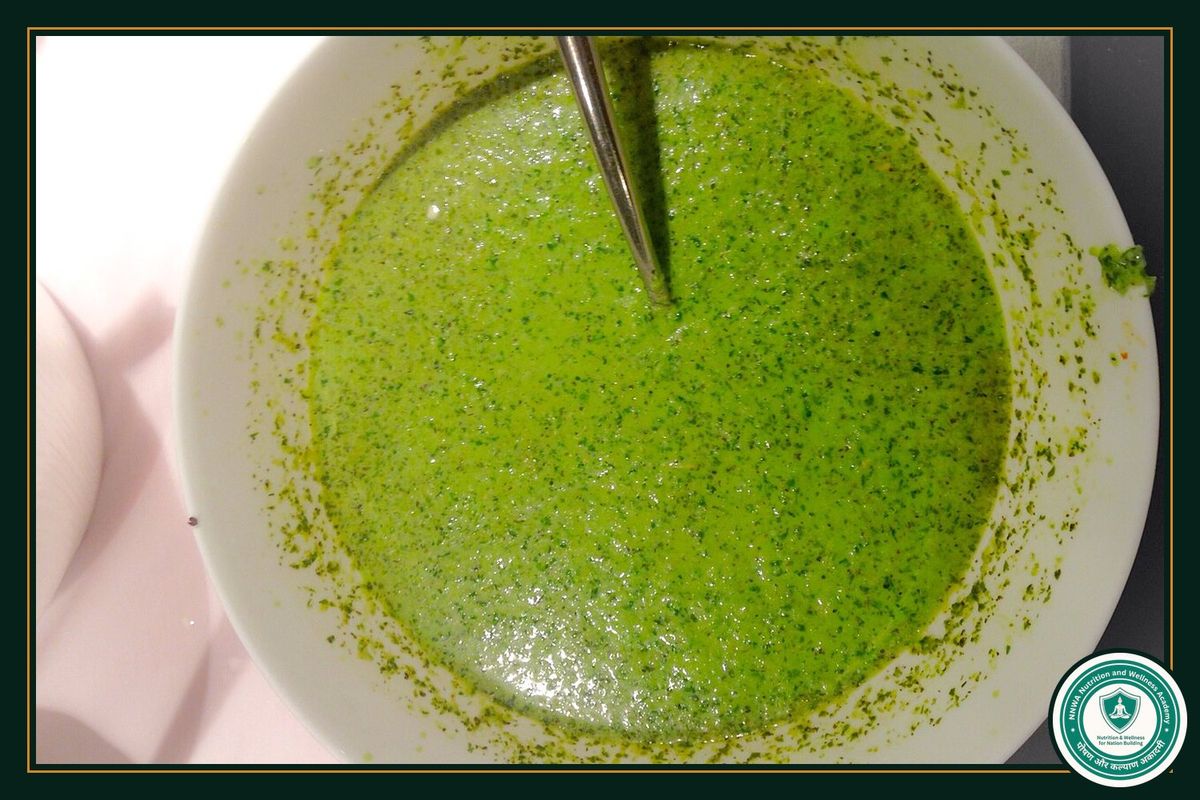
Pudina chutney is a fresh North Indian green chutney of mint, coriander, green chilli, ginger and lemon, ground to a sharp, cool paste. Leaves and temperature decide it: use mint leaves only, with no woody stems, and grind in quick bursts with ice-cold water. Stems make it bitter, and a hot blender turns it dull.
- Prep
- 15 min
- Total time
- 15 min
- Servings
- 8
- Energy per serving
- 15 kcalEstimated from this recipe's ingredients using IFCT 2017 values. Actual figures vary with portion and cooking.
- Vegetarian
- Vegan
- Gluten-free
Ingredients
- 2 packed cups mint leaves (pudina), about 60 g, picked from the stems
- 1 packed cup coriander leaves with tender stems, about 40 g
- 2 to 3 green chillies, roughly chopped
- 1/2 inch ginger, peeled and chopped
- 1 small onion, about 50 g, roughly chopped (optional)
- 1 tablespoon roasted chana dal (dalia), for body
- 1/2 teaspoon roasted cumin powder
- 1/2 teaspoon black salt (kala namak)
- 1/4 teaspoon salt, or to taste
- 1/2 teaspoon sugar
- 2 tablespoons lemon juice
- 3 to 4 tablespoons ice-cold water
NNWA health note
This is one of the easiest ways to add flavour to a plate without adding oil, cream or much sugar, and a spoon or two beside a snack replaces something heavier like a mayonnaise dip. Herbs are nutritious in themselves, but the small quantity eaten means they are a seasoning rather than a meaningful source of vitamins. Its salt content is modest, though the black salt counts, and people with reflux may find raw chilli and mint uncomfortable. Otherwise it is a good everyday habit.
Method
- 01
Pick the mint leaves from their stems, discarding any black or yellow leaves. Wash the mint and coriander in a large bowl of water, swish, lift out, and repeat until no grit remains at the bottom. Dry them in a clean towel for 2 minutes.
- 02
Chill the mixer jar in the fridge for about 10 minutes if your kitchen is hot, and add 2 tablespoons of ice-cold water to it. A cold jar slows the darkening of the leaves as they are ground.
- 03
Add the green chillies, ginger, onion and roasted chana dal to the jar and pulse in 3 or 4 short bursts, about 5 seconds each, until they form a coarse, wet paste without any big pieces.
- 04
Add the mint, coriander, cumin, black salt, salt and sugar, packing in the leaves. Grind in bursts of 10 seconds with pauses of a few seconds between them, scraping down the sides, for about 1 minute in all, until the chutney is smooth and bright green, without over-running the motor.
- 05
Stir in the lemon juice with a spoon or a last 2-second pulse. Add ice-cold water a tablespoon at a time, only if needed, until it falls slowly from a spoon and looks glossy.
- 06
Taste it on a small piece of something plain, like a slice of cucumber. Adjust the salt or lemon, then transfer immediately to a clean glass jar and refrigerate for at least 15 minutes before serving, as the sharpness will soften a little.
Last reviewed on 2 November 2026.
NNWA publishes the name and qualifications of everyone who writes and checks its material. You can see the full teaching team on the faculty page.
The chutney on every North Indian table
Green chutney turns up everywhere in North India: on a thali, with a samosa, beside paneer tikka and chicken tikka, or spread inside a sandwich. Pudina chutney is the version in which mint leads, usually supported by coriander so that the mint is not overwhelming. The balance is a matter of family habit. Mint-heavy versions are sharp and cooling; coriander-heavy ones are milder and sit closer to the standard green chutney.
Traditionally it was ground on a sil batta, a flat stone with a roller, which crushes the leaves without warming them. A mixer is what nearly everyone uses now, and it works well with a little care.
What turns green chutney dark and bitter?
Two faults spoil this chutney. Bitterness comes from mint stems and over-grinding. Mint stems are woody and sharply flavoured, unlike tender coriander stems, which are sweet and can stay. Pick the leaves off. Heat and air cause the darkening. A mixer's blades warm a small quantity of paste quickly, and warm cut leaves oxidise and turn the colour of old spinach. Hence the short bursts, ice-cold water, and a chilled jar on a hot day.
Lemon goes in last and briefly for the same reason. Acid slowly dulls the green of the leaves, so keep the chutney cold after it has been added. Roasted chana dal is a small and useful trick; it absorbs extra liquid, gives the chutney body so it clings to a samosa, and stops it from weeping water on the plate. Some versions use peanuts or coconut for this purpose, and each adds its own taste.
Rescuing a chutney that went wrong
If the chutney is too bitter, add a little more coriander, another pinch of sugar and a teaspoon of lemon. A spoonful of thick curd does more than anything else to round off the bitterness, but it changes the chutney from vegan and shortens its life. If it is too hot, more coriander and a spoon of roasted chana dal will soften it; chilli heat varies a good deal from batch to batch, so start low and taste.
A thin chutney can be thickened by grinding in another tablespoon of roasted chana dal. If it has gone pale and brown overnight, the flavour is still good, so use it in sandwiches or stir it into a marinade. A fizzy smell or sharp sourness in an old jar is a different matter: throw it away.
The curd version and other variations
The pale green dahi pudina chutney served with tandoori dishes and kebabs is made by whisking two or three tablespoons of this chutney into half a cup of thick hung curd with a pinch of chaat masala. It is the classic partner for tandoori chicken and hara bhara kabab. Make only what you need, as it does not last as long, and it is no longer vegan.
A chaat version uses less water and a little tamarind or amchur in place of lemon. Street-style sandwich chutney often grinds in a slice of bread or a few peanuts for thickness; bread means it is no longer gluten-free. Raw mango in the summer season replaces the lemon beautifully, with about a quarter cup of chopped flesh. Leave out the onion if you want it to keep for longer, and for a Jain table, skip the onion and ginger.
Storing it safely
Because it is raw and uncooked, the chutney needs care. Wash the herbs thoroughly, particularly if they came from the market with mud still on them, and use a clean, dry spoon each time you dip into the jar. Without onion, it keeps for three to four days in a sealed jar in the fridge; with onion, it is best within two days. Press cling film or a thin layer of oil on the surface to slow the darkening.
For longer storage, freeze it in an ice tray, tip the cubes into a bag and use them within a month. A cube thaws in about 10 minutes at room temperature and tastes very close to fresh. Mint is covered in more detail on the mint leaves food page. Using a chutney to carry flavour in place of a heavy dressing is a habit covered in healthy eating essentials too.
Learn the science
Healthy Eating & Everyday Wellness
This dish's nutrition reasoning is taught in full in this NNWA course.
What people ask about Pudina Chutney
Can I make pudina chutney without coriander?
Yes, and it will be sharper and more intensely cooling. Use a little extra roasted chana dal to soften it, and add more sugar or lemon to taste. All-mint chutneys can seem medicinal to some people, which is why most cooks add at least a handful of coriander.
Can I use dried mint?
Dried mint gives a dull, tea-like flavour and it cannot make this fresh chutney, as there is nothing to give it its colour or texture. Save it for sprinkling over raita. If fresh mint is not available, use only coriander and call it a coriander chutney.
Why does restaurant green chutney look so smooth and creamy?
Most restaurants blend in hung curd, a little cream or mayonnaise, or peanuts, which gives a smoother body and a pale colour. It often has more sugar too. The home version is thinner, greener and fresher tasting, and it is easy to make creamier with curd when you want it.
How do I grow enough mint at home to use for this?
Mint grows readily in a wide pot on a sunny balcony and spreads fast from a few stem cuttings placed in water until they root. Water it often and pick it regularly to keep it bushy. Grown this way, it is cheap and handy for frequent use.
More recipes

Aam Panna
Aam panna is a summer cooler made from cooked raw mango pulp, jaggery, roasted cumin and black salt, diluted with cold water when you want a…
Vegetarian · VeganRecipe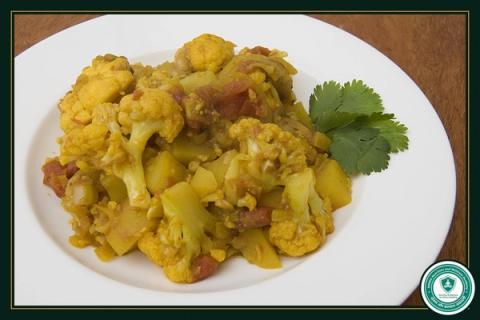
Aloo Gobi (Potato & Cauliflower Dry Curry)
Aloo gobi is a North Indian dry curry of potatoes and cauliflower cooked together with turmeric, cumin and a light blend of spices until ten…
Vegetarian · VeganRecipe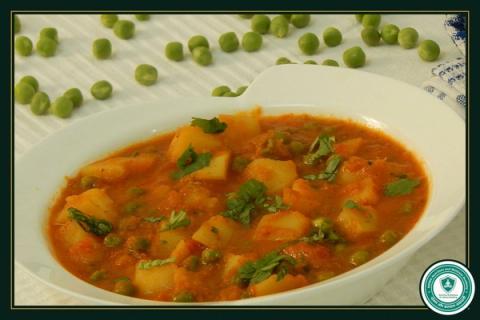
Aloo Matar
Aloo matar is a simple North Indian curry of potatoes and green peas in an onion and tomato base. It is one of the most commonly cooked home…
Vegetarian · VeganRecipe