
North Indian · Snack
Hara Bhara Kabab
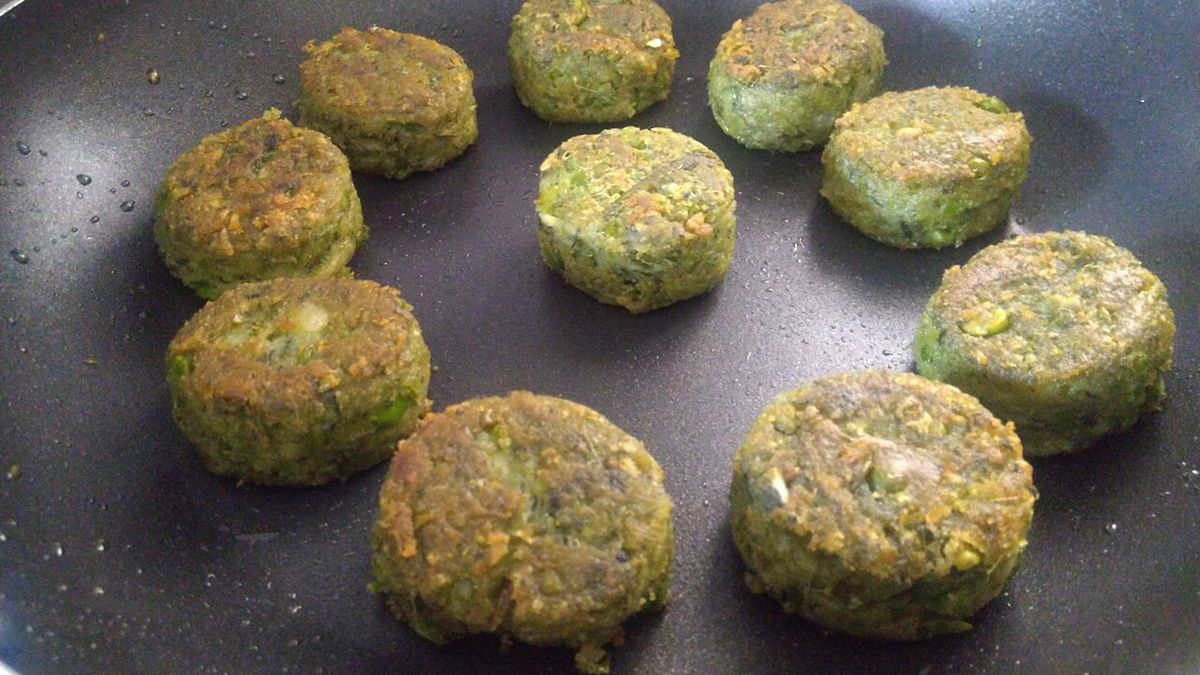
Hara bhara kabab is a North Indian vegetarian starter of spinach, green peas and potato, spiced and shallow-fried into crisp green patties. Success depends on moisture: blanched spinach squeezed properly dry and cold boiled potato give a mix that holds its shape, while a wet mix falls apart in the pan.
- Prep
- 30 min
- Cook
- 25 min
- Total time
- 55 min
- Servings
- 4
- Vegetarian
- Vegan
- Gluten-free
Ingredients
- 250 g spinach (palak), about 1 medium bunch, thick stems removed
- 1 cup green peas (matar), fresh or frozen, about 150 g
- 2 medium potatoes, about 250 g, boiled in their skins and fully cooled
- 3 tablespoons besan (gram flour)
- 2 green chillies, roughly chopped
- 1 inch ginger, peeled and roughly chopped
- 1/4 cup coriander leaves, packed
- 1 teaspoon roasted cumin powder
- 1/2 teaspoon garam masala
- 1 teaspoon chaat masala
- 1/2 teaspoon amchur (dry mango powder)
- 3/4 teaspoon salt, or to taste
- 12 cashews, halved (optional)
- 3 tablespoons oil, for shallow frying
NNWA health note
Hara bhara kabab is a kinder snack than most fried starters because it is largely vegetables and takes only a thin film of oil on a tawa. Spinach and peas add fibre, folate and some plant protein, and the potato is modest. Spinach iron is not well absorbed, so a squeeze of lemon on the plate is useful, though these should not be counted as an iron source. Portion still matters: two or three kababs with a green chutney is a snack, a plateful is a meal.
Method
- 01
Bring a large pan of water to a rolling boil on high heat. Push in the spinach for 1 minute, until limp and bright green, then lift it straight into a bowl of iced water for 2 minutes.
- 02
Boil the peas in the same water on high heat for 3 to 4 minutes, until they crush easily between your fingers. Drain and cool them under the cold tap.
- 03
Squeeze the spinach in your fists, a handful at a time, until almost no water runs out. It should shrink to a dense ball about the size of a small orange.
- 04
Roast the besan in a dry pan on medium-low heat for 3 to 4 minutes, stirring all the time, until it smells nutty and turns one shade darker. Tip it onto a plate to cool.
- 05
Grind the spinach, peas, chillies, ginger and coriander in short pulses with no water at all, scraping down the jar. Stop while the mix still has some texture, like coarse pesto.
- 06
Peel and grate the cold potatoes into a mixing bowl. Add the green paste, besan, cumin, garam masala, chaat masala, amchur and salt, and knead lightly for 1 minute until evenly green.
- 07
Test one kabab: heat 1 teaspoon of oil on a tawa over medium heat and cook a small patty for 2 minutes a side. If it spreads or breaks, knead in another tablespoon of roasted besan, and correct the salt.
- 08
Oil your palms and shape the mix into 12 discs about 1.5 cm thick. Press a cashew half into the centre of each, cover, and chill for 20 minutes until firm to the touch.
- 09
Heat 2 tablespoons of oil on a wide tawa over medium heat until a pinch of the mix sizzles gently. Lay in 6 kababs with space between them, and leave them untouched for 3 minutes, until the underside lifts away cleanly with a dark golden crust.
- 10
Turn them once with a flat spatula and cook for 3 more minutes, until both sides are crisp and the kababs feel firm when pressed. Drain on a rack, add the remaining oil, and repeat with the rest.
Last reviewed on 2 November 2026.
NNWA publishes the name and qualifications of everyone who writes and checks its material. You can see the full teaching team on the faculty page.
A modern favourite on North Indian menus
Hara bhara means full of green, and the name is the whole brief. These patties are a staple of North Indian vegetarian restaurants, wedding counters and party platters, usually arriving with a green chutney and a sliced onion salad. Unlike the old meat kebabs of Awadh and Delhi, there is no long lineage to speak of; this is a home and restaurant snack, and every family adjusts the spicing. The version here is the common one, with spinach, peas and potato bound with roasted besan and cooked on a tawa rather than deep-fried.
It sits somewhere between an aloo tikki and a vegetable cutlet, but the taste should be fresh and green with a sour lift, and not of potato alone.
Water is the enemy here
Three ingredients bring moisture into this mix, and each has to be dealt with. Spinach holds a surprising amount of water even after blanching, so squeeze it harder than feels necessary. Potatoes must be boiled in their skins and allowed to cool completely, since hot potato turns gummy when grated and absorbs nothing. Peas go in cooled and drained. The grinder gets no water, not even a splash to help the blades; scrape the jar instead and pulse.
Roasting the besan does two jobs. It removes the raw, beany taste, and it gives the flour the dryness it needs to bind. Raw besan in a patty cooked for only a few minutes tastes pasty right through.
Keeping the green colour
Most hara bhara kababs turn khaki for the same two reasons: spinach boiled for too long, and amchur or lemon sitting on the greens for hours. One minute in fast-boiling water followed by ice sets the colour. Shape the kababs the day you plan to cook them if you can, and keep them covered in the fridge. Restaurants sometimes add food colour to get that vivid shade; there is no need for it, and a home kabab that is a deep leaf green with a brown crust is exactly right.
Common mistakes and the rescue
If the mix is too soft to shape, knead in more roasted besan a tablespoon at a time. Two tablespoons of powdered poha also work very well, and fresh breadcrumbs are the usual restaurant fix, although bread means the kababs are no longer gluten-free. If they break when you turn them, the pan was not hot enough or you moved them too soon; leave them alone until the crust releases by itself. Chilling for longer helps too.
If they taste flat, it is nearly always salt and sourness and not more spice. Fry your test patty before you shape the whole batch, because this is the one moment you can still correct them. A pale, soft crust means too little heat; a burnt crust on a cold middle means too much. Medium is the setting.
Substitutions and a lighter version
Frozen peas are perfectly good and often sweeter than market peas out of season. Cashews are decoration more than anything, so leave them out for an allergy, or press in a raisin or a sliver of almond instead. Some cooks add crumbled paneer for richness; it is a common and tasty addition, though it means the recipe is no longer vegan. Hing is often added too, but many compounded hing powders contain wheat flour, which is why it is left out of this gluten-free version.
For a lighter version, brush the kababs with oil and cook them in an appe pan or an air fryer until browned, turning once. They lose some crust but stay pleasant. The tawa method already uses very little oil, so there is no need to apologise for it.
Serving, storing and reheating
Serve hot with pudina chutney and a little tamarind chutney if you have some, alongside paneer tikka on a party plate, or tucked into a roti with sliced onion for a quick wrap. Children who refuse green vegetables at the table often eat these without complaint.
Raw shaped kababs keep in a covered box in the fridge for a day. To freeze, lay them on a tray until hard, then bag them for up to a month, and cook from frozen on medium-low heat with a lid for the first few minutes. Cooked kababs keep for two days in the fridge. Reheat on a dry tawa, since a microwave makes the crust soggy, and heat them right through before eating.
Learn the science
Culinary Nutrition (Nutrition Chef)
This dish's nutrition reasoning is taught in full in this NNWA course.
What people ask about Hara Bhara Kabab
Can hara bhara kabab be baked instead of fried?
Yes. Brush the shaped kababs with oil and bake them on a lined tray at 200 degrees Celsius for about 25 minutes, turning once halfway. The crust is drier and less crisp than a tawa crust, so serve them straight from the oven.
Why do my kababs taste bitter?
Usually the spinach stems were left in, or the greens were overcooked before grinding. Mature spinach can taste slightly metallic as well, so pick tender leaves where possible and balance any sharpness with a little more amchur and chaat masala.
Can I use sweet potato in place of potato?
You can, and the kababs will be softer and a little sweeter, so add an extra spoon of roasted besan and more amchur to balance them. Bake or steam the sweet potato rather than boiling it, which keeps it from taking on more water.
How far ahead can I make these for a party?
Shape them the night before and keep them covered and chilled, then fry just before guests arrive. You can also part-cook them for two minutes a side in the afternoon and finish them on a hot tawa when you are ready to serve.
Are hara bhara kababs suitable for children's lunch boxes?
They travel well because they stay firm when cool and are not messy to eat. Reduce or leave out the green chilli for younger children, pack a small pot of chutney on the side, and include an ice pack if lunch is many hours away.
More recipes
Aam Panna
Aam panna is a summer cooler made from cooked raw mango pulp, jaggery, roasted cumin and black salt, diluted with cold water when you want a…
Vegetarian · VeganRecipeAloo Gobi (Potato & Cauliflower Dry Curry)
Aloo gobi is a North Indian dry curry of potatoes and cauliflower cooked together with turmeric, cumin and a light blend of spices until ten…
Vegetarian · VeganRecipeAloo Matar
Aloo matar is a simple North Indian curry of potatoes and green peas in an onion and tomato base. It is one of the most commonly cooked home…
Vegetarian · VeganRecipe