
South Indian · Main course
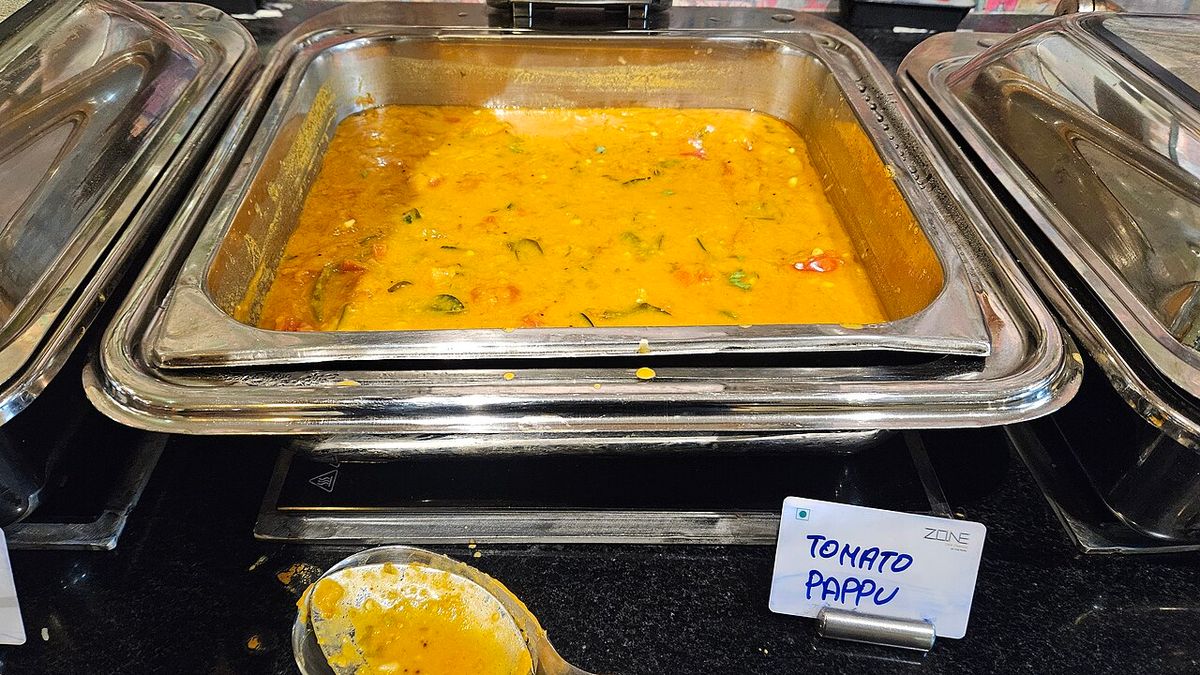
Tomato Pappu
Tomato pappu is the everyday dal of Andhra Pradesh and Telangana: toor dal pressure-cooked with sour tomatoes and green chillies, mashed and finished with a garlic and mustard tempering. The sourness decides whether it succeeds: use tart country tomatoes, or add a little tamarind, and cook the dal completely soft before mashing.
- Prep
- 10 min
- Cook
- 30 min
- Total time
- 40 min
- Servings
- 4
- Vegetarian
- Vegan
- Gluten-free
- Diabetic-friendly
Ingredients
- 1 cup toor dal (arhar, kandi pappu), about 200 g
- 4 medium sour tomatoes, about 350 g, roughly chopped
- 1 small onion, sliced
- 3 green chillies, slit
- 1/4 teaspoon turmeric powder
- 3 cups water
- 1 teaspoon salt, then to taste
- 1 small piece of tamarind, about 5 g, soaked in 2 tablespoons hot water (only if the tomatoes are mild)
- 2 tablespoons groundnut oil
- 1 teaspoon mustard seeds
- 1 teaspoon cumin seeds
- 2 dried red chillies
- 5 garlic cloves, crushed
- 1 sprig curry leaves
- A pinch of asafoetida (hing)
- 2 tablespoons chopped coriander leaves
NNWA health note
Tomato pappu is an honest everyday meal. Toor dal provides plant protein and fibre, tomatoes add vitamin C and sourness, and the oil here is modest. Eaten with rice and a vegetable, it gives a vegetarian plate a good balance, and the fibre and protein slow down how quickly the meal is digested. People with diabetes can happily include it, watching the portion of rice alongside. Those with advanced kidney disease may need to limit dal and tomatoes because of their potassium, and should follow their dietitian's advice on portions.
Method
- 01
Rinse the toor dal in three or four changes of water until the water is nearly clear, then soak for 15 to 20 minutes if you have the time. This helps the dal cook evenly.
- 02
Put the dal, tomatoes, onion, green chillies and turmeric into a pressure cooker with the 3 cups of water, keeping the cooker no more than half full, since dal foams and can block the vent.
- 03
Cook over a medium-high flame until the first whistle, then lower the flame to medium and cook for 3 more whistles, about 10 to 12 minutes in all. Turn off the flame and let the pressure fall completely on its own before you open the lid.
- 04
Open the cooker and check the dal: a grain should crush to nothing between your fingers. If any firmness remains, close the lid and cook for 1 more whistle.
- 05
Add the salt and the strained tamarind water, if using. Mash everything with a wooden pappu gutti, a whisk or the back of a ladle for about 1 minute, until the dal is creamy but still has a little texture and the tomato skins have broken down.
- 06
Set the pot over a medium flame and simmer for 5 minutes, stirring from time to time, adding up to 1/2 cup of hot water if needed. It should pour slowly from a spoon, thicker than sambar and looser than a dry dal. Taste for salt and sourness.
- 07
For the tempering, heat the oil in a small pan over a medium flame for 1 minute. Add the mustard seeds, and when they crackle, add the cumin and dried chillies and stir for 15 seconds.
- 08
Add the crushed garlic and fry for 30 to 45 seconds until it turns light gold and smells nutty, then add the curry leaves and asafoetida. They will spit, so hold the pan away from you. Pour everything straight into the dal, cover the pot for 1 minute to trap the aroma, then stir and finish with the coriander.
Last reviewed on 2 November 2026.
NNWA publishes the name and qualifications of everyone who writes and checks its material. You can see the full teaching team on the faculty page.
Where does tomato pappu come from?
Pappu simply means dal in Telugu, and pappu in one form or another appears at nearly every home meal in Andhra Pradesh and Telangana. Tomato is the most common version, along with those using gongura, drumstick or mango. The usual way to eat it is with hot rice and a spoon of ghee, a sharp pickle such as avakaya, and something crisp on the side. It is thicker than a sambar and has no sambar powder. Compared with the North Indian dal tadka, it is sourer, has more chilli and garlic in the tempering, and is eaten as a real main with rice instead of a side.
Some cooks in Telangana add a spoonful of tamarind as a matter of course, and others cook a pinch of red chilli powder into the dal. This version gives the simple home-style method common to both states.
The technique that matters: sourness and the mash
The right tomato makes the dish. Country tomatoes, often sold as naatu or desi in markets, are round, thin-skinned and sour. The long, firm hybrid tomatoes sold in most city shops are sweeter and meatier, so taste the dal once it has been cooked, and add a little tamarind or lemon juice as needed. Cooking the tomatoes in the pressure cooker with the dal lets their acid and flavour go right through it, unlike a tomato added at the end.
Mashing is what turns the pot into pappu. The traditional tool, a wooden masher called a pappu gutti, pushes the grains into a creamy mass while leaving a little body. A whisk does nearly as well. A hand blender gives a smooth, soupy result, and that is the one tool best avoided here.
What goes wrong, and how do you rescue it?
If the dal stays gritty, it may be old or the water could be very hard, so cook it for a few more whistles with a splash of hot water. Tomatoes can also slow softening slightly. If this keeps happening, cook the dal alone first, then add the tomatoes and simmer. If it is too thin, simmer without a lid for 5 to 8 minutes. Too thick is simple, as hot water loosens it. If the garlic burns in the tempering, throw that out and start again, because bitter garlic will ruin the whole pot. If the dal has come out too sour, a pinch of jaggery rounds it off, and if it tastes flat, it needs more salt before anything else.
Substitutions and a lighter version
Masoor dal cooks faster and gives a softer, paler pappu, and moong dal makes a lighter one, both of which suit a sensitive stomach. Ghee in the tempering is the more festive choice, and for a vegan meal, oil works perfectly. Shallots can replace the onion, and many cooks add a small piece of ginger. The dish is already reasonably light, so the honest way to lighten the meal further is to take more dal and a vegetable and less rice. Asafoetida is often bulked with wheat flour, so buy a labelled gluten-free packet if that matters to you.
What goes with tomato pappu?
Hot white rice is the classic partner, with a little ghee, a spoon of pickle and appadam on the side. A dry vegetable fry completes the meal, and beans poriyal or a thoran are easy choices even if they come from further south. It also pairs well with rotis or jeera rice for a lighter supper, and a bowl of curd or a glass of buttermilk closes the meal nicely. Those interested in how dals and grains together make up a vegetarian diet will find more in the plant-based nutrition course.
Storing and reheating
Cool the pappu quickly and refrigerate within 2 hours in a closed box, where it keeps for 2 days. It thickens as it chills, so loosen it with a little hot water and bring it to a rolling boil before serving. A freshly made tempering at the moment of reheating brings back the lost aroma. It freezes well for about a month, without the coriander, and should be thawed in the fridge.
Learn the science
Plant-Based Nutrition
This dish's nutrition reasoning is taught in full in this NNWA course.
What people ask about Tomato Pappu
Can I make tomato pappu without a pressure cooker?
Yes. Simmer the rinsed, soaked dal in a heavy covered pot with about 5 cups of water for 40 to 50 minutes until soft, then add the tomatoes and cook for 15 more minutes. Stir regularly and watch for any foam spilling over.
Why does my dal foam and spit from the cooker?
Dal releases a starchy foam as it comes to the boil, which can rise into the vent if the cooker is too full. Keep it half full at most, add a few drops of oil, and let the pressure fall on its own.
How is pappu different from pappu charu?
Pappu is thick and is eaten as the main dish with rice. Pappu charu is a thin, tamarind-based dal soup with vegetables, closer in spirit to sambar or rasam. They use many of the same ingredients but the amount of water and tamarind differs.
Can I use tinned tomatoes for this dal?
You can, though they are often sweeter and less sharp than fresh country tomatoes. About 1 1/2 cups of chopped tinned tomatoes replaces the fresh ones. Add a little tamarind or lemon, and taste after mashing before adding any further salt.
More recipes
Adai (Mixed Lentil Crepe)
Adai is a thick South Indian crepe made from a coarsely ground batter of rice and several dals, typically chana, toor and urad, with dried c…
Vegetarian · VeganRecipeAppam
Appam is a Kerala pancake made from a fermented batter of raw rice, cooked rice and coconut, cooked in a curved pan so it forms thin lacy ed…
Vegetarian · Gluten-freeRecipeAvial (Kerala Mixed Vegetable Curry in Coconut-Yoghurt Sauce)
Avial is a Kerala main course of mixed vegetables simmered in a coconut and green chilli paste and finished with a spoonful of yoghurt and r…
Vegetarian · Gut-healthRecipe