
North Indian · Main course
Mixed Vegetable Sabzi
Mixed vegetable sabzi is an everyday North Indian dish of seasonal vegetables cooked in a light onion and tomato masala, eaten with roti or rice. Its success depends on timing: hard vegetables go in first and soft ones last, so each piece stays recognisable instead of collapsing into a uniform stew.
- Prep
- 20 min
- Cook
- 30 min
- Total time
- 50 min
- Servings
- 4
- Vegetarian
- Vegan
- Gluten-free
- Weight-management
Ingredients
- 1 medium potato (about 150 g), cut into 1.5 cm cubes
- 1 medium carrot (about 100 g), cut into 1 cm pieces
- 100 g French beans, cut into 2.5 cm lengths
- 150 g cauliflower, cut into small florets
- 1/2 cup (about 75 g) green peas, fresh or frozen
- 1 medium capsicum (about 100 g), cut into 2 cm squares
- 2 tbsp neutral oil
- 1 tsp cumin seeds
- 1 large onion (about 150 g), finely chopped
- 1 tbsp ginger-garlic paste
- 1 green chilli, finely chopped
- 2 medium tomatoes (about 200 g), finely chopped
- 1/2 tsp turmeric powder
- 1 tsp Kashmiri red chilli powder
- 2 tsp coriander powder
- 1 tsp salt
- 1/4 cup water, plus more if needed
- 1/2 tsp garam masala
- 1 tsp kasuri methi, crushed between the palms
- 2 tbsp chopped fresh coriander
NNWA health note
This is one of the more useful dishes on a daily Indian plate. Six vegetables bring fibre, potassium, folate and vitamins A and C, and the tomato base carries them in a modest amount of oil. The fibre and water make it filling for its energy content, which suits someone managing their weight. It is low in protein, so it needs dal, curd, paneer or a pulse alongside it to count as a whole meal. Staggered cooking also helps here: vegetables that are not boiled to mush keep more of their heat-sensitive vitamins.
Method
- 01
Cut all the vegetables before lighting the stove, and keep them in three separate piles: potato and carrot, then beans and cauliflower, then peas and capsicum. Heat the oil in a wide, lidded kadhai on medium heat for 1 minute.
- 02
Add the cumin and let it sizzle for about 30 seconds until fragrant. Add the onion and cook on medium heat for 8 to 10 minutes, stirring often, until evenly golden at the edges and sweet-smelling.
- 03
Stir in the ginger-garlic paste and green chilli and cook for 1 minute until the sharp raw smell softens. Add the turmeric, chilli powder and coriander powder with a splash of water and stir for 30 seconds so that nothing scorches.
- 04
Add the tomatoes and salt and cook on medium heat for 6 to 8 minutes, mashing with the spoon, until the mixture turns thick and jammy and oil glistens at the edges.
- 05
Add the potato and carrot, stir to coat, pour in the water, cover, and cook on low to medium heat for 6 minutes. A knife should enter the potato with some resistance.
- 06
Add the beans and cauliflower, fold gently, cover again and cook for 6 minutes, checking once and adding a spoonful of water if the masala begins to catch at the base.
- 07
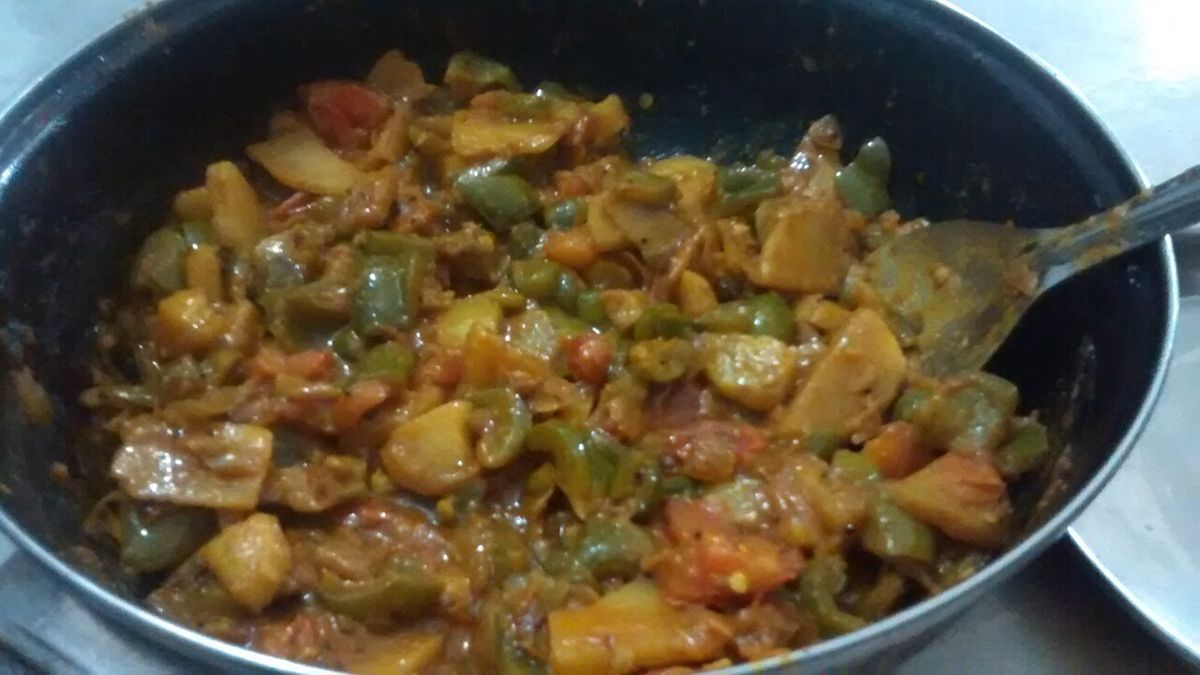
Add the peas and capsicum, fold, and cook uncovered on medium heat for 4 minutes until the capsicum is bright and still has some bite and the masala clings to the vegetables with little liquid left.
- 08
Sprinkle over the garam masala and kasuri methi, toss once, and turn off the heat. Stir in the fresh coriander, cover for 3 minutes so the aromas settle, and taste for salt before serving.
Last reviewed on 2 November 2026.
NNWA publishes the name and qualifications of everyone who writes and checks its material. You can see the full teaching team on the faculty page.
An everyday dish with no fixed list
Mixed vegetable sabzi, usually just called mix veg, has no single origin and no fixed recipe. It is what a North Indian household makes from whatever the sabziwala had that week, a handful of beans, some peas in winter, the last of the cauliflower. This recipe is the home style, dry to semi-dry, built on onion and tomato and eaten with phulkas or rice. It is different from restaurant mix veg, which uses a rich cashew and cream gravy and sits closer to navratan korma, and from the fiery veg Kolhapuri of Maharashtra.
The order of the vegetables
Most disappointing mix veg comes from one decision: tipping everything into the pan together. Potatoes and carrots need far longer than peas, so by the time the potato is soft, the capsicum has gone grey and the peas have split. Staging them in three batches costs no extra effort and makes the dish look and taste as though more care went into it. Cut sizes matter just as much. Hard vegetables are cut smaller, softer ones larger, so that the times even out. Carrots at one centimetre cook in the same time as potato at one and a half, and a cauliflower floret should fit comfortably on a spoon.
Add very little water. The vegetables release their own as they cook under a lid, and a quarter cup is enough to start the steam. The masala should coat the pieces, not float them. If you want a gravy for rice, add half a cup of hot water after the capsicum and simmer for three minutes, but keep the dry version for roti.
Building the masala first
Taste in this dish comes from the base, because the vegetables themselves are mild. Onions taken only to pale yellow leave the sabzi thin and sharp. Eight to ten minutes to a proper gold gives sweetness and body. The tomato stage is finished when the spoon leaves a track on the pan floor and a little oil appears at the rim. Rushing this stage is the usual reason a sabzi tastes sour and raw, and more spice will not fix it later.
Fixing a sabzi that has gone wrong
If the pan is watery at the end, take the lid off, raise the heat and stir gently until the liquid evaporates, or lift the vegetables out, reduce the sauce, and fold them back in. If the vegetables have gone mushy, do not stir any further. Add a handful of quickly fried capsicum or peas for texture, and call it a curry by adding a little water. If it tastes flat, add a squeeze of lemon and a pinch of salt before anything else. If the base has caught and tastes burnt, move the unburnt top to a clean pan without scraping the bottom.
Swaps through the year
The list is entirely flexible. Winter suits turnip, fresh peas and more cauliflower; summer suits lauki, tori and tinda, which go in with the second batch and need little water. Pumpkin works in the first batch, and spinach leaves can be folded in at the very end. Frozen peas and beans are perfectly good and need only the last few minutes. Hing is left out to keep the recipe gluten-free, since most Indian compounded hing contains wheat flour; a pinch with the cumin adds a savoury depth if gluten is not a concern. Dropping the potato and adding more beans or cauliflower makes a lighter plate that suits someone keeping starch low. Ghee in place of oil is fine, though the recipe is then no longer vegan. Ways of building a balanced plate around dishes like this are part of the healthy eating essentials course.
Serving and storing
Serve it hot with phulkas, multigrain roti or plain rice, alongside dal tadka and a bowl of curd to supply the protein that the vegetables lack. It makes a good filling for a wrap with a smear of green chutney, and leftovers stir well through rice with a little extra cumin.
Cool it quickly and refrigerate within two hours for up to two days. Reheat on medium heat with a spoonful of water, stirring gently until steaming throughout. The colour dulls and the capsicum softens by the second day, but the taste holds well. Do not freeze it, since potato turns grainy and most of the vegetables turn limp once they thaw.
Learn the science
Healthy Eating & Everyday Wellness
This dish's nutrition reasoning is taught in full in this NNWA course.
What people ask about Mixed Vegetable Sabzi
Can this sabzi be made in a pressure cooker?
It can, with one whistle on medium heat once the masala is cooked, and it is quick on a busy evening. You lose some of the separation between vegetables, so cut them larger and hold back the peas and capsicum to stir in afterwards.
Should the vegetables be fried before going into the masala?
Restaurants often deep-fry or par-boil them so every piece stays neat, but it adds fat and work that a home sabzi does not need. Browning the cauliflower and potato in a teaspoon of oil is a good middle path if you have the time.
Can onion and garlic be left out?
Yes, as many Jain and fasting-day kitchens do. Use extra ginger, a pinch of hing if gluten is not a concern, and a little more tomato, and skip the potato and carrot for a Jain plate. The sabzi tastes lighter but is still satisfying.
How much does this serve as part of a meal?
The recipe gives about four generous bowls as a side alongside dal and roti. If it is the only vegetable on a table with several dishes, it will stretch to six smaller helpings without anyone going short.
More recipes
Aam Panna
Aam panna is a summer cooler made from cooked raw mango pulp, jaggery, roasted cumin and black salt, diluted with cold water when you want a…
Vegetarian · VeganRecipeAloo Gobi (Potato & Cauliflower Dry Curry)
Aloo gobi is a North Indian dry curry of potatoes and cauliflower cooked together with turmeric, cumin and a light blend of spices until ten…
Vegetarian · VeganRecipeAloo Matar
Aloo matar is a simple North Indian curry of potatoes and green peas in an onion and tomato base. It is one of the most commonly cooked home…
Vegetarian · VeganRecipe