
North Indian · Main course
Methi Malai Matar
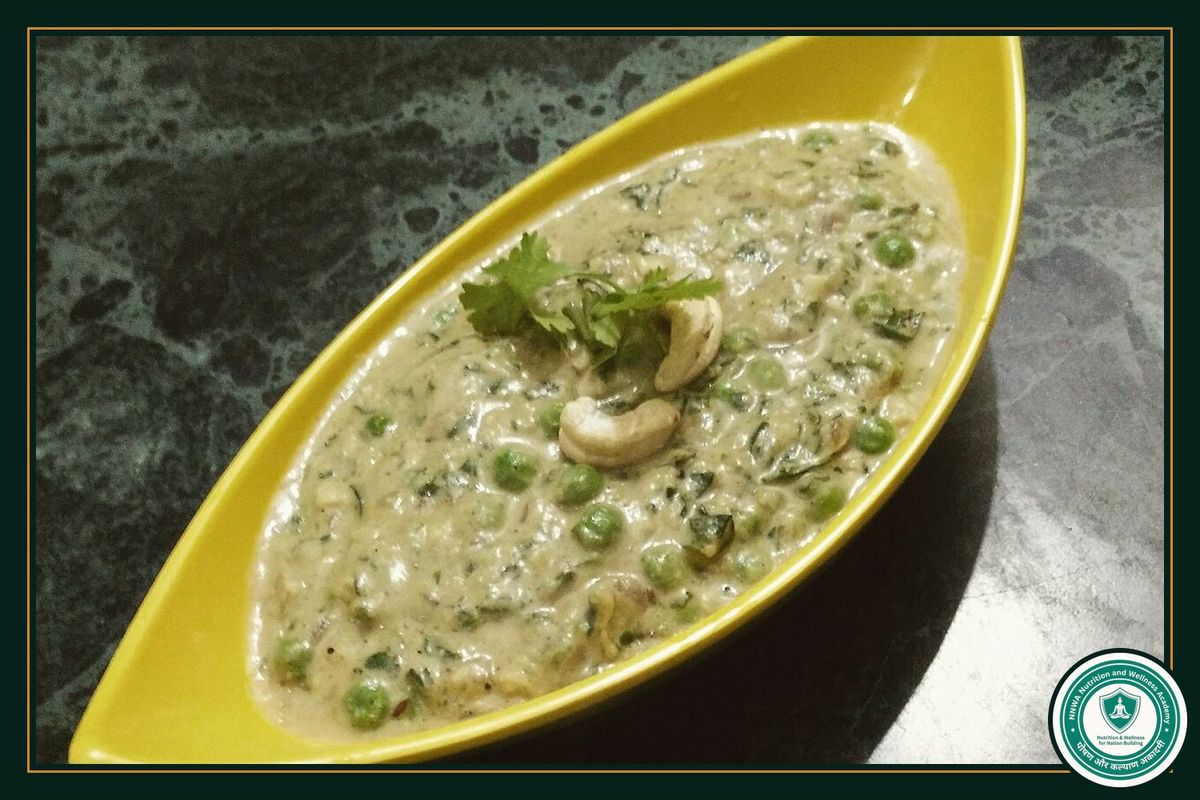
Methi malai matar is a rich North Indian curry of fresh fenugreek leaves and green peas in a pale, gently sweet gravy of onion, cashew, milk and cream. The balance is everything: salt and squeeze the methi to tame its bitterness, and keep the onion paste white by cooking it low and slow.
- Prep
- 25 min
- Cook
- 30 min
- Total time
- 55 min
- Servings
- 4
- Energy per serving
- 284 kcalEstimated from this recipe's ingredients using IFCT 2017 and USDA values. Actual figures vary with portion and cooking.
- Vegetarian
- Gluten-free
- Festive
Ingredients
- 1 large bunch fresh methi (about 250 g on the stem, 2 packed cups of picked leaves)
- 1/2 tsp salt, for the methi
- 1 cup (about 150 g) green peas, fresh or frozen
- 2 medium onions (about 200 g), roughly chopped
- 12 cashews
- 1 inch ginger, sliced
- 2 green chillies, deseeded
- 1/2 cup water, for boiling the onions
- 1 tbsp ghee
- 1 tbsp neutral oil
- 1 bay leaf
- 2 green cardamoms, lightly crushed
- 1 inch cinnamon stick
- 1/2 tsp cumin seeds
- 3/4 cup warm whole milk
- 1/2 cup fresh cream (malai)
- 1/2 tsp salt, for the gravy
- 1/4 tsp sugar
- 1/4 tsp ground white pepper
- 1/4 tsp garam masala
NNWA health note
Methi leaves and peas bring fibre, folate and some iron and vitamin K, and peas add a little protein. The gravy is the rich part: cream, cashew, ghee and whole milk make this a dish for a special meal, not an everyday curry. A modest helping alongside plain roti, a dal and a large salad suits most people. Anyone taking blood-thinning medication such as warfarin should keep their intake of leafy greens steady and ask their doctor about changes. Using a little less cream, as described in the recipe notes, keeps most of the taste.
Method
- 01
Pick the methi leaves from the thick stems and wash them in three changes of water to remove all the grit. Chop roughly, rub with 1/2 tsp salt and leave for 15 minutes until dark and wilted, then squeeze hard to remove the bitter green juice. Rinse once and squeeze again.
- 02
Boil fresh peas in salted water for 4 to 5 minutes until just tender, then drain and rinse under cold water to keep the colour bright. Frozen peas need only 1 to 2 minutes in hot water.
- 03
Simmer the onions, cashews, ginger and chillies in 1/2 cup of water on medium heat for 6 to 7 minutes until the onions look translucent and most of the water has gone. Cool slightly and blend to a smooth, white paste, adding a spoonful of water if needed.
- 04
Heat the ghee and oil in a heavy pan on low to medium heat. Add the bay leaf, cardamom, cinnamon and cumin and let them sizzle for 30 seconds until fragrant.
- 05
Add the squeezed methi and cook on medium heat for 3 to 4 minutes, stirring, until it darkens and smells toasty rather than grassy. Lift it out onto a plate and leave the whole spices in the pan.
- 06
Add the onion paste to the pan and cook on low heat for 6 to 8 minutes, stirring constantly, until it no longer smells raw and loosens slightly at the edges, keeping it pale with no brown colour at all.
- 07
Return the methi, add the peas, 1/2 tsp salt, sugar and white pepper, and stir for 1 minute. Pour in the warm milk slowly while stirring and simmer on low heat for 5 minutes until the gravy coats the back of a spoon.
- 08
Turn the heat to its lowest and stir in the cream. Warm for 2 minutes without letting it boil, stir in the garam masala and turn off the heat. Rest covered for 5 minutes, check the salt and lift out the whole spices before serving.
Last reviewed on 2 November 2026.
NNWA publishes the name and qualifications of everyone who writes and checks its material. You can see the full teaching team on the faculty page.
A richer style of North Indian cooking
Methi malai matar comes from the rich, cream-based side of North Indian cooking, the same family as shahi paneer and navratan korma. It has become a standard item on restaurant menus and at wedding buffets, particularly in winter, when fresh methi and sweet green peas are both at their best in the markets of Punjab, Delhi and Uttar Pradesh. Recipes vary. This version has no tomato and no turmeric, so that the gravy stays pale with green flecks, which is what most people picture. Some home cooks do add a little tomato, which is also fine but makes the sauce pinker and sharper.
Taming the methi
Fresh fenugreek has a pleasant bitterness that needs managing in a delicate gravy. Rubbing the chopped leaves with salt and leaving them for fifteen minutes draws out the dark juice where much of that bitterness sits. Squeeze, rinse and squeeze again. A short fry then drives off the raw, grassy edge. Blanching the leaves for a minute in boiling water is a faster alternative, though the colour fades a little. Some bitterness should remain, because it is what stops the dish from tasting like sweetened cream. Baby methi is milder and may need only a short salting. Take care to wash thoroughly, because methi often carries fine silt in its roots and stems.
Keeping the gravy white
A pale gravy is harder than it sounds, because the instinct is to fry onions until brown. Here they are boiled first, then the paste is cooked over low heat with constant stirring. It takes patience, and it matters: raw onion paste left uncooked tastes harsh even after simmering, and browned paste turns the gravy beige and bitter. Stir in warm milk slowly, since cold milk poured into a hot pan can split. The cream goes in last, over the lowest possible flame.
Fixing common faults
If the dish tastes too bitter, the methi needed more salting. Add another spoonful of cream, a pinch more sugar and a splash of milk to soften it. If the gravy has split into grainy flecks, take it off the heat and whisk in a spoonful of warm milk or cream, or blend a little of the sauce with a soaked cashew and stir it back in. If it is too sweet, add a pinch of salt, a little more white pepper and a squeeze of lemon right at the end, off the heat. If the sauce has become too thick, loosen it with warm milk rather than water, so that it retains its body.
Substitutes and a lighter version
When fresh methi is out of season, frozen chopped methi works well after thawing and squeezing, with no need to salt it. Kasuri methi gives the aroma but none of the body, so two tablespoons crushed into the gravy produces something closer to a fragrant matar malai than the true dish. Almonds or melon seeds can replace cashews in the paste. Hing is left out here, which keeps the recipe free of the wheat flour found in most compounded hing.
For a lighter version, keep the cashews, swap half the cream for extra whole milk, and use one tablespoon of ghee in total. The gravy stays pale and silky, but with less weight. Using low-fat milk throughout is possible, though it tends to split and leaves a thin sauce. Ways of keeping what makes a rich dish satisfying while lowering its fat are a part of the culinary nutrition course. Plain curd can take the place of cream only at the very end, and off the heat, or it will curdle.
Serving and storing
The mild, sweet sauce suits soft breads best, such as naan, phulka or a plain paratha, and it also works well with jeera rice or a simple vegetable pulao. As this is a mild main dish, it does best with something sharp alongside, such as a chilli pickle or an onion salad with lemon. It also sits well beside a darker dish such as dal makhani for a festive table.
Refrigerate within two hours and eat within two days. Dairy gravies thicken a good deal when chilled, so reheat over low heat with a splash of milk, stirring often, and avoid boiling. Do not freeze the finished dish, as the cream separates on thawing. You can, however, freeze the onion and cashew paste for up to a month, then cook the rest fresh on the day, which cuts the work considerably for a dinner party.
Learn the science
Culinary Nutrition (Nutrition Chef)
This dish's nutrition reasoning is taught in full in this NNWA course.
What people ask about Methi Malai Matar
Why is my methi malai matar turning yellow or beige?
Browned onion paste or a pinch of turmeric are the usual reasons. Boil the onions first, then cook the paste over low heat without letting it colour. Using ghee at too high a heat can also darken the sauce, so keep the flame gentle throughout.
How much methi should I buy?
One large market bunch of about 250 g on the stem gives roughly two packed cups of picked leaves, which shrink to a small handful once salted and squeezed. It looks like too much at the start, and it is not.
Can this be made without onion?
Yes. Use extra cashews, melon seeds and a little more ginger for body, and skip straight from the whole spices to the methi. The gravy will be lighter, slightly sweeter and very smooth, and it works well for those who avoid onion on certain days.
Can I make it ahead for a party?
Make the gravy without cream up to a day ahead and refrigerate it, keeping the peas separate so they stay green. On the day, warm it gently with a little milk, fold in the peas, and add the cream just before serving.
More recipes
Aam Panna
Aam panna is a summer cooler made from cooked raw mango pulp, jaggery, roasted cumin and black salt, diluted with cold water when you want a…
Vegetarian · VeganRecipe
Aloo Gobi (Potato & Cauliflower Dry Curry)
Aloo gobi is a North Indian dry curry of potatoes and cauliflower cooked together with turmeric, cumin and a light blend of spices until ten…
Vegetarian · VeganRecipe
Aloo Matar
Aloo matar is a simple North Indian curry of potatoes and green peas in an onion and tomato base. It is one of the most commonly cooked home…
Vegetarian · VeganRecipe