
South Indian · Main course
Kerala Egg Roast
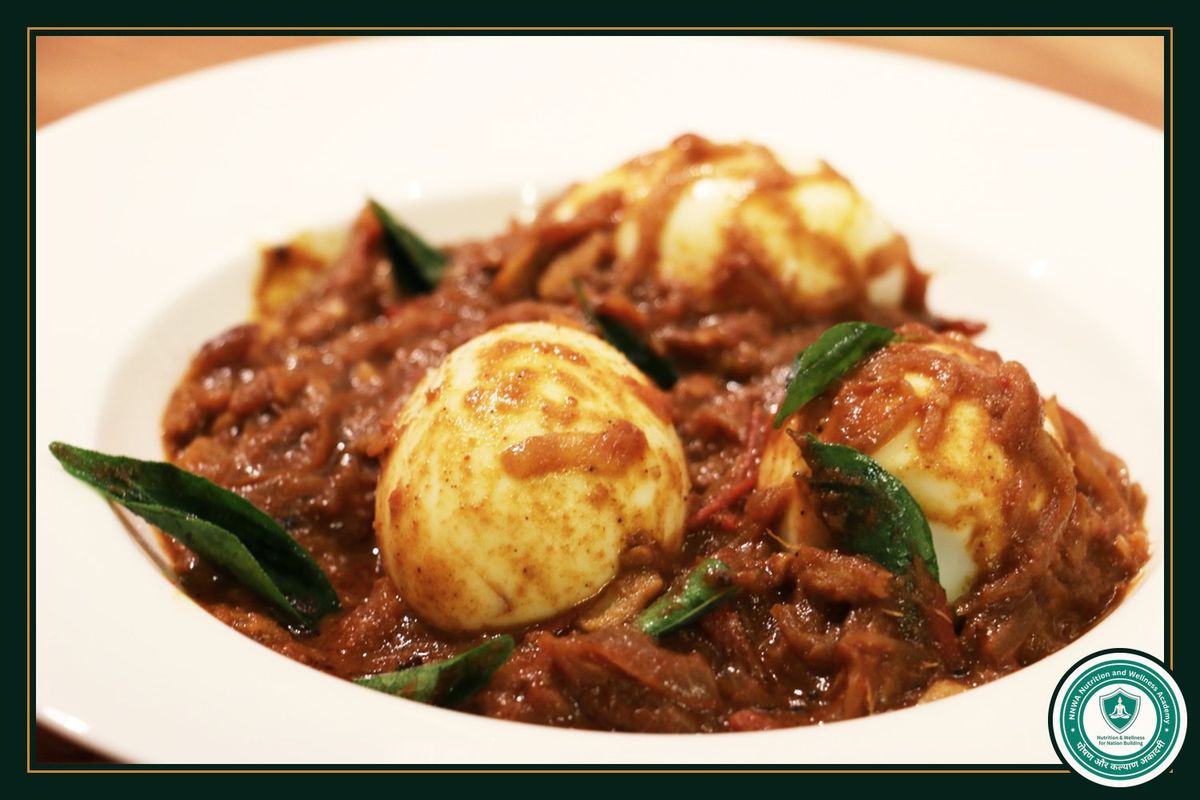
Kerala egg roast, or mutta roast, is a dry-style dish of boiled eggs in a dark masala of slowly caramelised onions, coconut oil, curry leaves and spices. Patience with the onions decides it: browned over about twenty-five minutes, they melt into a sweet, jammy coating. Rushed onions give a thin, sharp gravy that slides off the egg.
- Prep
- 15 min
- Cook
- 45 min
- Total time
- 1 hr
- Servings
- 3
- Energy per serving
- 359 kcalEstimated from this recipe's ingredients using IFCT 2017 values. Actual figures vary with portion and cooking.
- High-protein
- Gluten-free
Ingredients
- 6 eggs
- 3 tablespoons coconut oil
- 1/2 teaspoon mustard seeds
- 4 medium onions, about 400 g, thinly sliced
- 3/4 teaspoon salt, or to taste
- 1 inch ginger, finely chopped
- 5 garlic cloves, crushed
- 2 green chillies, slit
- 20 curry leaves, from about 2 sprigs
- 1 1/2 teaspoons Kashmiri red chilli powder
- 1 teaspoon coriander powder
- 1/4 teaspoon turmeric
- 1/2 teaspoon freshly crushed black pepper
- 1 large tomato, about 150 g, finely chopped
- 1/4 cup hot water
- 1/2 teaspoon garam masala
- 1 teaspoon coconut oil, to finish
NNWA health note
Two eggs give a serving a solid amount of good-quality protein, along with choline and vitamin B12, and the onions and tomato bring some fibre. Coconut oil is high in saturated fat, so three tablespoons between three people is about the right limit, and you can manage on two with a non-stick pan. Boiled eggs are not fried here, which keeps this lighter than many restaurant versions. Anyone told by a doctor to limit egg yolks should follow that advice; extra whites are an easy swap.
Method
- 01
Put the eggs in a pan with cold water to cover by about 2 cm. Bring to a boil on high heat, lower to a gentle simmer for 10 minutes, then move them to cold water for 5 minutes. Peel, and make 3 or 4 shallow lengthwise cuts in each egg.
- 02
Heat the 3 tablespoons of coconut oil in a heavy, wide pan on medium heat. Add the mustard seeds and wait for about 20 seconds until they splutter, then add the onions and salt, and stir to coat.
- 03
Cook the onions on medium heat for 20 to 25 minutes, stirring every couple of minutes and more often near the end. They will soften, turn translucent, reduce sharply, and finally become a deep caramel brown with a sweet smell. Add a spoon of water if they stick.
- 04
Add the ginger, garlic, green chillies and half the curry leaves, and stir for 2 to 3 minutes on medium heat, until the sharp garlic smell has mellowed and the leaves have crisped a little.
- 05
Lower the heat, add the chilli powder, coriander, turmeric and pepper, and stir for about 45 seconds, until the oil turns red and it smells toasted. If the spices start to catch, add a splash of water.
- 06
Add the tomato and cook on medium heat for 5 to 6 minutes, mashing with the back of the spoon, until it has collapsed entirely into the onions and the oil appears around the edges.
- 07
Pour in the hot water, stir, and let it bubble for 2 minutes on medium-low heat, until you have a thick masala that drops heavily from the spoon. Taste and correct the salt.
- 08
Lower in the eggs and spoon the masala over them, turning them gently. Cover and cook on low heat for 5 minutes, until the masala is clinging and the eggs are hot right through.
- 09
Sprinkle over the garam masala and the remaining curry leaves, drizzle with the teaspoon of coconut oil, and turn off the heat. Keep the lid on for 5 minutes so the aroma is sealed in before serving.
Last reviewed on 2 November 2026.
NNWA publishes the name and qualifications of everyone who writes and checks its material. You can see the full teaching team on the faculty page.
A staple of Kerala breakfasts and tea shops
Mutta roast is found everywhere in Kerala, from home breakfasts to tea shops and small restaurants. In spite of the name, nothing here is roasted in an oven. Roast in Kerala cooking refers to a dish that is cooked down in a pan with onions and spices until it is dark, thick and dry, as in the better-known beef roast. Most famously, it is eaten with soft, lacy appam for breakfast, or with puttu or flaky Malabar parotta at any hour.
The dish has many household variations. Some cooks use a little fennel or tamarind and others add coconut milk for a looser result. This recipe keeps to the common thick, onion-rich home style, without coconut milk.
Taking the onions all the way
Four onions may seem far too many for six eggs, but they reduce to a modest amount of masala. They are the gravy in this dish. A generous pinch of salt at the start draws out their water, which helps them to soften evenly and not fry too soon. Medium heat is the correct setting, and the first ten minutes are forgiving. After that, they colour fast and need your attention.
The change is easy to see. First they go limp and pale, then they turn golden and start to clump, and then a deep reddish-brown with a sweet, jam-like smell. If you stop at pale gold, the dish will be sharp and thin and will not cling to the egg. Thin slicing and a wide pan both help, since a deep, narrow pot steams the onions and they refuse to brown. This is also the stage at which good coconut oil earns its place, as its aroma goes straight into the base of the dish.
Preparing the eggs
Boil the eggs from cold and stop at 10 minutes for a set yolk with no grey ring. A quick cold bath makes them easier to peel and halts the cooking; slightly older eggs peel more cleanly than very fresh ones. Shallow cuts in the white allow the masala in, so that the egg does not taste plain beneath a strongly flavoured coat. Some cooks also fry the boiled eggs in a teaspoon of oil with chilli powder and turmeric for about a minute, until the surface blisters. It is a nice addition and an optional one.
Boiled eggs should go into the fridge if you are not using them within two hours, and peeled eggs are best used the same day.
Common mistakes and their fixes
If the masala tastes sharp and thin, the onions were not browned enough. Remove the eggs, and cook the masala on medium heat with a spoon more oil until it darkens; a teaspoon of sugar can help the colour along, although Kerala cooks would not need it. If you have overdone the chilli, stir in a spoonful of coconut milk off the heat or a little more tomato. If the onions have gone from brown to bitter black in places, remove the burnt bits if there are only a few, and start again if there are many. Too watery? Uncover and cook off the liquid; do not add flour or any thickener.
Substitutions and a lighter version
If coconut oil is not to your taste, use any neutral oil, but know that the dish loses a good part of its Kerala character. Shallots (small onions) are sweeter and very authentic if you have the time to slice that many. Kashmiri chilli is used for its red colour; if you have only a hotter chilli powder, use half the amount and add a little paprika. For anyone cutting down, use two tablespoons of oil in a non-stick pan and add water by the spoon as the onions cook. More on what an egg brings to a plate is in this egg protein guide, and sourced figures for a similar gravy dish are on the egg curry page. For a looser, curry-style version of the idea, see egg curry.
Serving, storing and reheating
Serve hot, with two eggs per person. Appam soaks up the masala well, and its faint sweetness suits the spice, as does steamed rice with a thin coconut curry. Leftover roast is excellent folded into a parotta roll with sliced raw onion.
Keep any leftovers in a sealed box in the fridge and eat within two days, refrigerating them within two hours of cooking. Reheat in a pan on low heat with a splash of water, covered, until steaming hot throughout. The whites turn rubbery if microwaved at full power, so cut the eggs in half and use a medium setting if you need to. Do not freeze this dish, since the cooked whites become tough and watery. The onion masala alone freezes well for up to a month, so a double batch gives you a quick start for another day: warm it, add freshly boiled eggs and you have it ready in a quarter of an hour.
Learn the science
Sports Nutrition
This dish's nutrition reasoning is taught in full in this NNWA course.
What people ask about Kerala Egg Roast
What does the word roast mean in this dish?
In Kerala, a roast means a dish cooked in an open pan until the masala turns dark and clings to the main ingredient, with almost no gravy. It has nothing to do with oven roasting, and the same term is used for Kerala beef roast and chicken roast.
Can I make Kerala egg roast with coconut milk?
Yes. Add a quarter cup of thick coconut milk in place of the hot water and warm it through gently without boiling hard. The dish will be milder, creamier and more like a stew, which many people enjoy with appam, though the dry roast character will be softer.
How do I stop the boiled eggs from going rubbery?
Avoid long cooking after they go into the masala. Five minutes on low heat is all they need to warm through and take on flavour. Long simmering or a hot reheat tightens the whites, so add the eggs last and keep the heat gentle.
Which onions work best for mutta roast?
Ordinary red onions are what most home cooks use and they give a good, sweet masala. Small shallots are more traditional in some Kerala kitchens and slightly sweeter, though they take longer to prepare. Slice either thinly and evenly, as thick pieces will not melt down.
Is Kerala egg roast good for a high-protein meal?
Yes, two whole eggs per person give a useful amount of protein, and it is easy to add an extra boiled egg white to each plate if you need more. Eaten with appam or parotta, it makes a satisfying meal, and a salad or thoran adds the missing vegetables.
More recipes
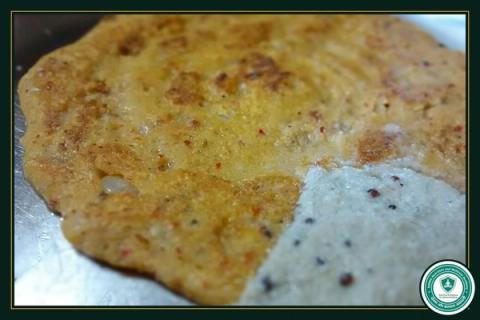
Adai (Mixed Lentil Crepe)
Adai is a thick South Indian crepe made from a coarsely ground batter of rice and several dals, typically chana, toor and urad, with dried c…
Vegetarian · VeganRecipe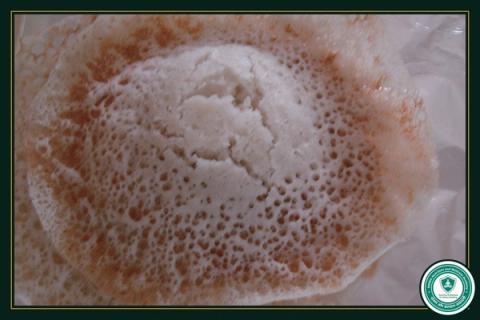
Appam
Appam is a Kerala pancake made from a fermented batter of raw rice, cooked rice and coconut, cooked in a curved pan so it forms thin lacy ed…
Vegetarian · Gluten-freeRecipe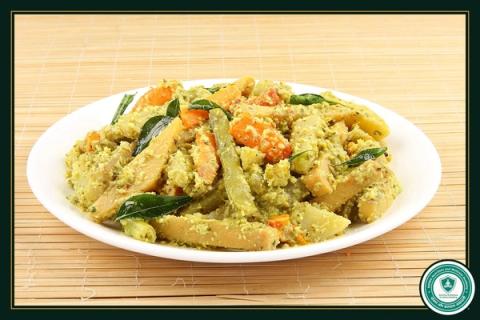
Avial (Kerala Mixed Vegetable Curry in Coconut-Yoghurt Sauce)
Avial is a Kerala main course of mixed vegetables simmered in a coconut and green chilli paste and finished with a spoonful of yoghurt and r…
Vegetarian · Gut-healthRecipe