
East Indian · Main course
Dalma
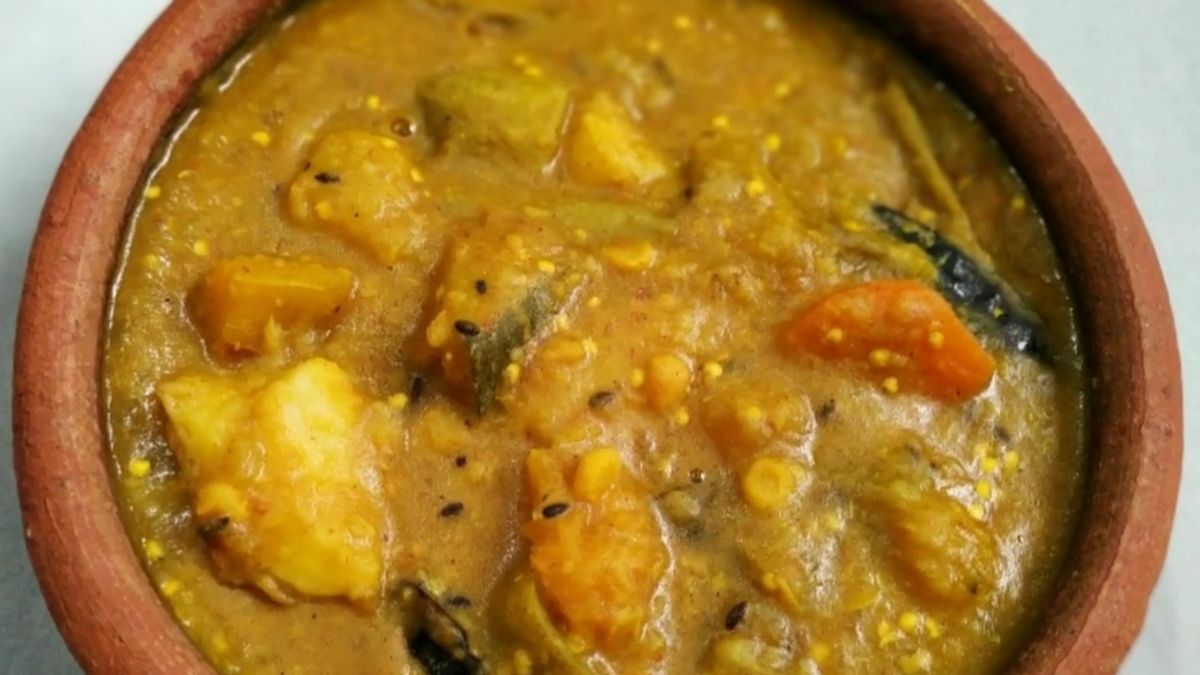
Dalma is the everyday Odia dish of toor dal simmered with chunky vegetables such as raw papaya, raw banana and pumpkin, then finished with ghee, pancha phutana, roasted cumin powder and coconut. Success depends on adding the vegetables in stages, so each one turns tender without collapsing into the dal.
- Prep
- 25 min
- Cook
- 40 min
- Total time
- 1 hr 5 min
- Servings
- 4
- Vegetarian
- Gluten-free
Ingredients
- 1 cup (200 g) toor dal (arhar)
- 4 cups water, plus more to adjust
- 1/2 teaspoon turmeric powder
- 1 teaspoon salt, or to taste
- 1 inch ginger, finely grated
- 1 cup raw papaya, peeled and cut into 2 cm cubes
- 1/2 cup suran (elephant foot yam), peeled and cubed, optional
- 1 raw banana, peeled and cut into thick half moons
- 1 cup pumpkin, skin on, cut into 3 cm chunks
- 1 small brinjal, cut into 3 cm chunks
- 2 teaspoons cumin seeds, for the bhaja masala
- 3 dried red chillies, 1 for the bhaja masala and 2 for tempering
- 2 tablespoons ghee
- 2 bay leaves
- 1 teaspoon pancha phutana (Odia five-spice mix)
- 1/4 cup freshly grated coconut
NNWA health note
Dalma is a sensible everyday meal. Toor dal supplies protein and fibre, rice alongside it rounds out the amino acids, and the vegetables add bulk and more fibre for very little fat. The ghee here works out to about half a tablespoon a serving, which carries the flavour without weighing the dish down. Raw banana and yam are starchy, so a large helping with a full plate of rice is a bigger meal than it looks. Dal and these vegetables are also rich in potassium, so anyone with kidney disease should follow their doctor or dietitian on portions.
Method
- 01
Rinse the dal until the water runs nearly clear and soak it for 20 minutes. Cut all the vegetables now, keeping the raw banana in a bowl of water so it does not darken.
- 02
For the bhaja masala, dry roast the cumin seeds and one dried chilli in a small pan on low heat for 2 to 3 minutes, until the cumin is a shade darker and smells nutty. Cool and grind to a powder.
- 03
Drain the dal and put it in a pressure cooker with the water, turmeric, salt and ginger. Cook on medium heat for 2 whistles, then on low for 3 minutes, and let the pressure fall on its own.
- 04
Open the cooker and check the dal. It should be soft enough to crush between two fingers, with some grains still whole. Whisk it lightly, about ten strokes, and leave it loose and pourable.
- 05
Bring the dal to a gentle simmer on medium heat and add the papaya and yam. Cover and cook for 8 minutes, until the papaya has lost its raw white look at the edges.
- 06
Add the raw banana, pumpkin and brinjal with a splash of hot water if the dal looks tight. Cover and simmer on low for 10 to 12 minutes, until a knife slides through each piece and the pumpkin is just starting to soften at its corners.
- 07
Stir gently once or twice with a flat spoon rather than whisking, so the pieces stay whole. Taste for salt; the dal should be thick enough to coat a spoon but still fall off it.
- 08
In a small pan, heat the ghee on medium until it shimmers. Add the bay leaves, pancha phutana and the two remaining chillies and let them crackle for about 30 seconds, taking care that the fenugreek in the mix does not go dark and bitter.
- 09
Pour the sizzling tempering straight into the dal and cover for 2 minutes to trap the aroma. Stir in the bhaja masala and half the coconut, simmer on low for 2 minutes, and top with the rest of the coconut to serve.
Last reviewed on 2 November 2026.
NNWA publishes the name and qualifications of everyone who writes and checks its material. You can see the full teaching team on the faculty page.
The dish and how it is eaten
Dalma belongs to Odisha, where it is ordinary home food and also part of temple cooking in Puri. It is more than a dal with some vegetables thrown in. The vegetables are cut large and count as half the dish, so a bowl of dalma with rice can be a whole lunch. The version here is a traditional home style with no onion, garlic or tomato, which is how most Odia cooks would describe a proper dalma. Some households add a little hing or a pinch of sugar, and vegetables change with the season and the market. Drumstick, ridge gourd and green beans all turn up.
The technique that decides the result
Timing is the whole skill. Raw papaya and yam are dense and need a head start, while raw banana, pumpkin and brinjal go soft quickly. If everything goes into the cooker together with the dal, which is a common weekday shortcut, you get a uniform yellow mash and the pumpkin disappears. Cooking the dal first and adding vegetables in two stages keeps each piece recognisable. The second thing that matters is the bhaja masala. Freshly roasted cumin and chilli, ground just before use, give dalma its smoky finish. Shop-bought cumin powder tastes flat by comparison, and it is only two minutes of work.
Common mistakes and their rescues
If the dal is too thin after the vegetables are done, take the lid off and simmer on medium for 5 minutes, then crush a few pumpkin pieces against the side of the pan. If it has set too thick, loosen it with hot water rather than cold, a quarter cup at a time, and bring it back to a simmer. If the dal stays hard after cooking, the likely cause is old pulses; give it another whistle before the vegetables go in. Bitterness usually means burnt fenugreek in the pancha phutana. Make a fresh tempering in a clean pan and, if the first one has already gone in, add a small pinch of sugar and a spoon of coconut to soften the edge. Vegetables that have gone to mush cannot be brought back, but the dish still tastes right, so serve it as a thick dal and cut larger next time.
Substitutions and a lighter version
Pancha phutana is equal parts cumin, mustard, fennel, fenugreek and nigella, and Bengali panch phoron works the same way. If raw papaya is hard to find, use lauki or ridge gourd, added with the second batch since both cook faster. Chana dal or a mix of toor and moong can stand in for part of the toor, though the texture will change. Suran can make the hands itch, so rub them with a little oil before peeling and cook it fully. To make it vegan, temper in mustard oil rather than ghee; the flavour is sharper, and it is a different dish from the ghee version, though still a good one. For a lighter bowl, keep the ghee to 2 teaspoons and leave out the yam and banana, using more pumpkin and papaya instead. You lose some body, and the bhaja masala and coconut still carry the dish.
Serving it
Steamed rice is the classic partner, with a small fried vegetable on the side such as begun bhaja and a spoon of ghee if the day allows. Dalma also goes well with roti, and many Odia families serve it in summer beside pakhala bhata. If you are used to a thinner North Indian dal tadka, expect this to feel closer to a stew. The serving-level figures are on the dalma dish page, which is the place to look if you are counting.
Storing and reheating
Cool the dalma within an hour or two and refrigerate it in a closed container for up to 2 days. It thickens a good deal overnight because the raw banana and dal keep absorbing liquid, so add hot water when reheating and warm it through on low heat until bubbling, stirring gently. Papaya and banana turn grainy after freezing, so this one is better made fresh. A small fresh tempering of ghee and cumin on the second day brings back most of the aroma.
Learn the science
Plant-Based Nutrition
This dish's nutrition reasoning is taught in full in this NNWA course.
What people ask about Dalma
Is dalma the same as sambar?
No. Both combine toor dal and vegetables, but sambar is built on tamarind and a ground sambar powder, while dalma has no souring agent and relies on pancha phutana, roasted cumin and coconut for its gentler, sweeter taste.
Can I make dalma without a pressure cooker?
Yes. Simmer the soaked dal in a heavy covered pot on low heat for about 35 to 40 minutes, topping up with hot water as needed, then carry on with the vegetables exactly as written in the steps.
Why does traditional dalma leave out onion and garlic?
The tradition follows the temple and home kitchens of Odisha, where these are avoided in much sattvik cooking. Ginger, bay leaf and roasted cumin give enough savour, so a first attempt without them is well worth trying before you change anything.
Which vegetables should I avoid in dalma?
Skip anything that bleeds colour or strong flavour, such as beetroot, cabbage or capsicum, since they take over the pot. Stay with mild, starchy or gourd-type vegetables, which soak up the dal and hold their pieces through the simmer.
Can dalma be packed for a tiffin?
It travels well if you keep it a little looser than you would at home, since it sets as it cools. Pack it hot in a sealed flask, or chill it and reheat thoroughly at work before eating it with rice.
More recipes
Aloo Posto (Bengali Potato & Poppy Seed Curry)
Aloo posto is a Bengali side dish from West Bengal made by simmering cubed potatoes in a ground white poppy seed paste with minimal spicing.…
VegetarianRecipe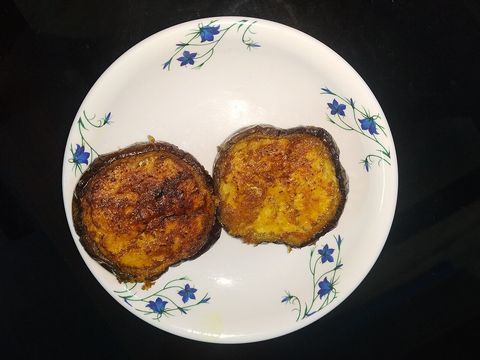
Begun Bhaja
Begun bhaja is thick slices of brinjal rubbed with turmeric, salt and a little sugar, then fried in mustard oil until browned outside and cr…
Vegetarian · VeganRecipeBengali Shukto (Mixed Vegetable Bitter Curry)
Shukto is a traditional Bengali mixed vegetable curry from West Bengal, built on bitter gourd and a medley of seasonal vegetables in a light…
Vegetarian · VeganRecipe