
North Indian · Main course
Soya Chunks Curry
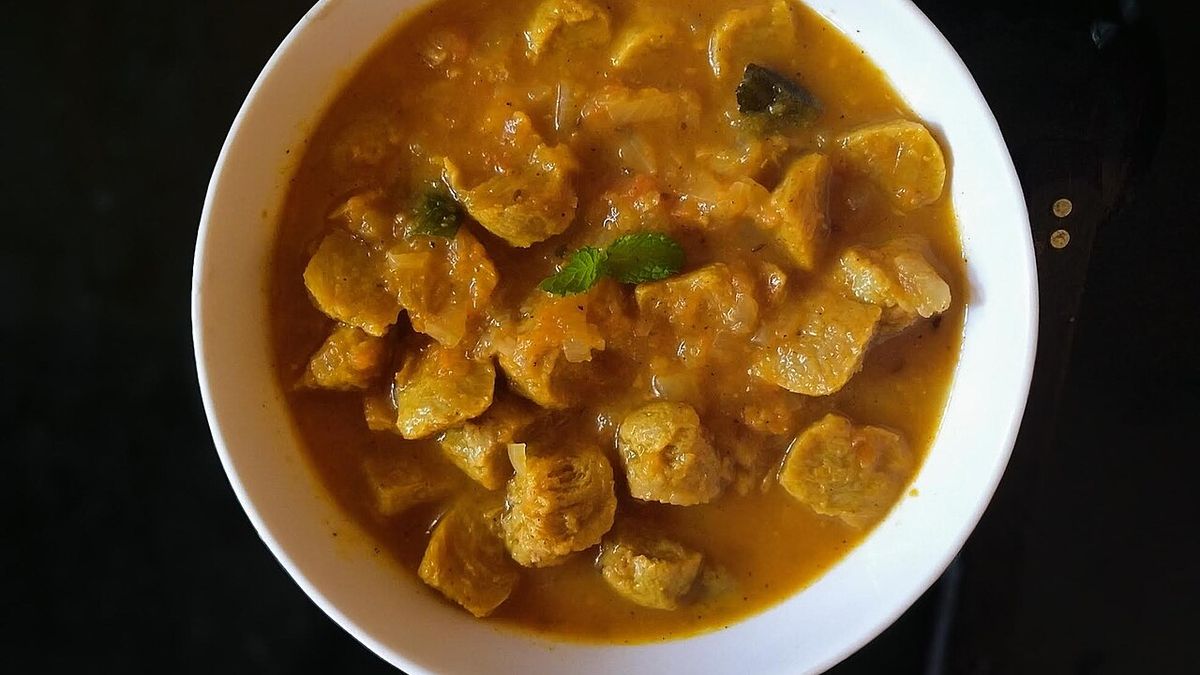
Soya chunks curry, often called nutri or meal maker curry, is a homely Indian dish of textured soya simmered in an onion and tomato gravy. Preparation decides it: boil the chunks, rinse them and squeeze them hard, twice, or they keep a beany smell and taste of very little.
- Prep
- 15 min
- Cook
- 35 min
- Total time
- 50 min
- Servings
- 4
- Vegetarian
- Vegan
- High-protein
Ingredients
- 1.5 cups (about 100 g) dry soya chunks
- 1 litre water, for boiling the chunks
- 1/2 tsp salt, for the boiling water
- 2 tbsp neutral oil, plus 1 tsp for browning
- 1 bay leaf
- 1 tsp cumin seeds
- 2 medium onions (about 200 g), finely chopped
- 1 tbsp ginger-garlic paste
- 1 green chilli, slit
- 3 medium tomatoes (about 300 g), puréed or finely chopped
- 1/2 tsp turmeric powder
- 1 tsp Kashmiri red chilli powder
- 2 tsp coriander powder
- 1/2 tsp cumin powder
- 3/4 tsp salt, for the curry
- 1.5 cups hot water
- 1/2 tsp garam masala
- 1 tsp kasuri methi, crushed between the palms
- 2 tbsp chopped fresh coriander
NNWA health note
Soya chunks are made from defatted soya flour, so they are one of the most concentrated plant proteins in an Indian kitchen, with the amino acid balance to match. Check the packet for its protein figure and work out your share from the dry weight. A portion also brings fibre, iron and very little fat, and the gravy here uses little oil. The chunks are still a processed food and work best alongside dals and other pulses, not as a replacement for them. Anyone with kidney disease, or taking thyroid medication, should ask their doctor how much soya suits them.
Method
- 01
Bring the litre of water and 1/2 tsp salt to a rolling boil, add the soya chunks and boil on medium heat for 5 minutes until they have swollen to about three times their size and feel spongy throughout.
- 02
Drain and cover with cold water. When cool enough to handle, squeeze each handful hard over the sink until no more water runs out. Soak in fresh cold water for a minute and squeeze again; the chunks should smell neutral and feel only slightly damp.
- 03
Heat 1 tsp oil in a heavy pan on medium-high heat, add the chunks and fry for 4 to 5 minutes, stirring now and then, until patches of golden brown appear. Tip them onto a plate.
- 04
In the same pan, heat the remaining 2 tbsp oil on medium heat. Add the bay leaf and cumin seeds and let them sizzle for about 30 seconds. Add the onions and cook for 10 minutes, stirring often, until a deep golden colour.
- 05
Stir in the ginger-garlic paste and green chilli and cook for 1 minute until the raw smell softens. Add the turmeric, chilli powder, coriander powder and cumin powder with a splash of water and stir for 30 seconds.
- 06
Add the tomatoes and salt and cook on medium heat for 8 to 10 minutes, stirring and mashing, until the masala is thick and dark and oil separates at the edges. Rushing this stage leaves a sour, thin curry.
- 07
Add the browned chunks and stir for 2 minutes so they take up the masala. Pour in the hot water, bring to a boil, then cover and simmer on low heat for 12 minutes until a chunk tastes seasoned right through and the gravy coats a spoon.
- 08
Stir in the garam masala and kasuri methi and simmer for 1 minute more. Turn off the heat, add the fresh coriander, rest covered for 5 minutes and check for salt before serving.
Last reviewed on 2 November 2026.
NNWA publishes the name and qualifications of everyone who writes and checks its material. You can see the full teaching team on the faculty page.
A modern pantry staple
Unlike most of the dishes in this collection, soya chunks curry has no old regional story. Textured soya is a modern product, made by extruding defatted soya flour, and it reached Indian kitchens in the second half of the last century under names such as nutri, nutrela and meal maker. It has since become a dependable weeknight curry in homes from Punjab to Bengal, and a favourite among vegetarian students and gym-goers. Regional habits vary: some add potato and cook it like a meat curry, others keep it dry with a thick masala. This recipe gives the North Indian home gravy version.
Boil, rinse, squeeze, repeat
Dry soya chunks have a faint beany, cardboard-like smell, and they stay rubbery if they are only soaked for a few minutes. Most people who dislike the dish have eaten chunks that were not prepared properly. Boiling hydrates them completely and starts to carry away the smell. The cold rinse and squeeze removes the cloudy water that holds that smell. Doing it twice sounds fussy, but it takes under three minutes and changes the dish from something to tolerate into something to look forward to.
Squeezing also makes the chunks thirsty. A chunk that still holds boiling water cannot absorb masala, and it stays bland inside no matter how long the curry simmers. A properly squeezed chunk acts like a sponge, and the twelve-minute simmer fills it with seasoned gravy. Larger chunks can be torn in half to expose more surface. Browning them in a little oil adds a nutty, roasted note and a slightly firmer bite.
Troubleshooting the pot
If the curry has a beany smell, the chunks were not rinsed thoroughly. Lift them out, rinse and squeeze them again, brown them and return them to the gravy with an extra pinch of garam masala. If the chunks are tough, they need more time: add half a cup of hot water and simmer for ten minutes more. Very old packets can stay chewy regardless, so check the date on the pack. If the gravy is thin, mash a few chunks into it and simmer uncovered for five minutes. If it tastes sharp, the tomatoes needed longer; let it simmer with a pinch of sugar for a few minutes.
Variations and swaps
Adding two peeled and cubed potatoes with the hot water turns this into a fuller one-pot meal, and a few peas in the last five minutes add some sweetness. For a richer, restaurant-style finish, stir in two tablespoons of beaten curd on low heat with the masala before adding water, keeping in mind that the recipe is then no longer vegan. Ground melon seeds or cashews add body in the same way. Soya granules can replace chunks, in which case they need only a brief soak and a dry, keema-style finish like keema matar, made without meat. Gluten-free readers should check the pack, because soya chunks are sometimes processed on lines shared with wheat, and hing is left out of this recipe for the same reason.
To lighten the dish, reduce the oil to a tablespoon and use a non-stick pan. There is little else to remove, since the fat in this curry is entirely in the tempering. The soya chunks curry dish page lists sourced figures for a typical serving.
Fitting it into a day of eating
The curry goes best with plain rice, jeera rice or phulkas, with a salad of cucumber and onion. It can also be simmered down until nearly dry and folded into a wrap, which makes a good lunchbox meal. Because a serving supplies so much protein, it is useful for vegetarians who struggle to reach their daily target, and it pairs well with lentils through the rest of the day rather than replacing them. The guide to vegetarian protein sources shows where soya stands beside dals, paneer and curd, and the plant-based nutrition course covers planning this kind of diet in more depth.
Storing and reheating
The curry keeps for up to three days in a closed container in the refrigerator, provided it is cooled and put away within two hours. Soya chunks keep absorbing liquid as they sit, so it will be thicker the next day. Add a splash of hot water and simmer until steaming hot right through. It freezes well for up to a month, and it thaws without turning grainy. Boiled and squeezed chunks can also be frozen plain in a closed bag for a quick curry another day. Keep the dry packet sealed in a cool cupboard to avoid staleness.
Learn the science
Plant-Based Nutrition
This dish's nutrition reasoning is taught in full in this NNWA course.
What people ask about Soya Chunks Curry
How many soya chunks should one person eat?
A home serving of about 25 g dry weight, as in this recipe, is reasonable for most adults several times a week. It is sensible to rotate soya with dals, chana and dairy instead of depending on it alone for protein at every meal.
Do soya chunks disturb hormones in men?
Normal food amounts of soya have not been shown to harm male hormone levels in the human research available, despite the common worry. Very large intakes are a different matter, and anyone with a specific endocrine condition should take advice from their own doctor.
Can soya chunks be soaked instead of boiled?
Soaking in very hot water for 15 minutes works, and it is what many packets suggest. Boiling gives softer, more evenly hydrated chunks with less of the raw smell, so it is worth the small extra step whenever you have the time.
Can this curry be made in a pressure cooker?
Yes. After frying the masala, add the squeezed chunks and hot water, and cook for one whistle on medium heat. Let the pressure fall by itself. The chunks turn softer than in the open pan, and you may need to boil off a little gravy.
Is it suitable for children?
Soya chunks are a fine family food when well cooked and cut into small pieces for younger children. Reduce the chilli and serve smaller portions, and keep the rest of the plate varied with dal, rice and vegetables rather than relying on soya daily.
More recipes
Aam Panna
Aam panna is a summer cooler made from cooked raw mango pulp, jaggery, roasted cumin and black salt, diluted with cold water when you want a…
Vegetarian · VeganRecipeAloo Gobi (Potato & Cauliflower Dry Curry)
Aloo gobi is a North Indian dry curry of potatoes and cauliflower cooked together with turmeric, cumin and a light blend of spices until ten…
Vegetarian · VeganRecipeAloo Matar
Aloo matar is a simple North Indian curry of potatoes and green peas in an onion and tomato base. It is one of the most commonly cooked home…
Vegetarian · VeganRecipe