
East Indian · Breakfast
Sattu Paratha
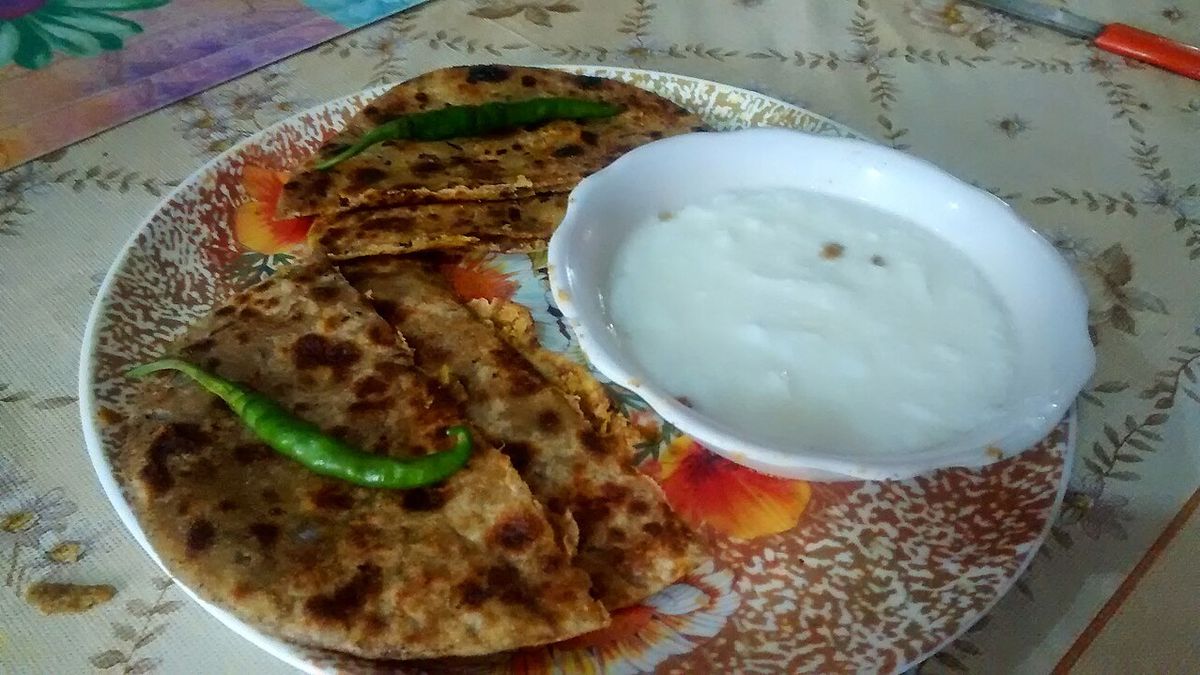
Sattu paratha is a whole wheat flatbread from Bihar and eastern Uttar Pradesh, stuffed with roasted gram flour sharpened with raw onion, garlic, green chilli, ajwain, pickle oil and lemon. Its success rests on the filling's moisture: squeezed in a fist it must hold together, or the paratha will either split or taste dry.
- Prep
- 30 min
- Cook
- 30 min
- Total time
- 1 hr
- Servings
- 4
- Vegetarian
Ingredients
- 2 cups (260 g) whole wheat atta
- 1/2 teaspoon salt, for the dough
- 1 tablespoon oil, for the dough
- 3/4 cup lukewarm water, approximately, for the dough
- 1 cup (120 g) sattu (roasted gram flour)
- 1 small onion, very finely chopped
- 3 garlic cloves, grated
- 1 inch ginger, grated
- 2 green chillies, finely chopped
- 2 tablespoons coriander leaves, finely chopped
- 1/2 teaspoon ajwain (carom seeds)
- 1/2 teaspoon kalonji (nigella seeds)
- 1/2 teaspoon salt, for the filling, or to taste
- 1 tablespoon mustard oil
- 1 tablespoon oil from a mango or chilli pickle, or extra mustard oil
- 1 tablespoon lemon juice
- 3 to 4 tablespoons water, for the filling
- 3 tablespoons ghee, for cooking
NNWA health note
Sattu brings more protein and fibre than a plain flour flatbread, and it is roasted, so it has a good, filling quality without added fat. That makes these parathas a steadier breakfast than a white bread sandwich, particularly with curd on the side. They still carry ghee and a good amount of wheat, so two is a sensible portion for most adults, with more for someone doing hard physical work. Sattu is not a replacement for a balanced plate, but it is an affordable way to add pulses to the morning.
Method
- 01
Mix the atta, salt and oil in a large bowl, then add the water little by little and knead for 6 to 8 minutes into a soft, smooth dough. It should spring back slowly when pressed. Cover and rest it for 20 minutes.
- 02
Meanwhile, tip the sattu into a bowl and add the onion, garlic, ginger, chillies, coriander, ajwain, kalonji and salt. Rub everything through with your fingers for a minute so the flavours spread evenly.
- 03
Pour in the mustard oil, pickle oil and lemon juice, then add water one tablespoon at a time. Squeeze a handful in your fist: it should hold its shape, and crumble only when you press it again. Taste now, since the raw filling should be punchy.
- 04
Divide the dough into 8 balls about the size of a small lime, and shape each one into a 4 inch disc that is thinner at the edges than at the centre.
- 05
Place a heaped 2 tablespoons of filling in the centre of a disc. Bring the edges up and over like a purse, pinch firmly to seal and twist off any extra dough. Press the ball flat and rest it for a few minutes while you fill the rest.
- 06
Dust lightly with atta and roll gently from the centre outwards into a 6 to 7 inch circle, using very little pressure. If a little filling shows, patch it with a pinch of dry flour rather than rolling harder.
- 07
Heat a tawa on medium-high until a sprinkle of flour browns in about 10 seconds. Cook the paratha for 30 to 40 seconds until small bubbles appear, flip, and cook for 40 seconds more with the heat at medium.
- 08
Spread half a teaspoon of ghee on the top and flip, pressing the edges with a spatula. Spread another half teaspoon on the other side, flip again and cook for about a minute in total, until golden brown spots appear on both sides and it puffs in places.
- 09
Stack them in a cloth-lined box to stay soft, and serve hot with chokha, curd or pickle. Continue with the remaining balls, adjusting the heat lower if the tawa begins to smoke.
Last reviewed on 2 November 2026.
NNWA publishes the name and qualifications of everyone who writes and checks its material. You can see the full teaching team on the faculty page.
The dish and how it is eaten
Sattu, flour ground from roasted chana, is a mainstay of Bihar, Jharkhand and eastern Uttar Pradesh, where it is mixed into a cooling sattu drink in summer and packed into litti over a fire. Sattu ka paratha is the home version of that same filling, cooked on a tawa rather than baked. It is breakfast food and a packed lunch, sold as well at roadside stalls. It usually arrives with chokha, the mash of fire-roasted brinjal or boiled potato sharpened with mustard oil and raw garlic. Every family has its own balance of raw garlic, pickle oil and chilli, so treat the amounts below as a starting point.
The filling is the whole recipe
Bought sattu is dry and has a strong roasted aroma, and on its own it tastes like toasted dust. The raw onion, garlic and chilli wake it up, and the fat and acid are what make it taste of Bihar. Pickle oil is a traditional choice, since it brings fermented sourness and spice in a single spoonful, and mustard oil adds pungency. The moisture test matters more than any measure. Too dry and the filling falls out in a powder when the paratha is cut; too wet and it pushes through the dough as you roll. A handful squeezed in the fist should keep the print of your fingers. Add the water just before you start filling, since the sattu keeps drinking it for a few minutes.
Rolling without a burst
A stuffed paratha splits when the dough is too stiff, the filling is too much, or the rolling pin is forced. Use a soft dough rested for a full 20 minutes. Keep the disc thicker at its centre than at the edge, since that is where the seal sits. Press the stuffed ball flat with your palm first, and roll with an even pressure in all directions, turning the paratha as you go. If a spot breaks, dab flour on it and carry on; a small patch cooks up well, and the only result is a few charred crumbs on the tawa, which you should wipe away with a dry cloth.
Common mistakes and their rescues
If the parathas come out hard and biscuity, the tawa was too cool and they stayed on it too long; raise the heat and turn them sooner. If the outside browns before the inside warms, lower the flame and press the edges with a spatula while cooking. A filling that tastes flat usually needs salt and lemon rather than more spice, and it can still be corrected after the first paratha comes off. If the filling has gone too wet, stir in a spoon or two of sattu and let it stand. Leftover filling is useful: roll it into small balls for a quick snack, or stir some into curd.
Substitutions and a lighter version
If you cannot find sattu, dry roast besan on low heat for about 10 minutes until it smells nutty and is a shade darker. It is not identical, but it is a reasonable substitute for sattu made from whole roasted chana. Skip the onion and garlic for a Jain or fasting-style version and use extra ginger and a little amchur for the bite. For a dairy-free meal, cook in oil rather than ghee. For a lighter breakfast, use a quarter teaspoon of fat a side on a well heated non-stick tawa, and fold in more chopped coriander or grated radish, squeezed dry, with the filling. The filling adds body without any frying, which is why sattu also comes up in sports nutrition conversations as a low-cost protein source.
Serving it
A roasted-tomato or brinjal chokha is the classic partner, along with a little raw onion and green chilli. On a weekday, curd or masala chaas and some mango pickle make it a complete meal. Avoid a heavy curry on the side, since the paratha is already dense. It works better with something cool and sour that lets the garlic and mustard come through.
Storing and reheating
Fresh parathas stay soft for several hours wrapped in a clean cloth inside a closed box, which makes them good for a tiffin. Refrigerate for up to 2 days and warm on a hot tawa for 30 seconds a side. To freeze them, half cook the parathas without fat, cool, stack between sheets of baking paper and keep for a month, then finish on the tawa with ghee. The filling keeps for a day in the fridge, but add the raw onion only when you start to roll.
Learn the science
Sports Nutrition
This dish's nutrition reasoning is taught in full in this NNWA course.
What people ask about Sattu Paratha
Is sattu the same as besan?
No. Besan is raw chana dal flour, while sattu is made from chana that has been roasted before grinding. It needs no further cooking, tastes nutty, and has a drier texture than ordinary besan, which is why it behaves differently in dough.
Why does my sattu paratha taste bitter?
Old sattu can go rancid, and the odour gives it away straight off, so smell it before use. Burning the filling where it breaks through the dough is another cause, so wipe your tawa between parathas if any filling leaks.
Can sattu parathas be made gluten-free?
Sattu itself contains no wheat, but this dough does. A dough of jowar or rice flour bound with hot water can hold the filling, although it will break more easily, and it is best patted out by hand instead of rolled.
How much filling should each paratha take?
A heaped 2 tablespoons in a small lime-sized ball of dough is about right for a beginner. As your hands get used to the seal, you can raise this to 3 tablespoons, which gives a more generous, sharper paratha.
More recipes
Aloo Posto (Bengali Potato & Poppy Seed Curry)
Aloo posto is a Bengali side dish from West Bengal made by simmering cubed potatoes in a ground white poppy seed paste with minimal spicing.…
VegetarianRecipe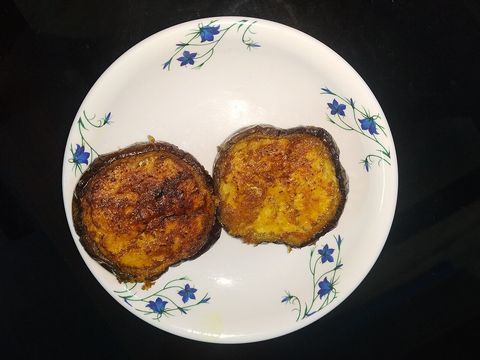
Begun Bhaja
Begun bhaja is thick slices of brinjal rubbed with turmeric, salt and a little sugar, then fried in mustard oil until browned outside and cr…
Vegetarian · VeganRecipeBengali Shukto (Mixed Vegetable Bitter Curry)
Shukto is a traditional Bengali mixed vegetable curry from West Bengal, built on bitter gourd and a medley of seasonal vegetables in a light…
Vegetarian · VeganRecipe