
South Indian · Breakfast
Neer Dosa
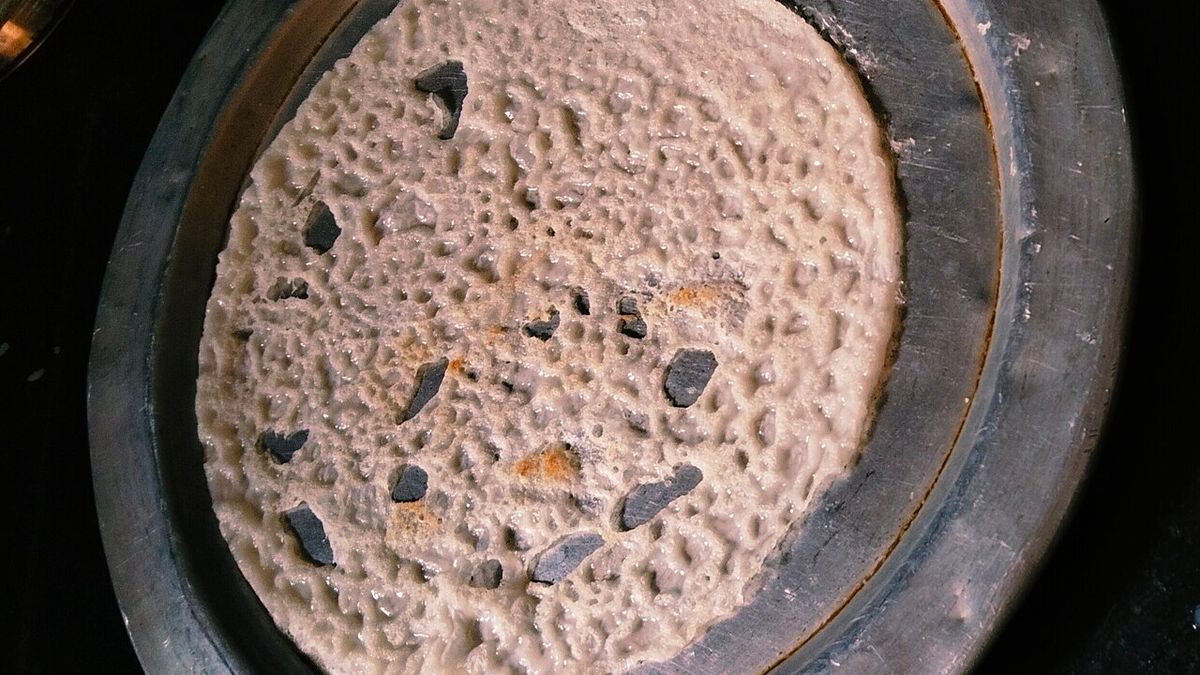
Neer dosa is a soft, lacy crepe from coastal Karnataka, made from soaked raw rice ground into a batter as thin as buttermilk, with no fermenting. A hot griddle and watery batter decide whether it succeeds: the batter must be poured from a height so it sets in a web, then steamed briefly and never flipped.
- Prep
- 15 min
- Cook
- 30 min
- Total time
- 45 min
- Servings
- 4
- Vegetarian
- Vegan
- Gluten-free
Ingredients
- 2 cups raw white rice such as sona masuri or dosa rice, about 400 g
- 1/4 cup freshly grated coconut (optional, for a softer dosa)
- 1 teaspoon salt
- 3 1/2 to 4 cups water, for grinding and thinning
- 2 teaspoons coconut oil or neutral oil, for the griddle
- 1/2 small onion, for rubbing the griddle (optional)
NNWA health note
Neer dosa is mostly rice and water, so it is light, easy to digest and low in fat, but it is also low in protein and fibre. It digests quickly, which means it is better eaten with something that holds you for longer, such as a dal, a fish curry or an egg dish. Its modest oil content makes it a kinder choice than a fried breakfast. Those managing blood sugar should watch the number of dosas and build the plate around protein and vegetables, as they would with any white rice dish.
Method
- 01
Rinse the rice three or four times until the water runs almost clear, then cover generously with water and soak for 4 to 6 hours. A grain should break easily between your fingers.
- 02
Drain the rice and put it in a mixer with the coconut, if using, and 1 1/2 cups of fresh water. Grind for 3 to 4 minutes, pausing to rest the motor, until completely smooth. Rub a little batter between two fingers: it should feel silky, with no grit.
- 03
Pour into a large bowl, stir in the salt and enough of the remaining water to give a batter as thin as buttermilk. It should run straight off a spoon, and a coat on the spoon should look translucent.
- 04
Heat a 20 to 25 cm non-stick or well-seasoned iron tawa over a medium-high flame for about 2 minutes, until a few drops of water sizzle and vanish at once. Rub the surface very lightly with oil using the cut onion or a folded cloth.
- 05
Stir the batter from the bottom, because the rice settles quickly. Scoop out a small ladleful and pour it from about 15 cm above the griddle, starting at the outer edge and working inward in a spiral. Holes will form, and these are wanted. Tilt the pan or dribble a little batter into any big gaps.
- 06
Cover with a lid and cook on a medium flame for about 1 minute. The dosa is done when the top looks matte and white, the edges curl slightly and it lifts away by itself. There should be no browning, and it needs no flipping.
- 07
Run a flat spatula under the dosa, then fold it in half and in half again into a triangle while it is on the griddle. Lay it on a plate without stacking while hot, as hot dosas stuck together will tear.
- 08
Stir the batter again and repeat, wiping the griddle lightly with oil every 2 or 3 dosas. If the griddle overheats and the batter sets on contact without spreading, sprinkle on some water, wipe it off and lower the flame for a moment.
Last reviewed on 2 November 2026.
NNWA publishes the name and qualifications of everyone who writes and checks its material. You can see the full teaching team on the faculty page.
Where does neer dosa come from?
Neer means water in Kannada and Tulu, and neer dosa takes its name from how watery the batter is. It belongs to the Tulu-speaking coast around Mangaluru and Udupi in Karnataka, where rice is the staple and a meal is often built around a seafood or chicken curry with plenty of gravy. These dosas are served soft, folded and stacked, in a pile that soaks up whatever is ladled on top. They are breakfast in some homes and dinner in others, and they are a good choice for cooks without the patience or the kitchen warmth for a fermented batter.
The technique: thin batter and a hot griddle
Unlike a masala dosa, this batter contains no urad dal and is not fermented. Nothing but rice starch holds it together, so the method is about setting a very thin film of it quickly. The griddle must be hot enough to set the batter the second it lands, and the pour from a height spreads it out in thin streams. That gives the fine lacy web that makes the dish. A spread with the back of a ladle, as you would do for an ordinary dosa, drags the batter and ruins it.
The lid matters as well. Steam finishes the top without any flipping, and that is what keeps the dosa pale and tender. A neer dosa with brown spots has been cooked too hard or too long, and it will be crisp and brittle instead of soft.
What goes wrong, and how do you rescue it?
A dosa that sticks and tears usually means the griddle was not hot enough, or it was lifted too early. Wait until the edges lift on their own. If the dosa stays thick and white like a pancake, the batter is too heavy, so add a few tablespoons of water and test again. If it spreads into nothing and breaks when you fold it, the batter is too thin, or the rice has settled and you scooped only water. Stir thoroughly, and if needed grind a tablespoon of cooked rice with a little water and mix it through, which is a useful shortcut for binding.
A gritty mouthfeel means the rice was under-soaked or under-ground. Return the batter to the mixer for another minute or two, adding water if it heats up. Bits of dried batter left on an iron griddle also cause sticking, so wipe it clean between dosas.
Substitutions and storage of the batter
Any plain raw rice works, including sona masuri and ponni. Avoid basmati, which gives a weaker film, and parboiled idli rice, which stays grainy and needs longer grinding. Rice flour makes a quick version if you have not soaked anything: whisk 2 cups of fine rice flour with about 4 1/2 cups of water and the salt, adding a handful of grated coconut. This is a shortcut, and the dosa is a little less soft. Coconut can be left out completely with only a small loss in softness.
Keep the batter covered in the fridge and use it within 2 days. Thin it again before cooking, since it thickens as it stands. If it smells sour or looks bubbly, it has begun to ferment and it is better thrown out than used in this recipe.
What goes with neer dosa?
On the Mangalorean table it goes with kori gassi, a coconut chicken curry, or with fish curry. At home, a Kerala fish curry, a good chicken curry or an egg curry all suit it. For a vegetarian meal, try coconut chutney with a side of dal. A traditional sweet option is grated coconut cooked with jaggery and cardamom, folded inside like a stuffing. The balanced Indian plate guide is useful for working out how much protein and vegetable to pair with a rice-based meal like this one.
Storing and reheating
Cooked dosas keep their softness best when eaten within an hour. Let them stop steaming on a wide plate, then keep them in a cloth-lined casserole. Leftovers keep in the fridge in a sealed box for a day, separated by baking paper. Warm them for a few seconds on a covered griddle with a sprinkle of water to steam them back to softness. Cooked rice foods should not sit about at room temperature for more than two hours, so refrigerate leftovers promptly.
Learn the science
Healthy Eating & Everyday Wellness
This dish's nutrition reasoning is taught in full in this NNWA course.
What people ask about Neer Dosa
Does neer dosa batter need to ferment?
No. It is ground and cooked straight away, which is one of its great advantages for a quick breakfast. Fermentation changes the taste and makes the dosa sour and spongy, so it is best used fresh or stored in the fridge.
Can I make neer dosa on an iron griddle?
Yes, as long as it is well seasoned, though a non-stick griddle is more forgiving for a beginner. On iron, rub the surface with an onion half dipped in oil between dosas, and let the griddle recover its heat every time.
Why do neer dosas stick together on the plate?
They are very moist while hot, so stacking them too soon glues the folds together. Lay them side by side on a wide plate for a minute or two until they stop steaming, then pile them up gently in a covered dish.
Can I add other flavours to the batter?
Finely chopped curry leaves, cumin seeds or a little green chilli are common additions, but they should be stirred in only at the end. Avoid anything that makes the batter thick, since the lace depends on how freely it pours.
More recipes
Adai (Mixed Lentil Crepe)
Adai is a thick South Indian crepe made from a coarsely ground batter of rice and several dals, typically chana, toor and urad, with dried c…
Vegetarian · VeganRecipeAppam
Appam is a Kerala pancake made from a fermented batter of raw rice, cooked rice and coconut, cooked in a curved pan so it forms thin lacy ed…
Vegetarian · Gluten-freeRecipeAvial (Kerala Mixed Vegetable Curry in Coconut-Yoghurt Sauce)
Avial is a Kerala main course of mixed vegetables simmered in a coconut and green chilli paste and finished with a spoonful of yoghurt and r…
Vegetarian · Gut-healthRecipe