
North Indian · Main course
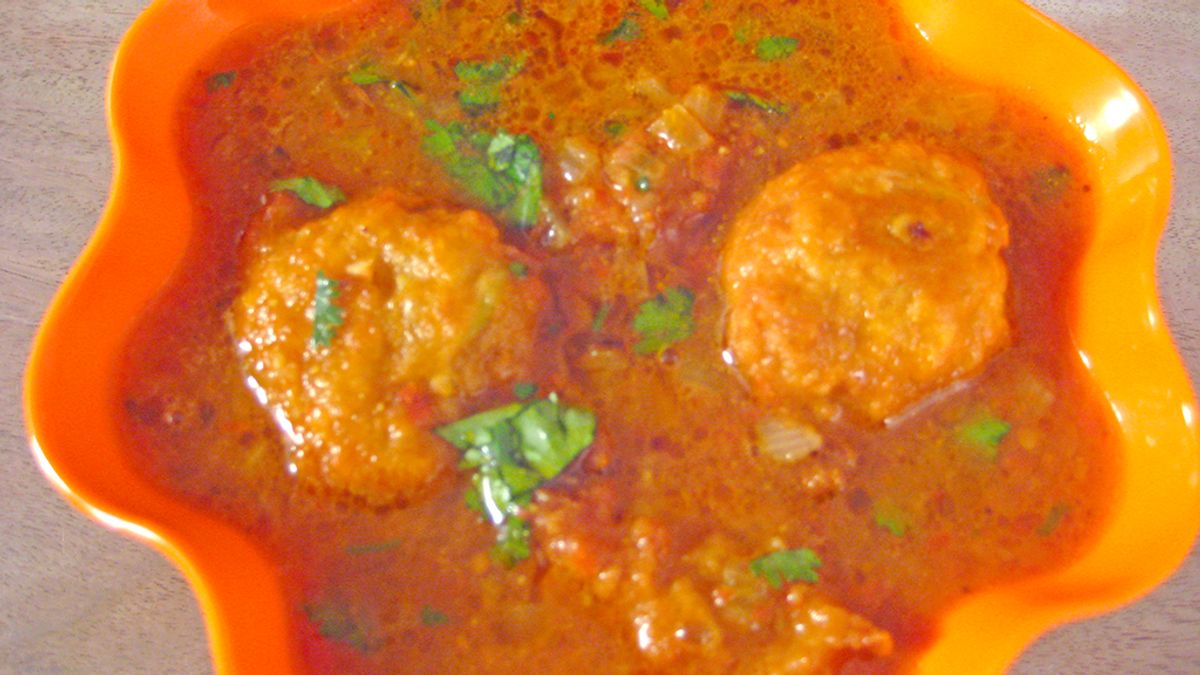
Lauki Kofta
Lauki kofta is a North Indian curry of fried bottle gourd dumplings simmered briefly in a spiced onion, tomato and cashew gravy. Everything rests on squeezing the grated lauki really hard and salting it only at the last minute, because extra water makes the koftas burst in the hot oil.
- Prep
- 30 min
- Cook
- 45 min
- Total time
- 1 hr 15 min
- Servings
- 4
- Vegetarian
- Gluten-free
Ingredients
- 1 medium lauki (about 600 g), peeled and grated
- 1/2 cup (about 60 g) besan (gram flour), plus 1 to 2 tbsp if needed
- 1 green chilli, finely chopped
- 1/2 inch ginger, grated
- 1/2 tsp cumin seeds
- 1/2 tsp salt, for the koftas
- 400 ml neutral oil, for deep frying
- 2 tbsp neutral oil, for the gravy
- 1 bay leaf
- 1/2 tsp cumin seeds, for the gravy
- 2 medium onions (about 200 g), ground to a paste
- 1 tbsp ginger-garlic paste
- 3 medium tomatoes (about 300 g), puréed
- 12 cashews, soaked in hot water for 15 minutes and ground smooth
- 1/2 tsp turmeric powder
- 1 tsp Kashmiri red chilli powder
- 2 tsp coriander powder
- 1 tsp salt, for the gravy
- 1 cup reserved lauki water, topped up with plain water
- 1/2 tsp garam masala
- 1 tsp kasuri methi, crushed between the palms
- 2 tbsp fresh cream
NNWA health note
Bottle gourd itself is light and mostly water, but deep frying and a cashew gravy turn this into a rich dish, so treat it as a special-occasion curry. The besan adds a little protein, and the tomato and onion base brings some vitamins. To keep the plate balanced, eat it with plain roti or rice and a large salad. Some readers look for lauki as a health food: the plain version in a dal or a light sabzi is the better everyday choice, and this one is simply a very good dinner.
Method
- 01
Cut a small slice from the lauki and taste it raw before anything else. If it is bitter at all, discard the entire gourd. Peel and grate the rest, then put it in a muslin cloth and squeeze hard over a bowl until it feels almost dry, saving the water.
- 02
You should have about 1 packed cup of pulp. Make the gravy first, so the koftas are fried closer to serving. Heat 2 tbsp oil in a heavy pan on medium heat, then add the bay leaf and cumin and let them sizzle for 30 seconds.
- 03
Add the onion paste and cook on medium heat for 10 to 12 minutes, stirring often, until it turns light brown and stops smelling raw. Stir in the ginger-garlic paste and cook for 1 minute until the sharpness softens.
- 04
Add the turmeric, chilli powder and coriander powder with a splash of water, then the tomato purée and salt. Cook for 8 to 10 minutes on medium heat until it thickens and oil pools at the edges.
- 05
Stir in the cashew paste and cook on low heat for 2 minutes. Pour in the cup of lauki water and simmer on low heat for 5 minutes until it coats a spoon. Add the garam masala, kasuri methi and cream, stir, and turn off the heat.
- 06
Mix the squeezed lauki with the besan, chilli, ginger and cumin, and only now add 1/2 tsp salt, because salt draws out water. The mixture should press into a ball that keeps its shape; add a spoonful more besan if it does not.
- 07
Heat the frying oil in a deep kadhai, no more than half full, on medium heat for about 4 minutes. A pinch of mixture should rise slowly within 4 to 5 seconds with steady bubbles, about 170 C. Fry one test kofta first to check that it holds.
- 08
Shape about 14 walnut-sized balls with oiled hands and fry 4 or 5 at a time for 4 to 5 minutes, turning gently, until deep golden brown all over. Drain on a steel strainer.
- 09
Five minutes before serving, bring the gravy back to a gentle simmer on low heat, thinning with a little water if needed, and slide in the koftas. Warm them for 2 to 3 minutes without stirring, then rest covered and serve hot.
Last reviewed on 2 November 2026.
NNWA publishes the name and qualifications of everyone who writes and checks its material. You can see the full teaching team on the faculty page.
A celebration dish made from a plain vegetable
Lauki, or bottle gourd, is among the most ordinary vegetables in a North Indian kitchen, usually cooked plainly or in dal. Kofta turns it into something for a guest or a Sunday. Grated gourd is bound with gram flour, fried, and finished in a rich gravy, in the same family as the paneer and potato malai kofta, though lighter on the tongue. Families differ on the gravy: some keep it thin and tomato-based with no nuts at all, others add cashew and cream as this recipe does. Both are correct, and you can drop the cream and cashew to get the plainer one.
A safety check that takes five seconds
Always taste a sliver of raw lauki before cooking. A bitter bottle gourd contains cucurbitacins, natural toxins that have caused serious poisoning, particularly when people drank bitter lauki juice. Cooking does not make it safe. If the piece tastes bitter even slightly, spit it out, rinse your mouth and throw away the entire gourd, including anything already grated into the same bowl. Most gourds are perfectly sweet and mild, but this check is worth doing every time.
Squeeze, then salt
Lauki is very wet, and steam from trapped water is what splits a kofta open in hot oil. Grate it on the larger holes of a box grater, gather it in a muslin cloth or clean kitchen towel, and wring it with both hands until the pulp feels nearly dry. A 600 g gourd gives roughly one packed cup of pulp and a surprising amount of liquid. Save that liquid, because it adds sweetness and body to the gravy.
Salt goes in last and the mixture should be fried straight away. Left to stand with salt, the pulp weeps again within ten minutes and the mixture slackens. Use only enough besan to bind; too much makes the kofta dense and floury, while the right amount leaves it soft enough to take up the gravy.
If the koftas misbehave
If a test kofta falls apart in the oil, the mixture is too wet, so add a spoonful of besan and try another. If it browns quickly and stays raw inside, the oil is too hot; let it cool for a minute and lower the flame. If the koftas harden, there is too much besan or they were fried too long, and a longer rest of five minutes in hot gravy will soften them. Frying safety is the same as for any deep frying: dry your hands, keep the oil no more than half way up the kadhai, add the balls gently from the side, and keep children well clear.
A gravy that looks thin can simmer for a few minutes longer. One that has split usually had the cream added on a high boil, and a spoon of warm water stirred in off the heat will bring it back together.
Lighter versions and swaps
An appe or paniyaram pan makes a fair lighter kofta: put a few drops of oil in each mould, add the mixture, cover and cook on low heat for about 8 minutes, turning once. The result has a thinner crust and a drier centre, but it takes the gravy well. Baked koftas also work, though they are less tender. For the gravy, swap the cream for a spoon of beaten curd stirred in on low heat, or omit both. Melon seeds (magaz) can replace cashews for an allergy, ground the same way. The besan keeps this gluten-free as written; hing is left out because most compounded hing contains wheat flour. How traditional dishes like this are adapted without losing what makes them good is a theme of the culinary nutrition course.
Serving, storing and reheating
Add the koftas to the gravy only just before serving, since they drink it up as they sit and can leave the pot dry within half an hour. Serve with jeera rice, phulkas or tandoori roti, and a sharp onion salad. A dry green vegetable or a plain raita rounds out the table without competing with the gravy.
Store koftas and gravy separately in the refrigerator for up to two days, after cooling within two hours. Reheat the gravy until simmering, thin it slightly, drop in the koftas and warm for three minutes. Fried koftas freeze well for about a month in a closed box; thaw them on the counter for twenty minutes before warming them through in the gravy.
Learn the science
Culinary Nutrition (Nutrition Chef)
This dish's nutrition reasoning is taught in full in this NNWA course.
What people ask about Lauki Kofta
Can the koftas be fried ahead of time?
Yes. Fry them up to a day earlier, keep them refrigerated in a covered box, and warm them through in the simmering gravy just before the meal. Many hosts do this because it spares them from standing at the kadhai when guests arrive.
Should the lauki be cooked before grating?
No, raw grated lauki is standard. Pre-cooking makes it harder to squeeze and leaves a softer, wetter mixture that breaks up. Only the fine grate and the hard squeeze matter, and the gourd cooks through fully in the four or five minutes of frying.
Can rice flour or cornflour be added?
A tablespoon of rice flour in the mixture gives a crisper shell, and some cooks like that. Cornflour works as well but can make the centre slightly gummy. Either is optional, and the recipe holds together with besan alone once the gourd is properly dry.
How much gravy does this make?
About three cups, which feels generous at the start and less so after the koftas have absorbed their share. If you plan to keep it on the table for a while, add an extra half cup of water when you warm it up.
How can I tell that a lauki is fresh?
A fresh lauki is firm, pale green and slightly fuzzy, and a fingernail should press into the skin easily. Avoid any with soft spots, a yellow tint or a hollow feel, and still taste a raw slice before you start grating it.
More recipes
Aam Panna
Aam panna is a summer cooler made from cooked raw mango pulp, jaggery, roasted cumin and black salt, diluted with cold water when you want a…
Vegetarian · VeganRecipeAloo Gobi (Potato & Cauliflower Dry Curry)
Aloo gobi is a North Indian dry curry of potatoes and cauliflower cooked together with turmeric, cumin and a light blend of spices until ten…
Vegetarian · VeganRecipeAloo Matar
Aloo matar is a simple North Indian curry of potatoes and green peas in an onion and tomato base. It is one of the most commonly cooked home…
Vegetarian · VeganRecipe