
East Indian · Side dish
Mochar Ghonto
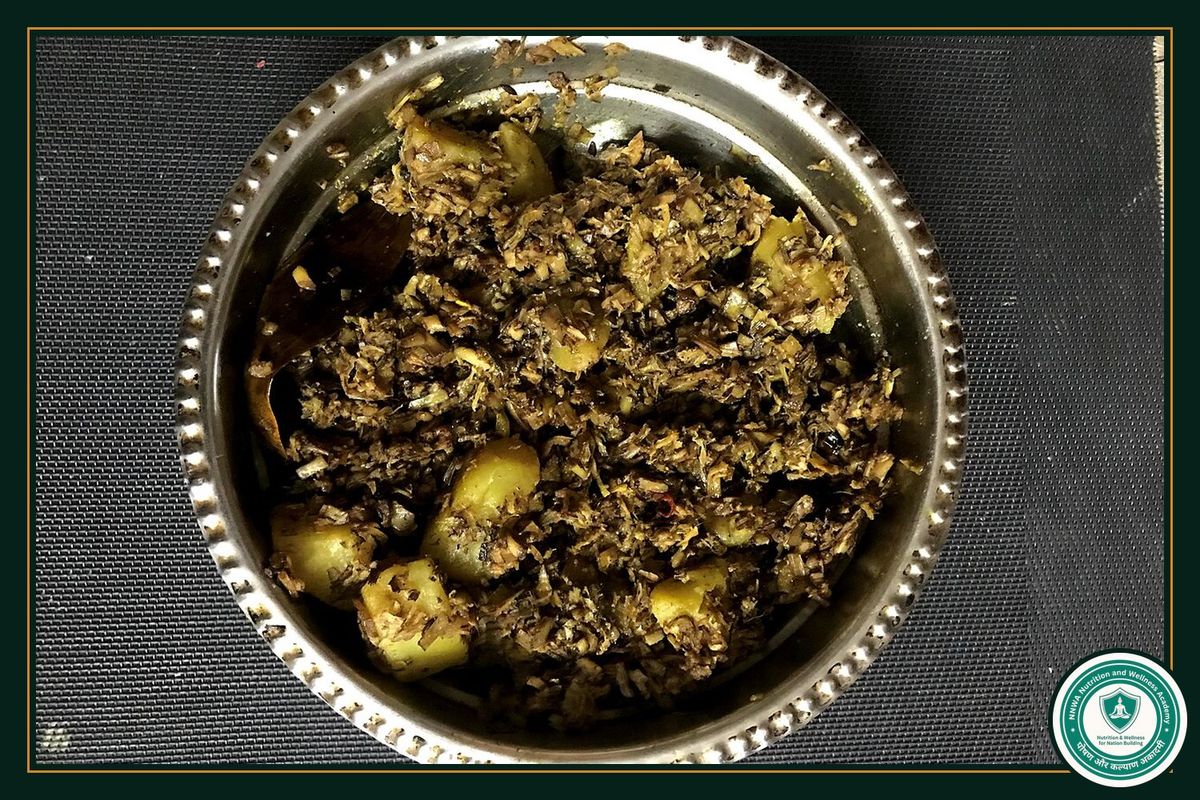
Mochar ghonto is a Bengali dry curry of finely chopped banana blossom cooked with potato, coconut, ginger and warm spices, finished with ghee. It rests on the cleaning: every floret must lose its tough stamen and papery scale, then be boiled briefly, or the finished dish tastes bitter and chews like string.
- Prep
- 50 min
- Cook
- 35 min
- Total time
- 1 hr 25 min
- Servings
- 4
- Energy per serving
- 238 kcalEstimated from this recipe's ingredients using IFCT 2017 and USDA values. Actual figures vary with portion and cooking.
- Vegetarian
- Gluten-free
Ingredients
- 1 large banana blossom (mocha), about 600 g before cleaning
- 1 tablespoon oil, for rubbing on the hands while cleaning
- 1 cup thin buttermilk or 1 tablespoon salt in 1 litre water, for soaking
- 1 1/4 teaspoons turmeric powder
- 1 teaspoon salt, or to taste
- 3 tablespoons mustard oil
- 2 medium potatoes, peeled and cut into 1 cm cubes
- 1/4 cup kala chana, soaked overnight and boiled until tender, optional
- 2 bay leaves
- 1 teaspoon cumin seeds
- 2 dried red chillies
- 1 tablespoon ginger paste
- 1 teaspoon cumin powder
- 1 teaspoon coriander powder
- 1/2 teaspoon Kashmiri chilli powder
- 1/4 cup freshly grated coconut
- 1 teaspoon sugar
- 1 tablespoon ghee
- 1/2 teaspoon garam masala
NNWA health note
Banana blossom is a modest and fibre-rich vegetable, and it is low in fat before oil enters the picture. This recipe uses fried potato and coconut and finishes with ghee, so it is a rich-tasting side rather than a light one, though the portions served alongside dal and rice are usually small. The kala chana adds extra protein and more fibre. Claims that banana flower treats specific conditions go well beyond the evidence, so enjoy it as a good vegetable that makes for variety on the plate.
Method
- 01
Oil your hands and a work board so the sap does not stain. Peel away the dark outer bracts one by one and lift off each row of pale florets, working towards the core until the florets become too small and tender to clean.
- 02
Clean each floret: pull out the long central stamen with its hard rounded tip, and the thin papery scale beside it, because neither softens with cooking. Put the cleaned florets straight into the buttermilk or salted water to stop them turning black. Leave the innermost tender core whole.
- 03
Drain the florets and chop them and the tender core finely on a board. Bring a pot of water to the boil with 1/2 teaspoon of the turmeric and 1/2 teaspoon of the salt, add the chopped blossom and boil on high heat for 8 minutes, until it turns pale brown and soft.
- 04
Drain in a colander and, when cool enough to touch, squeeze handfuls firmly until no water runs out. The blossom should feel like damp cotton. This step removes most of the astringency and lets it fry rather than stew.
- 05
Heat the mustard oil in a kadhai on medium heat until it just starts to smoke, then lower the heat slightly. Fry the potato cubes for 6 minutes until golden and nearly cooked, then lift them out with a slotted spoon.
- 06
Add the bay leaves, cumin seeds and dried chillies to the same oil and let them crackle for 20 seconds. Stir in the ginger paste with the cumin powder, coriander powder, chilli powder and remaining turmeric, and fry on low heat for 2 minutes with a splash of water, until the oil separates.
- 07
Add the squeezed blossom and fry on medium heat for 8 to 10 minutes, stirring often, until it starts to look dry and the raw vegetable smell has gone and it smells toasty.
- 08
Return the potatoes with the kala chana if using, add the coconut, sugar, remaining salt and 1/4 cup of water. Cover and cook on low heat for 8 to 10 minutes, until the potato is fully soft and the water has been absorbed.
- 09
Uncover and raise the heat to medium for a minute or two to dry off any moisture. Stir in the ghee and garam masala, turn off the heat, and rest with the lid on for 5 minutes before serving.
Last reviewed on 2 November 2026.
NNWA publishes the name and qualifications of everyone who writes and checks its material. You can see the full teaching team on the faculty page.
The dish and how it is eaten
A ghonto, in Bengali cooking, is a mixed vegetable preparation cooked until nearly dry, usually without onion or garlic and often finished with a spoon of ghee and garam masala. Mochar ghonto, made from banana blossom, is one of the best known. It is a side dish for rice and dal, and Bengali households treat it as something special because the cleaning takes time. Kerala, Assam and Tamil Nadu all cook banana flower too, in thorans and other dishes, though the seasoning is quite different. Some markets in Bengal sell it already cleaned, which saves a good deal of the labour. Elsewhere, expect to clean it at home.
Cleaning banana blossom without the stain
This is the part that puts people off, and it gets faster after the first dozen florets. The sap is sticky and leaves a dark stain that does not wash off easily, so oil your hands and your board before you begin. Lift off each purple bract and you find a row of pale florets beneath. In each floret, there are two things to remove: the long stamen with the rounded club-like tip, and a thin, plastic-like scale at the base. Both stay tough through any amount of cooking. Work near the soaking water and drop each cleaned floret in right away, because exposed florets go black in minutes. Near the centre, the florets become too small to clean; that whole pale heart can be chopped and used as it is. A large mocha takes about 30 to 40 minutes for a first-timer. With a second person it goes faster.
The boil and the squeeze
Boiling and squeezing is what takes away the astringent, slightly tannic taste. Skipping it to save time is the most common reason a ghonto tastes harsh. Eight minutes in salted turmeric water is enough; much longer and it starts to lose its texture. The squeeze matters as much as the boil, because wet blossom steams and clumps in the pan. It should be dry enough to fry and brown lightly, since the toasty smell at that stage carries the whole dish.
Common mistakes and their rescues
If you find stringy, tough bits while eating, some stamens were missed; there is no fix in the pan, so clean more carefully next time. If the dish tastes bitter, the blossom was likely not boiled long enough, and a little extra sugar, coconut and a spoon of ghee will soften the edge. A wet, mushy ghonto needs a wide pan and medium heat for a few minutes, stirring until the moisture has gone. If the bottom begins to catch, sprinkle a tablespoon of hot water and scrape. Do not be alarmed by the colour, which ends up a dull brown rather than bright; that is how it should look.
Substitutions and a lighter version
Kala chana is common but optional, and some families use fried bori (sun-dried lentil dumplings) instead, which brings a nice crunch. Mustard oil can be swapped for a neutral oil for a gentler flavour. Frozen or vacuum-packed banana blossom is available in some stores: taste a floret first, and boil it for only 5 minutes. For a vegan version, finish with a teaspoon of mustard oil in place of the ghee, and use salted water for the soak. To lighten the dish, reduce the mustard oil to 1 1/2 tablespoons, cook the potato with the blossom instead of frying it first, and keep the coconut to 2 tablespoons. The sweetness and warmth still come through.
Serving it
Plain steamed rice and a thin cholar dal or moong dal is the natural pairing, since ghonto wants something to moisten it. It also sits well on a full Bengali lunch that starts with shukto. Rotis are a fair alternative on a weekday.
Storing and reheating
Refrigerate within two hours in a closed container, where it keeps for up to 3 days. Reheat in a pan on low heat with a tablespoon of water, stirring until hot throughout, and finish with a fresh half-teaspoon of ghee if you like. The potato suffers in the freezer, so freeze only a batch made without it. Cleaned, raw florets keep in water in the fridge for a day, which lets you split the work in two.
Learn the science
Gut Health & Digestive Wellness
This dish's nutrition reasoning is taught in full in this NNWA course.
What people ask about Mochar Ghonto
How do I know a banana blossom is fresh when buying one?
Choose one that feels heavy and tightly closed, with firm, deep purple bracts without dry or brown edges. A blossom that has begun to open or feels light has been sitting for days and is usually more bitter.
Does banana blossom have to be boiled before cooking?
For this Bengali style, yes. Some regional dishes fry it straight after chopping and soaking, but a brief boil gives a reliably mild flavour, which is why it is the safer choice for anyone cooking mocha the first time.
Can I cook mochar ghonto in advance for a party?
It reheats better than many vegetable dishes, so it can be made the day before. Keep the ghee and garam masala aside, reheat gently on the day, and add them right before serving for a fresher aroma.
Why did my hands turn black while cleaning the blossom?
The sap oxidises on the skin, which is why oiled hands or gloves help. If the stain has already set, rub your fingers with a cut lemon or a little sugar and oil, then wash them with soap and warm water.
More recipes
Aloo Posto (Bengali Potato & Poppy Seed Curry)
Aloo posto is a Bengali side dish from West Bengal made by simmering cubed potatoes in a ground white poppy seed paste with minimal spicing.…
VegetarianRecipe
Begun Bhaja
Begun bhaja is thick slices of brinjal rubbed with turmeric, salt and a little sugar, then fried in mustard oil until browned outside and cr…
Vegetarian · VeganRecipe
Bengali Shukto (Mixed Vegetable Bitter Curry)
Shukto is a traditional Bengali mixed vegetable curry from West Bengal, built on bitter gourd and a medley of seasonal vegetables in a light…
Vegetarian · VeganRecipe