
North Indian · Main course
Kadai Chicken
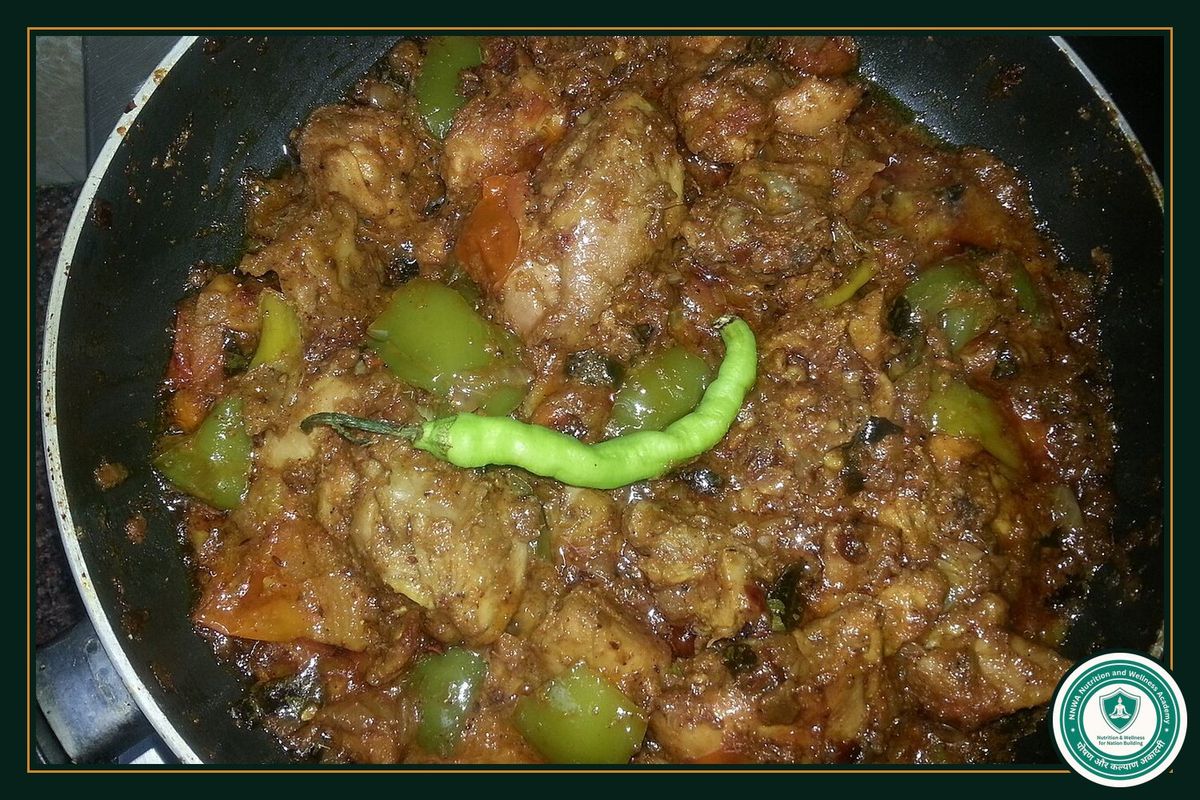
Kadai chicken is a North Indian curry of chicken cooked in a wok-like kadai with tomatoes, capsicum and a coarsely crushed masala of coriander seeds and dried red chillies. The fresh, coarse masala decides it: toasted and pounded just before cooking, it gives the bold, crunchy spice that a shop powder never reaches.
- Prep
- 20 min
- Cook
- 40 min
- Total time
- 1 hr
- Servings
- 4
- Energy per serving
- 422 kcalEstimated from this recipe's ingredients using IFCT 2017 values. Actual figures vary with portion and cooking.
- High-protein
- Gluten-free
Ingredients
- 750 g chicken, skinless, bone-in curry cut
- 2 tablespoons coriander seeds
- 1 teaspoon cumin seeds
- 1 teaspoon black peppercorns
- 5 dried Kashmiri red chillies, stems removed
- 1/2 teaspoon fennel seeds (saunf), optional
- 4 tablespoons mustard oil or neutral oil
- 2 medium onions, about 200 g, finely chopped
- 1 tablespoon ginger-garlic paste
- 4 ripe tomatoes, about 350 g, finely chopped
- 1/2 teaspoon turmeric
- 1 teaspoon salt, or to taste
- 1 large capsicum, cut into 2 cm squares
- 1 medium onion, cut into petals
- 2 green chillies, slit
- 1 inch ginger, cut into thin matchsticks
- 1 tablespoon kasuri methi (dried fenugreek leaves)
- 1/4 cup chopped coriander leaves
NNWA health note
This is a sensible main course: plenty of protein from the chicken, vegetables in the same pot, and no cream or nut paste. The oil is the main thing to watch, since restaurant kadai dishes are often swimming in it. Four tablespoons here, across four servings, is a reasonable home amount, and a careful cook can manage on three with a good pan. Serve it with roti and a salad and you have a balanced meal.
Method
- 01
Dry roast the coriander, cumin, peppercorns, red chillies and fennel in a kadai on medium-low heat for 2 to 3 minutes, shaking the pan, until fragrant and the chillies puff a little. Cool on a plate, then pound coarsely in a mortar, or pulse twice in a dry mixer jar, keeping visible pieces of seed.
- 02
Rub the chicken with the turmeric and half the salt, and leave it while you chop. Heat the oil in the kadai on high heat; if using mustard oil, let it reach the point of a faint smoke, then lower the heat for 30 seconds.
- 03
Return the heat to high and add the chicken in a single layer, in two batches if it crowds the pan. Sear for 6 to 8 minutes, turning a few times, until browned in patches, then lift it out onto a plate.
- 04
Lower to medium heat, add the chopped onions to the same oil and fry for 8 to 10 minutes, scraping up the browned bits, until deep golden at the edges. Add the ginger-garlic paste and stir for 2 minutes, until the raw smell disappears.
- 05
Add about two thirds of the crushed masala and stir for 30 seconds, until it smells toasted. Add the tomatoes and remaining salt and cook on medium-high heat for 8 to 10 minutes, mashing with the ladle, until the tomatoes collapse and oil appears at the edges.
- 06
Return the chicken and its juices to the kadai and toss to coat with the masala. Add 1/4 cup of hot water only if the masala is sticking, cover, and cook on medium-low heat for 15 to 20 minutes, stirring twice, until tender and with no pink at the bone.
- 07
Uncover, raise the heat to high, and add the capsicum, onion petals, green chillies and half the ginger. Toss for 3 to 4 minutes, until the vegetables are glossy and just softened at the edges but still crunchy, and the gravy clings to the chicken.
- 08
Crush the kasuri methi between your palms and scatter it in, with the remaining masala. Toss for 1 minute on medium heat, turn off the heat, finish with the coriander leaves and remaining ginger, and rest for 5 minutes before serving.
Last reviewed on 2 November 2026.
NNWA publishes the name and qualifications of everyone who writes and checks its material. You can see the full teaching team on the faculty page.
A dish named after the pan
A kadai is the deep, round-bottomed iron or steel pan found in nearly every Indian kitchen, and kadai dishes are a North Indian restaurant and dhaba style. The idea is quick cooking over strong heat, thick masala clinging to the meat, and crunchy vegetables that still taste of themselves. Its nearest vegetarian relation, using the same masala, is kadai paneer.
Recipes differ from kitchen to kitchen. Some add a little cream or cashew paste in the manner of a restaurant gravy; this version stays with the drier, tomato-based style, which keeps the taste of the spices in the foreground.
Crushing your own kadai masala
The whole recipe turns on those few minutes with a mortar. Coriander seeds have a lemony sweetness when they are freshly toasted, and they lose it fast once ground. Roast them on gentle heat until they just start to smell, and let them cool before pounding, so they crush instead of smear. You want a coarse powder with broken seed in it, and you should feel it between your teeth in the finished dish.
Kashmiri chillies give colour with moderate heat. If you only have hotter varieties, such as Guntur, use two or three and accept a paler, sharper dish. Holding back a third of the masala until the end matters too: the first batch cooks into the gravy and the last keeps the fresh top note that makes people ask what you did.
High heat in a small home kitchen
Home burners are weaker than a dhaba flame, so give yourself some help. Sear in batches, because a crowded pan stews the chicken in its own water and you will never get the brown patches that carry the flavour. Pat the chicken dry first if it was washed. A heavy iron kadai holds heat better than a thin steel one, though a wide cast-iron pan or a heavy wok does the job just as well. Keep the water to the minimum; the tomatoes and the bird release plenty of their own.
The capsicum goes in last for a reason. Cooked with the chicken, it turns soft and grey-green and flavours the whole pot in a way most people find too strong. Three or four minutes at the end leaves it bright and crisp.
Mistakes and how to rescue them
If the dish looks wet at the end, turn the heat to high, take off the lid, and keep tossing until the liquid has cooked down and clings. If the tomatoes taste sharp, they were underripe or undercooked; give them another few minutes and add a pinch of sugar. Too hot from the chillies? Stir in a spoonful of whisked curd off the heat, or serve more raita and roti on the side. Bitter notes usually mean the masala scorched when it hit the oil, so add it with the heat lowered and tomatoes ready to go in straight after.
Chicken that stays tough after 20 minutes simply needs longer, because older birds take more time. Add a splash of hot water, cover, and check every 5 minutes. Before serving, cut through the thickest piece near the bone to confirm that there is no pink and that the juices run clear.
Substitutions and shortcuts
Boneless thigh cooks in about 10 minutes under the lid and is a fair shortcut for a weeknight, although bone-in pieces have more flavour. Shop-bought kadai masala is a shortcut too; if you use it, add it late, and add a little freshly crushed coriander if you can. Canned tomatoes work out of season, using about one and a half cups. Mustard oil is common in the north and has a particular pungency; if your family dislikes it, any neutral oil is fine.
There is nothing to lighten beyond the oil, and three tablespoons is enough if your pan is good. More on the protein that a serving of chicken brings is in this guide.
Serving, storing and reheating
Tear into it with tandoori roti, naan or plain phulka, with sliced onion and lemon at the side. Because the gravy is thick and clinging, rice is a less natural partner, though jeera rice with a dal alongside works well. It is less rich than butter chicken, and you can serve it more often.
Refrigerate within two hours and eat within three days. Reheat in a pan on medium heat with a splash of water until piping hot throughout. It freezes for a month, but the capsicum goes soft, so if you plan to freeze, leave it out and toss it in fresh when you reheat.
Learn the science
Sports Nutrition
This dish's nutrition reasoning is taught in full in this NNWA course.
What people ask about Kadai Chicken
What is the difference between kadai chicken and chicken curry?
A home chicken curry has a looser gravy built on ground spices and is meant for rice or roti. Kadai chicken is drier, thicker and tossed over strong heat, with coarsely crushed whole spices and crunchy capsicum as its signature.
Can I make kadai chicken without a kadai?
Yes. Use the widest heavy pan you own, since surface area matters more than shape. Cast iron or a thick-based steel wok is ideal. A narrow pressure cooker base is a poor choice because the chicken steams instead of browning in the oil.
Is kadai chicken very spicy?
It is bold, but you control it. Kashmiri chillies add more colour than fire and the peppercorns give warmth. For children or sensitive stomachs, leave out the green chillies and halve the peppercorns. The coriander and tomato will still carry plenty of flavour.
Can I marinate the chicken in advance?
A marinade is not traditional here, though salt and turmeric for a few hours in the fridge helps the flavour reach the bone. Avoid a wet curd marinade, because the extra water prevents browning and takes the dish away from its dry style.
How do I know the masala is cooked?
Look for oil separating at the edge of the pan and a mass that moves together when you push the ladle through it. The smell changes as well, from raw and tomato-sharp to deep and roasted. If it still looks watery, it needs more time.
More recipes
Aam Panna
Aam panna is a summer cooler made from cooked raw mango pulp, jaggery, roasted cumin and black salt, diluted with cold water when you want a…
Vegetarian · VeganRecipe
Aloo Gobi (Potato & Cauliflower Dry Curry)
Aloo gobi is a North Indian dry curry of potatoes and cauliflower cooked together with turmeric, cumin and a light blend of spices until ten…
Vegetarian · VeganRecipe
Aloo Matar
Aloo matar is a simple North Indian curry of potatoes and green peas in an onion and tomato base. It is one of the most commonly cooked home…
Vegetarian · VeganRecipe