
Northeast Indian · Main course
Chicken Thukpa
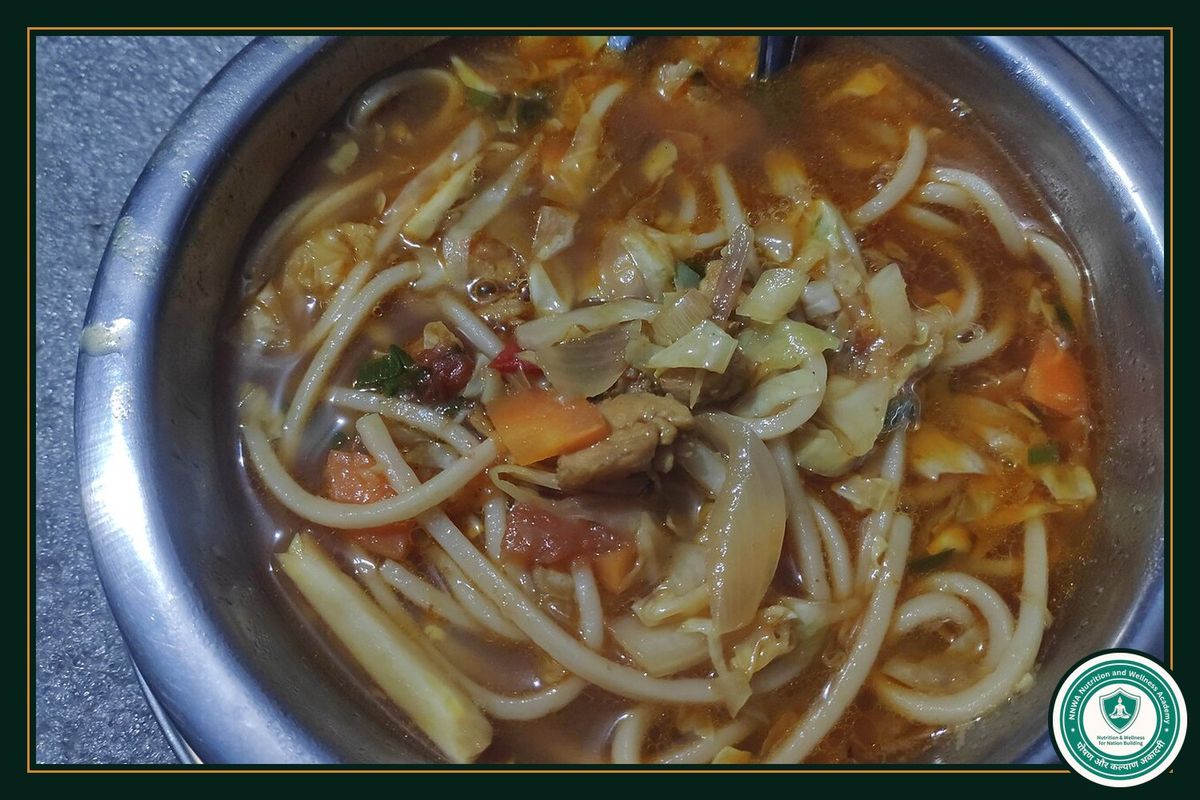
Chicken thukpa is a Himalayan noodle soup of Tibetan origin, eaten across Sikkim, Ladakh, Arunachal Pradesh and Darjeeling. It stands or falls on the broth: simmer bone-in chicken slowly with ginger and garlic for proper body, then cook the noodles separately so they stay firm and do not cloud the soup or soak it up.
- Prep
- 20 min
- Cook
- 50 min
- Total time
- 1 hr 10 min
- Servings
- 4
- Energy per serving
- 445 kcalEstimated from this recipe's ingredients using IFCT 2017 and USDA values. Actual figures vary with portion and cooking.
- High-protein
Ingredients
- 500 g bone-in chicken, curry cut, skinless
- 200 g dried egg or wheat noodles
- 7 cups water
- 2 inch ginger, half sliced and half grated
- 6 garlic cloves, 2 crushed whole and 4 finely chopped
- 1 teaspoon black peppercorns, lightly crushed
- 2 tablespoons oil
- 1 medium onion, thinly sliced
- 2 medium tomatoes, finely chopped
- 2 green chillies, or 1 teaspoon red chilli paste
- 1/2 teaspoon turmeric powder
- 1/2 teaspoon cumin powder
- 1 medium carrot, cut into thin matchsticks
- 1 cup finely shredded cabbage
- 1/2 cup sliced beans or green peas
- 1 tablespoon light soy sauce
- 1 tablespoon lime or lemon juice
- Salt to taste
- A handful of spring onion greens and coriander leaves, chopped
NNWA health note
Thukpa makes a reasonably balanced one-bowl meal: the chicken gives protein, the vegetables add fibre and the noodles provide the starch, and the fat stays modest since there is little oil and the skin is off. You can shift the balance further by adding more vegetables and using fewer noodles. The usual thing to watch is sodium, since soy sauce and broth salt add up quickly, so season at the end and go easy if you have been told to limit salt. Chicken soup is comforting when you are unwell, but it does not treat colds.
Method
- 01
Put the chicken in a large pot with the water, sliced ginger, crushed garlic, peppercorns and 1 teaspoon of salt. Bring slowly to a boil on medium heat and skim off the grey foam with a spoon for the first 5 minutes.
- 02
Turn the heat to low, partly cover and simmer for 30 minutes, with only small bubbles breaking at the surface, until the chicken shows no pink at the bone and comes away easily. A hard boil clouds the broth.
- 03
Lift out the chicken with tongs, cool for 5 minutes and shred the meat by hand, discarding the bones. Strain the broth, which should measure about 5 to 6 cups; top up with hot water if it is short.
- 04
Boil the noodles in a separate pot of salted water on high for 1 minute less than the packet says, until just firm when bitten. Drain, rinse under cold water for 20 seconds, toss with 1 teaspoon of oil and set aside.
- 05
Heat the remaining oil on medium in the clean soup pot. Fry the onion for 4 to 5 minutes until soft and just golden at the edges, then add the chopped garlic, grated ginger and chillies and stir for 1 minute until fragrant.
- 06
Add the tomatoes, turmeric and cumin with a pinch of salt and cook on medium for 5 to 6 minutes, pressing with the spoon, until the tomato has broken down to a thick paste and oil shows at the edges.
- 07
Add the carrot and beans and stir for 2 minutes, then pour in the hot broth. Simmer on medium for 4 minutes, add the cabbage and cook for 2 minutes more, until the vegetables are tender with a slight bite.
- 08
Return the shredded chicken and stir in the soy sauce and lime juice, and warm on low for 2 minutes until the soup is steaming. Taste, adding salt if needed, and take it off the heat without letting it boil again.
- 09
Divide the noodles between 4 deep bowls, ladle the hot soup and chicken over them and top with the spring onion and coriander. Serve at once, while the noodles are still firm.
Last reviewed on 2 November 2026.
NNWA publishes the name and qualifications of everyone who writes and checks its material. You can see the full teaching team on the faculty page.
A soup from the high mountains
Thukpa is a Tibetan word for a noodle soup, and the dish travelled with Tibetan communities into the Indian Himalaya. Today it is daily food in Ladakh, Sikkim, Arunachal Pradesh and the Darjeeling hills, sold in small family restaurants alongside momos, and made at home on cold evenings. Each place has its own way of making it. Ladakhi homes may roll their own noodles, Sikkimese and Nepali-speaking cooks often add a little timur, a citrusy Himalayan pepper, and Arunachal has its own versions with local greens.
This recipe is a home-style chicken thukpa close to what you might eat in Gangtok or Darjeeling, with a tomato and garlic base. Restaurant thukpa is sometimes thickened or quite heavily spiced, whereas many home versions are thinner and lighter. There is no single correct version, so adjust it as you like.
Building the broth
This is a soup, so the liquid matters most. Bones give the body, and so bone-in pieces are worth buying. Start with cold water and bring it up gently, because the proteins that come out of the meat rise as foam that you can skim away. Then keep the pot at a bare simmer. A rolling boil beats that foam back into the liquid and leaves it cloudy and tasting flat. Half an hour on a low flame is plenty for a curry-cut bird. An old-style country chicken, however, needs up to an hour and gives a deeper flavour for it.
The second layer of flavour is the fried base of onion, garlic, ginger, chilli and tomato. Cooked properly to a thick paste, it gives the soup a rounded savoury depth. If it goes in half raw, the broth tastes of watery tomato. Take the full 5 or 6 minutes.
Common faults and how to fix them
Mushy noodles and a starchy, thick soup come from cooking the noodles in the pot. That is the most common mistake, and boiling them apart avoids it. If your soup has turned cloudy, it will still taste fine. Stop it boiling, let it settle for a few minutes and ladle gently from the top. Flat, thin taste usually means too little salt or acid. Add a pinch of salt and a squeeze of lime and taste before adding more soy sauce.
Too much heat for the table is easily handled by serving the chilli on the side. Hill restaurants usually do that anyway, with a fierce red chilli paste in a small dish, so that everyone chooses their own heat. Dry, stringy chicken has been boiled too hard. Next time, keep the flame low and shred the meat only when it has cooled slightly. If it has happened already, keep the shreds in the broth for a while so they soak some of it up.
Swaps and a lighter bowl
Any noodles will work: flat wheat, thin egg, or hand-cut. Rice noodles suit anyone avoiding wheat, and in that case swap the soy sauce for a gluten-free tamari and check any packaged stock. Pak choi, spinach or mustard greens can replace the cabbage. If you have some timur, grind a pinch into the fried base; failing that, a little extra crushed black pepper and a squeeze of lime point in the same direction. A shorter cooking method is to use boneless thigh and a quick stock of bones or a stock cube, though you lose some of the body.
For a lighter bowl, use 120 g of noodles and double the vegetables. The soup stays filling, and the protein stays where it was. Keeping protein up in a simple one-pot meal is a common theme in NNWA's sports nutrition course. For a vegetarian bowl, the mountain greens in a gundruk soup show another side of the same kitchens.
Serving it
Thukpa is a full meal and needs nothing more than the bowl. A small dish of chilli paste, a lime wedge and a plate of momos are the usual extras. A cup of hot tea afterwards is the common way to finish in the hills.
Storing and reheating
Store the soup and noodles in separate containers. Cool the soup within 2 hours and keep it in the refrigerator for up to 3 days, or freeze it without the noodles for a month. Reheat the soup until it boils steadily for a couple of minutes, then pour it over the noodles in a bowl, and they will warm up as they sit. Cooked noodles keep for a day or two, and they are quick to make fresh if they have gone soft.
Learn the science
Sports Nutrition
This dish's nutrition reasoning is taught in full in this NNWA course.
What people ask about Chicken Thukpa
Is thukpa the same as ramen or chow mein?
No. Chow mein is stir-fried noodles with little liquid, and ramen has its own Japanese broths and alkaline noodles. Thukpa is closer to a thin, home-style soup from the Himalaya, seasoned with garlic, ginger, tomato and chilli, and often made in one large pot.
Can I make thukpa with leftover chicken?
Yes. Skip the first three steps and use a good stock, then add the cooked chicken just to warm through at the end. Boiling already-cooked chicken dries it out, so heat it in the soup only for the last minute or so.
What makes thukpa spicy in the hills?
Usually a separate paste of fresh or dried red chilli ground with salt and sometimes garlic or tomato, served on the side. In Sikkim and Darjeeling, the very hot dalle chilli is a favourite, and just a small amount goes a long way.
How do I stop the noodles soaking up all the soup?
Keep them undercooked by a minute, rinse them cold and only combine them with the soup in the bowl, right before eating. Leftover noodles sitting in soup overnight will swell up and turn soft, and no reheating will bring them back.
More recipes
Aloo Pitika
Aloo pitika is the everyday Assamese mash of boiled potato with raw mustard oil, onion, green chilli and salt, eaten with rice and dal. Ther…
Vegetarian · VeganRecipe
Assamese Khar (Alkaline Raw Papaya & Lentil Dish)
Khar is an Assamese main course, and also the name of its defining ingredient: a filtered alkaline water traditionally made from banana-peel…
Vegetarian · VeganRecipe
Assamese Masor Tenga (Tangy Fish Curry)
Masor tenga is an Assamese fish curry from Assam, a light, sour-tasting broth built around a freshwater fish and soured with ingredients suc…
High-protein · Heart-healthyRecipe